 return2ozma
BYD Reveals the ‘World’s Longest-Range EV’ as American Auto Industry Struggles to Keep Pace
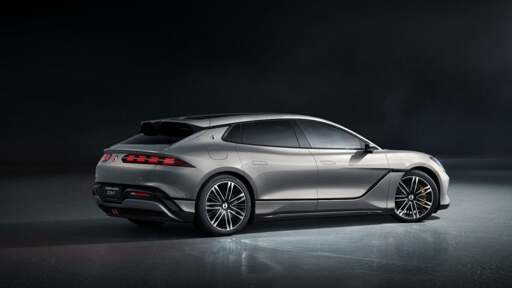
 Vieric
“Struggling” implies the American Auto industry is at least trying to keep pace. But really, they aren’t trying at all. They are content to sit back thinking their current flock of geese will lay golden eggs forever even as more and more of those geese drop dead from old age.
That‘s the main problem in Europe as well. I don‘t mind tariffs on heavily subsidized cars that are designed not to make profit but to destroy our industries. However, even then our manufacturers are in a constant crisis mode and unable to adapt. It‘s really pathetic.
But hey, when the car lobby is dead maybe that means more trains and cycling paths in the long run? Perhaps there‘s an opportunity here.
 SkunkWorkz
It’s all thanks to Germany though. They are the ones who have succeeded in scrapping the bill to ban new ICE vehicle sales after 2035
If it has to be forced, then it probably isn’t a good idea.
We’re only just now. Like this year just now, seeing batteries that can be made much cheaper and last much longer (sodium ion) and batteries that will last the actual lifetime of a vehicle (solid state lithiums, allegedly). The cars the past 5 years that have had LifePO4 batts will last decently long. Up until now you’ve been looking at EV’s that cost more, with batteries that will go bad in them that cost huge amounts of money to replace. A 10 year old Tesla with 200,000 miles on it is essentially garbage. No one will pay much for it because it’s about to need a $15,000 battery, and when it fails it’s going to the junk yard. My little ice car has nearly 300,000 miles on it and is old enough to vote. If the engine blows up I could buy a working used one for like $500 and install it myself, or pay somebody else a couple grand to deal with it all for me.
Passenger cars aren’t the end all be all to global warming or the environment, either. They aren’t the main cause. Most countries grid systems couldn’t handle a complete EV swap by 2035. Look at the issues these stupid ai server farms are causing grid systems.
My point is, no one should need to force ev. At this point it will become the better and obvious choice over ice on its own. It isn’t there yet for tons of people or countries.
grid systems couldn’t handle a complete EV swap by 2035. Look at the issues these stupid ai server farms
While we’re so stagnant it would be a challenge, do you not see the difference between
- a known, gradual transition with a 20 year timeframe (10 to end ice production + 10 for most existing to age out)
- an immediate demand for for large amounts of power for a bubble technology that didn’t exist a couple years ago
We’re (the world) is currently massively back ordered on transformers by many years and no one is ramping up production. Let alone the rest of the infrastructure, or what people in apartments and others with no garages are set to do. Were too far out to solve those problems. Even 20 years out.
Maybe, but there’s a lot more chance to solve it 20 years out
More importantly, generating and transmitting more power is not the only option. It is for ai since a datacenter needs huge power continuously. However EVs need much smaller amounts of power intermittently. If I plug in overnight, I don’t care when it charges or how fast as long as it’s done by morning. Not everyone does that at the same time, and we ought to be able to create a “smart” solution to coordinate this and minimize the impact
EV potentially could coordinate with the grid so we don’t need much or any additional power but just use it at different times
You still have to look at the millions of people with no garages, that park on streets and apartment parking lots, and who won’t have means to charge outside of going and charging at fast charge stations away from where they live. These will all take massive amounts of high current power at peak times, not overnight. The people in their single family houses with their double car garages won’t be an issue for overnight charging. It will be an issue for all the others. Imagine places like Kansas city or Chicago or LA.
Fast chargers aren’t the only option
- Tesla already has fast chargers with megapack, and with solar. There are fast chargers that don’t impact the grid much
- we definitely need to build out destination chargers. Charging at work is no different from at home, except for when. And build out of solar can make peak energy available just when needed
- there are proposed answers such as streetlight chargers
Obviously we don’t have an answer yet, haven’t built out the infrastructure, but we do have options