 return2ozma
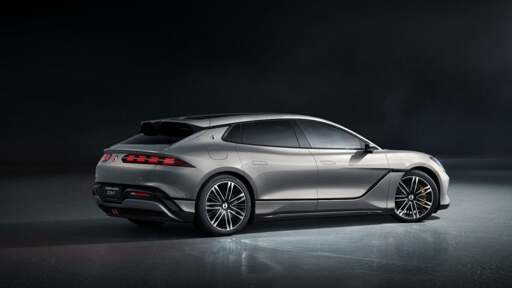
BYD Reveals the ‘World’s Longest-Range EV’ as American Auto Industry Struggles to Keep Pace
 Vieric
“Struggling” implies the American Auto industry is at least trying to keep pace. But really, they aren’t trying at all. They are content to sit back thinking their current flock of geese will lay golden eggs forever even as more and more of those geese drop dead from old age.
That‘s the main problem in Europe as well. I don‘t mind tariffs on heavily subsidized cars that are designed not to make profit but to destroy our industries. However, even then our manufacturers are in a constant crisis mode and unable to adapt. It‘s really pathetic.
But hey, when the car lobby is dead maybe that means more trains and cycling paths in the long run? Perhaps there‘s an opportunity here.
 SkunkWorkz
It’s all thanks to Germany though. They are the ones who have succeeded in scrapping the bill to ban new ICE vehicle sales after 2035
If it has to be forced, then it probably isn’t a good idea.
We’re only just now. Like this year just now, seeing batteries that can be made much cheaper and last much longer (sodium ion) and batteries that will last the actual lifetime of a vehicle (solid state lithiums, allegedly). The cars the past 5 years that have had LifePO4 batts will last decently long. Up until now you’ve been looking at EV’s that cost more, with batteries that will go bad in them that cost huge amounts of money to replace. A 10 year old Tesla with 200,000 miles on it is essentially garbage. No one will pay much for it because it’s about to need a $15,000 battery, and when it fails it’s going to the junk yard. My little ice car has nearly 300,000 miles on it and is old enough to vote. If the engine blows up I could buy a working used one for like $500 and install it myself, or pay somebody else a couple grand to deal with it all for me.
Passenger cars aren’t the end all be all to global warming or the environment, either. They aren’t the main cause. Most countries grid systems couldn’t handle a complete EV swap by 2035. Look at the issues these stupid ai server farms are causing grid systems.
My point is, no one should need to force ev. At this point it will become the better and obvious choice over ice on its own. It isn’t there yet for tons of people or countries.
Never understood why EVs aren’t made with standardized hot swappable cells. Would solve the range problem and the wear problem.
There was at least one company several years ago that was trying. Go to a place and pay a fee, kind of like how you’d swap out a propane gas bbq grill tank. They’d forklift out the empty batt and forklift in the charged one, was their game plan.
The tech is all too knew for standardization. Too many chemistries and voltages and places to figure out where to stick batteries.
If what catl is producing right now is correct and true, we should be all set in the coming future. Supposed sodium batteries at 175wh per kilogram and over 10,000 charge cycles and very fast charging. Great for sub 300 mile range small econo vehicles. Then the solid state lithiums they’re working on are also supposed to have a high amount of charge cycles and energy densities close to 500wh\kg, which will give plenty of range and make the cars lighter, which is really needed to ease up on suspension and efficiency and tread wear.
Not practical, no one wants it.
People are already bitching and moaning about how hard it is to build out charging, when it’s based on existing electric system that’s is already everywhere. You really think it’s at all practical to build out everywhere a network of station width a large inventory of one ton batteries to fit every age of every vehicle in every location no matter how rural? You want to hold battery technology stagnant to support this? You want to lose the efficiency and reliability benefits of structural batteries.
The reality is current batteries already last longer than the first owner keeps a vehicle and newer ones easily exceed lifespan of ice vehicles. The reality is charging is already more convenient that battery swapping. The reality is building out chargers is much easier than any other infrastructure
You really think it’s at all practical to build out everywhere a network of station
It works with propane tanks.
one ton batteries to fit every age of every vehicle in every location no matter how rural and heavy automated equipment to maneuver them?
That’s where standardization comes in. All vehicles would use the same cells, or maybe a couple sizes depending on use case. No reason they have to way a ton either a car could have multiple cells sized for a person to be able to handle themselves. This would also allow you to “top up” if they can get the cells to drain sequentially.
You want to hold battery technology stagnant to support this? You want to lose the efficiency and reliability benefits of structural batteries.
As long as new technology connects to the old connections then they can change whatever they want inside the cells. That’s how batteries have been for pretty much the entire history of batteries. And no I don’t want to lose anything. I was merely asking a question.
The reality is current batteries already last longer than the first owner keeps a vehicle and newer ones easily exceed lifespan of ice vehicles.
I’d very much like to know what the actual numbers are for “how long the first owner keeps a vehicle” and the “lifespan of ice vehicles”. I’ve had my car for 15 years and I’m the first owner. My dad had a truck that’s coming up on 40 and is still kicking. EVs haven’t even been around long enough to prove that
Everyone has different definition of lifetime and very few keep theirs 40 years
I personally buy new and keep it for its lifetime, as defined by “needing more work than its value “. That has worked out to be 12-15 years for ICE cars. For an EV I’m reasonably confident will last longer and the vehicle Will still have a small amount of resale value based on batteries degrade rather than stop
Also I’ve seen quite a few articles like
 dan
danNo one will pay much for it because it’s about to need a $15,000 battery,
That’s pretty rare though. Less than 5% of EVs need a battery replacement after 10 years (including those with defective batteries), and modern EV batteries should last at least 20 years, after which they’re still estimated to have around 65-70% capacity.
That’s not pretty rare, and with lithium batteries it’s also a guaranteed capacity loss, even if there’s not many power cycles to them. Age is a huge determinate factor in capacity and power loss in lithium batteries. The capacity loss also isn’t on a straight line scale. It increases with time. One or two percent a year loss for the first 5 years and then it will get bigger and bigger. Unlike an ice vehicle that’s kept in a garage and taken care of that can got well over 200,000 miles almost regardless of age, an EV currently can’t do that. They’re terrible in the 2nd and third hand market. A 20 year old EV will be useless.
While battery degradation is real, one thing people often overlook is that most of these mandates include PHEVs under the umbrella of electric vehicles. PHEVs have way smaller batteries which make them lighter, cheaper, and they aren’t subject to range anxiety. The only downside is the extra cost and the continued maintenance required of an ICE (but ICE buyers are used to it and don’t care about that).
That’s quite false, buddy. In fact it’s an outright lie. For Europe and for the US, so I don’t know where you’re talking about this “most of” is at.
The EU bill was for a complete ICE ban by 2035, and the reversal that Germany was pushing for in removing that ban was for it to be a 90% emissions reduction instead of a ban. This was wanted by Germany for the sole purpose of still allowing hybrids after 2035.
In shorter fashion: It didn’t include hybrids. Now it’s going to.
The ban for ICE vehicles was only for new registrations. ICE cars registered before 2035 were still allowed to be driven after 2035.
My mistake, it always allowed PHEVs in Canada and I made the assumption it was similar elsewhere as a full blown EV mandate is a really though sell. Thanks for clarifying.
If it has to be forced, then it probably isn’t a good idea
It’s not like people want to do that for shits and giggles.
A different perspective is the market shift is inevitable. We can work with it to make the transition smooth, to help existing manufacturers retool, to more quickly build out the necessary infrastructure, ensuring least disruption and existing manufacturers are still in business. Or we can let the market be disrupted by new companies predominantly in other countries. The transition will be longer and rougher as jobs are lost, infrastructure lags, existing manufacturers cling to old technology, until eventually that entire industrial base collapses
Or of course there’s the perspective of acknowledging long term climate trends and understand the responsibility to our children, our society, our descendants, to make small steps to mitigate the harm we do them
grid systems couldn’t handle a complete EV swap by 2035. Look at the issues these stupid ai server farms
While we’re so stagnant it would be a challenge, do you not see the difference between
- a known, gradual transition with a 20 year timeframe (10 to end ice production + 10 for most existing to age out)
- an immediate demand for for large amounts of power for a bubble technology that didn’t exist a couple years ago
We’re (the world) is currently massively back ordered on transformers by many years and no one is ramping up production. Let alone the rest of the infrastructure, or what people in apartments and others with no garages are set to do. Were too far out to solve those problems. Even 20 years out.
Maybe, but there’s a lot more chance to solve it 20 years out
More importantly, generating and transmitting more power is not the only option. It is for ai since a datacenter needs huge power continuously. However EVs need much smaller amounts of power intermittently. If I plug in overnight, I don’t care when it charges or how fast as long as it’s done by morning. Not everyone does that at the same time, and we ought to be able to create a “smart” solution to coordinate this and minimize the impact
EV potentially could coordinate with the grid so we don’t need much or any additional power but just use it at different times
You still have to look at the millions of people with no garages, that park on streets and apartment parking lots, and who won’t have means to charge outside of going and charging at fast charge stations away from where they live. These will all take massive amounts of high current power at peak times, not overnight. The people in their single family houses with their double car garages won’t be an issue for overnight charging. It will be an issue for all the others. Imagine places like Kansas city or Chicago or LA.
Fast chargers aren’t the only option
- Tesla already has fast chargers with megapack, and with solar. There are fast chargers that don’t impact the grid much
- we definitely need to build out destination chargers. Charging at work is no different from at home, except for when. And build out of solar can make peak energy available just when needed
- there are proposed answers such as streetlight chargers
Obviously we don’t have an answer yet, haven’t built out the infrastructure, but we do have options
Canada did the same thing. We also got rid of the carbon levy.