https://inews.co.uk/inews-lifestyle/woman-killed-three-days-uk-failed-raging-4259360?fbclid=PAQ0xDSwQVAZRleHRuA2FlbQIxMQBzcnRjBmFwcF9pZA8xMjQwMjQ1NzQyODc0MTQAAacB6grwA2dGibd_K-i-QUOHBJFdx9fLaVC4Yn4S7RPKqSKCJVMyOI9I2jAuYQ_aem_XL_wYjX4K20bRj_aEfSH6w

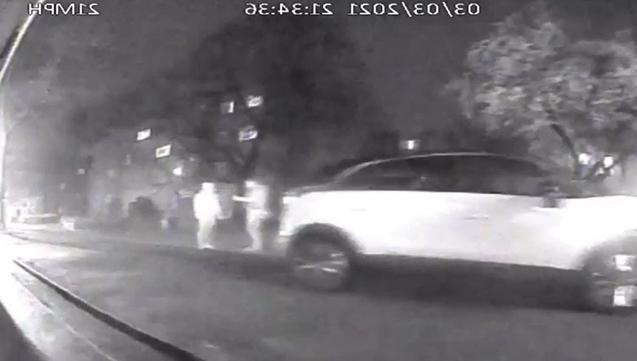
When #SarahEverard was raped and murdered by a serving Metropolitan police officer, less than a week before #InternationalWomensDay in March 2021, it was not an isolated incident. She was one of 147 women and girls murdered by men in the UK in 2021, an average of one every two and a half days.

The case occurred less than a year after the murders of Bibaa Henry and Nicole Smallman, who were egregiously failed by the police
A woman is killed every three days in the UK. We’ve been failed and we’re raging

When Sarah Everard was murdered five years ago this week, we were promised change. Instead misogyny and abuse remain rife

The i Paper
in the hours and days after they were murdered in a #London park. Officers posed for photos with their bodies, before sharing them with others on a #WhatsApp group.
In the wake of these horrific events, clear evidence of widespread #racism and #misogyny in policing emerged. There were 41 officers in the WhatsApp group where the images of Henry and Smallman’s bodies were shared. #WayneCouzens the officer who killed Everard, was found to have shared “grossly racist, sexist and misogynistic”

messages with other officers, including jokes about raping a female colleague. It was widely reported that #Couzens nicknamed “the rapist” by some of his colleagues.

Wider #police failings when it came to misogyny were also exposed. It emerged that Couzens had been previously reported for indecent exposure, and that a lack of investigation had meant a missed opportunity for him to be stripped of his police credentials years before Sarah’s death.

When women organised a vigil in the wake of Everard’s death, police forcefully detained protestors, sparking widespread outrage.
The following year, an investigation by the IOPC revealed officers stationed at #CharingCrossPoliceStation had shared #WhatsApp messages boasting about physically assaulting their partners, saying it “makes them love you more”, fantasising about raping and “hate f***[ing]” a female officer and other misogynistic, racist and homophobic comments.
Henry, Smallman and Everard’s murders were part of a broader pattern of both violence against women and girls and institutional sexism in policing. The thing that connects these patterns is that both are deeply rooted in societal misogyny.
Immediately after Sarah Everard’s death, promises of institutional transformation were made. The #CaseyReview and #AngioliniInquiry were announced to examine issues including police recruitment, vetting processes and dismissals.
Yet five years on, it feels like little has changed. Here we are in 2026, drowning in torrents of deepfake sexualised images generated by #Grok, a tool owned by the wealthiest man in the world. The President of the #UnitedStates has himself been the subject of multiple sexual assault allegations and was successfully sued for sexual abuse by #ElizabethJeanCarroll in a civil case. The release of the #Epstein files have exposed a misogynistic sex trafficking operation encompassing thousands
of powerful men.
Allegations of horrendous abuse among well-connected, seemingly untouchable men proliferate. We watch the global rollback of women’s rights, from Afghanistan to the United States. In the UK, we face the prospect of a potential future government whose candidates threaten to punish women for not having children and use women’s safety as a cynical veil to cloak their racist rhetoric while offering no policies to tackle an existing crisis of domestic and sexual violence.
During 2022-2023, UK police recorded over one million crimes relating to violence against women and girls (VAWG), an average of over 2,700 per day. It accounts for 20 per cent of all police-recorded crime in England and Wales, yet it still doesn’t feel like a priority. Between 2021 and 2023, the Home Office underspent an average of 15 per cent of its allocated budget for VAWG, while survivors faced devastating delays to court processes and unbearably long waiting lists for support.
Since Everard’s death, we have seen the murders of hundreds of women at the hands of men, with clear evidence of the deadly impact of societal misogyny.
This misogyny is often at its most visible in the public response to women’s deaths. When Sabina Nessa was killed in southeast London, attack alarms were handed out to 200 women in the local area. No men were stopped and given information or education about male violence.
When Bobbi-Anne McLeod was murdered by a man who had abducted her
from a bus stop in the same year, the male leader of her local council told ITV News: “Everybody has a responsibility not to try to put themselves in a compromising position.” He later apologised for his comments, but they revealed a glaring truth. Society is prepared to look anywhere for the cause of women’s murders except directly at the perpetrators themselves.
When Kyle Clifford raped and murdered his former partner Louise Hunt and killed her sister Hannah and mother Carol in 2024,
he had searched for and consumed the content of extreme misogynist #AndrewTate in the days leading up to his attack. Prosecutors argued at his trial that “the sort of violent misogyny promoted by #Tate is the same type of motivation that… fuelled both the murders and the rape”.
Societal and media misogyny continue to besmirch the memories of women who lose their lives to male violence. When headteacher #EmmaPattison and her daughter #Lettie were murdered by her husband
in 2023, #media reports asked: “Did living in the shadow of his high-achieving wife lead to unthinkable tragedy?” As if to imply that her audacious decision to have a successful career had somehow pushed her emasculated husband into murdering her.
The number of police officers charged with sexual and domestic violence has only continued to mount: from #DavidCarrick, guilty of over 70 offences over a 17-year period, to #CliffMitchell, who carried out a “campaign of rape” against two victims,
including a child under the age of 13, while he was a serving officer.
These weren’t shocking anomalies. In 2023, the #MetPolice revealed it was investigating 1,633 sexual and domestic abuse claims involving over 1,000 of its officers.
Despite repeated promises over vetting and disciplinary procedures, there is little to bolster women’s trust in an institution that has repeatedly failed us.
A Met call handler sacked for describing a rape victim as a “slut” was reinstated
after appealing against his sacking for gross misconduct. A vetting review concluded in 2023 found that thousands of police officers and staff had not been properly checked between 2019-2023, leading to 131 recruits going on to commit crimes or misconduct, including rape.
A Panorama investigation in 2025 saw more than 300 people contact the BBC with allegations of racism, corruption and bullying of victims by police, including repeated failings of domestic violence victims.
Clear evidence that the policing “culture change” we’ve heard so much about remains a far-off dream.
In December 2025, over four years after Everard’s death, the second part of the Angiolini report revealed that more than a quarter of police forces in England and Wales still had not implemented basic policies for investigating sexual offences.
Just this month, we learned that the number of police sexual misconduct allegations involving currently serving officers has risen
by a third compared to the previous year.
Yes, there has been some progress. In 2025, the Government announced new powers enabling chief constables to sack officers who failed vetting standards. Recent measures to improve the justice system for rape survivors have included a ban on “bad character” evidence being used against rape survivors who have previously reported abuse, and new restrictions to police access to rape survivors’ therapy notes. There have been some welcome
boosts in funding for victim support services and action finally taken to curb technology facilitated violence, such as measures taken against non-consensual image abuse and the depiction of strangulation in pornography.
But these measures too often feel like piecemeal tinkering at the edges of a broken system, often only taken after painful years of campaigning by courageous survivors and activists.
The Government’s long-awaited action plan on Violence Against Women and Girls
centred on prevention with its focus on education, but more funding will be required to make this an effective reality. And a more ambitious, preventative approach is desperately needed elsewhere too. Instead of waiting to act on issues like AI deepfake images – after millions of women and children have already been harmed – we urgently need common sense regulation of AI tools before they are released.
While we wait, and rage, and protest, and advocate, and grieve, women are continually reminded of how little our lives, voices and pain matter. The recent release of the Epstein files only served to remind us of the sheer extent of impunity for powerful, rich, well-connected men. Women and girls harmed, raped, trafficked, dead. Powerful men using powerful institutions to protect each other. And society seems to shrug.
We live in a country in which policing
and criminal justice fail women so badly that #rape is virtually decriminalised. This might sound like an exaggeration until you realise that #HomeOffice statistics for the year ending March 2024 indicated that the proportion of rape offences resulting in a charge or summons was just 2.6 per cent, a paltry 0.5 per cent increase on the previous year. Little wonder that we have one of the lowest rape conviction rates in #Europe.
Progress is so slow that women are literally paying with their lives while wealthy men laugh at one another’s crimes behind closed doors and email accounts.
An emergency on this scale demands an emergency response.
“This report should mark a turning point”, said #LadyAngiolini. But how many “turning points” and “tipping points” and “watershed moments” have we been promised? Words without action and recommendations without implementation and plans without adequate funding
won’t stem the tide.
Susan Everard, Sarah’s mother, told an inquiry into her death of a “turmoil of emotions — sadness, rage, panic, guilt and numbness”. They are feelings I know so many other women also feel as we struggle against institutions that were never made to protect us, in a society that often simply doesn’t seem to care.

Until real, ambitious, proactive reform happens, until institutional misogyny and normalised societal sexism shift, women don’t just “feel” that we aren’t safe. We know that we aren’t.

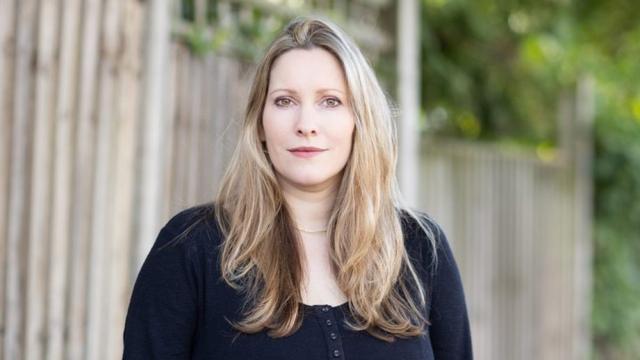
Laura Bates is the author of The New Age of Sexism

#LauraBates #TheNewAgeOfSexism

Two Met Police officers jailed for sharing photos of murdered sisters Bibaa Henry and Nicole Smallman

Former PCs Deniz Jaffer and Jamie Lewis pleaded guilty to misconduct in public office for their actions following the sisters' murder in June 2020

The i Paper
Wayne Couzens: Sarah Everard’s killer used Covid laws to handcuff and ‘arrest’ her before murdering her

Couzens, 48, used his police ID card and posed as an undercover officer to kidnap Sarah

The i Paper
Police watchdog uncovers ‘disgraceful’ behaviour at London unit including officers having sex on duty

The Independent Office for Police Conduct uncovered evidence of racism, misogyny, bullying and harassment involving serving officers at Charing Cross Police station in central London

The i Paper
After a date with a sexist police officer, I understand why the Met is so rotten

The ruthless truth is: the force doesn't just have an institutional problem, it has a man problem. We all do

The i Paper