 Pete Prodoehl 🍕
Hey kids, in the olden days you bought (instead of “rented”) software and it came in a box with a disc and it was yours to use forever!
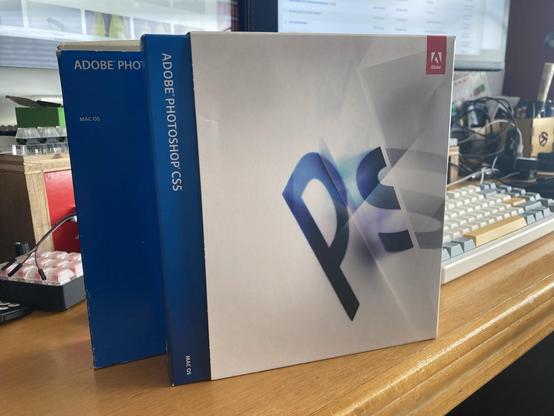
Well, the “forever” part was tricky because it might break due to OS upgrades or computer architecture/chip changes.
But making a one-time purchase and using software 5 or 10 years was not unheard of.
I think I paid $500 for Photoshop and it came out to under $9 per month if I do the math right… that’s for 10 years of use.
If it’s still $20 per month for a subscription and you do 10 years that’s $2,400.
@rasterweb The disaster is one can be locked out of software you paid for if the internet is down or vendor's servers are down because you cannot authenticate that you have paid for the software. They do not even provide alternative authentication like a key. The software keeps needing re-authentication and it is not a one-off. It is like renting a house and not being able to open the door unless the telephone line is working and the landlord's answering machine is not full.
A total disaster.
@adingbatponder That is a scandal, for sure. There's no good reason that local authentication should not be available.
As I said elsewhere, I blame inadequate regulation. Vendors can be made to do this, if enough people push for it.
@rasterweb The mortgage/rent comparison is popular, but I think probably faulty, because these are also very different cost/benefit structures. A tenant may pay more per m^2, but they're also not responsible for many things that a homeowner would be. And in nearly all cases, a flat with the same floorspace and amenitites as most private homes would demand much higher rent.
In my mind, the biggest difference is that renters cannot build equity.
/2
@rasterweb 2/ I would liken software to being more like a personal vehicle, which you can buy, rent, or lease. Probably lease. A new car depreciates over time, no matter how well cared for. A leased car has aspects of both ownership or rental, but is replaced periodically.
But no one can build equity in software, no matter how you access it or for how long. There's no appreciation, no resale value, for anyone.
@wesdym If you want to be pedantic (which I am fine with):
I can own it for as long as like and/or as long as I am able.
Is that better?
So what is the software equivalency of this?
In the old days maybe it would have been getting a used computer with software already installed from the previous owner that you could still use?
@rasterweb Ironic that you should accuse me of pedantry.
Take a powder. And try not to be this tiresome and immature in the future, okay?
@wesdym Apologies, I meant no insult. I am pedantic and hold no ill will towards others who are.
My mind is a little fuzzy from medication today so if I read things poorly please know I did not mean to do so.
@rasterweb mortgages are rent control for the middle class
(Or at least, that’s what they *were*)
 adingbatponder
  👾
👾 Michael 🤨
 WesDym
 Alan Bucknam
 John Wilson