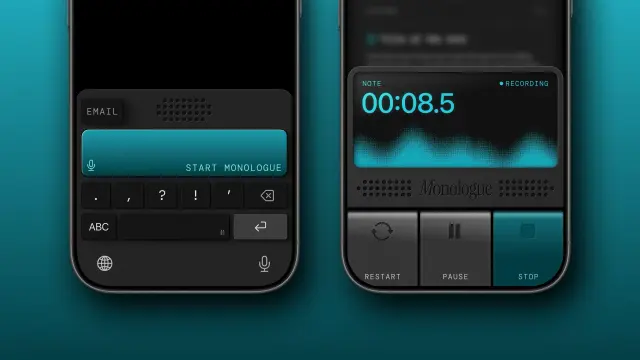
#Monologue was an interesting experiment. The app was completely vibe-coded and I got hired to clean everything up and make it look good.

The result is now available in the App Store.

https://monologue.to

Here is how #Monologue looked like before I took over.
@lucaslove that's... a lot closer to how it'd look like if I worked on it :)
@lucaslove How was the quality of the vibe-coded app? Did you have to rewrite from scratch, or were you able to re-use (parts of) the existing code?

@aaronk6 Naveen, who vibe-coded the prototype is an engineer himself and so it wasn't totally terrible. I was actually surprised of how well some of it was implemented. But it had a lot of the common vibe-coding issues like duplicated code or holding some Swift concepts and 3rd party libraries wrong.

I started with a big refactor at the beginning to have a good foundation and then moved on by modularizing and rebuilding feature by feature with the new design.


@aaronk6 Would you be interested on reading more about that process?
@lucaslove Yes, that’s very interesting. Thanks for sharing your assessment of the vibe-coded project. If there’s more you can share, I’d love to hear it. I did a hobby project with Claude last year and also noticed that it made weird choices when it came to SwiftUI. Often it didn’t know about the latest APIs and wrote complicated workarounds. However, taken with a grain of salt, I think vibe-coding can drastically speed up development (if used by engineers), especially for quick prototyping.

@aaronk6 I wrote a blog post about how we built Monologue.

Currently waiting on confirmation where it will be published.

Will let you know.

@aaronk6 It evolved into 2 blog posts. One about the design and another one about the challenges of taking over a vibe-coded project.

https://lucas.love/blog/monologue-for-ios

How We Built Monologue for iOS

A vibe-coded prototype, a remote team, and the craft of turning it into a polished product.