 Parents For Future
"Like Prime, but with human beings"
“We need to get better at treating this like a business,” ICE Acting Director Todd M. Lyons said at a border security conference in April, according to the Arizona Mirror.
The administration’s goal, he said, was to deport immigrants as efficiently as Amazon moves packages:
“Like Prime, but with human beings.”
Commercial real estate experts say concentrating detainees in warehouses would create its own logistical problems. Such structures are designed for storage and shipping, not human habitation.
They tend to be poorly ventilated and lack precise temperature controls — and, because they are typically located far from residential areas, they may not have access to the plumbing and sanitation systems needed to support thousands of full-time residents.
“It’s dehumanizing,” said Tania Wolf, an advocate with the National Immigration Project who is based in New Orleans — about one hour south from the site of a planned warehouse in Hammond, La.
“You’re treating people, for lack of a better term, like cattle.”
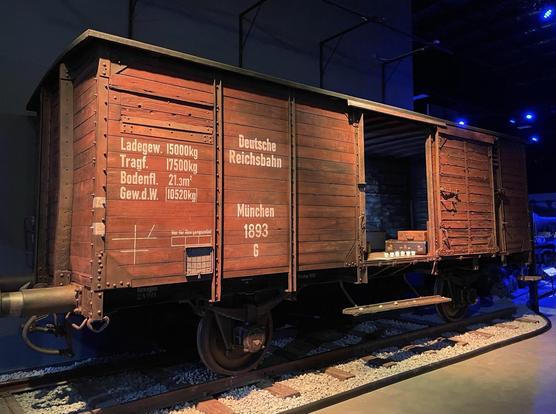
See also: https://encyclopedia.ushmm.org/content/en/article/german-railways-and-the-holocaust
Nazi Germany’s Reichsbahn treated humans as "cargo," optimizing logistics via transit "warehouses" and standardized "bulk shipments."
By integrating cattle-car transports into national rail schedules, they achieved terrifying efficiency, managing millions like a routine industrial supply chain.
👀

@parents4future
I seem to recall that for the Nazis, they actually endeavored to make the rail transport of detainees purposefully slow and inhumane.
IIRC they decided it was more efficient and convenient if as many detainees as possible died in the rail cars, rather than at a processing facility or in the camps.
So, they were very fast to get detainees on the trains, but then they were meandered around the system, parked on sidings for extended periods, etc.
 The Lack Thereof