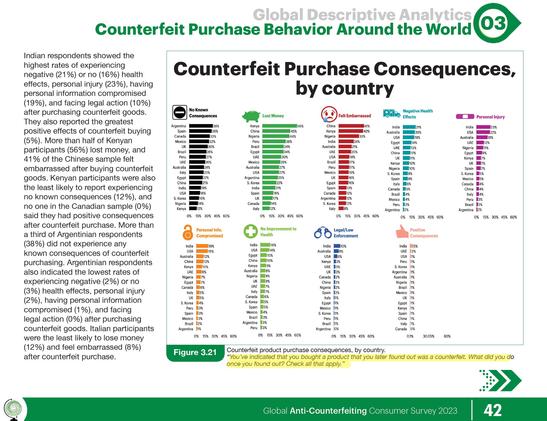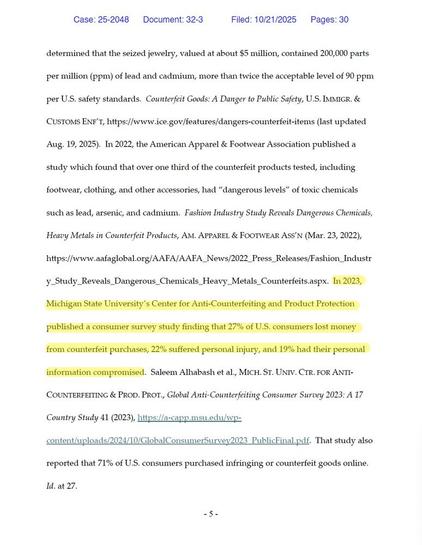
"A 2023 A-CAPP Center Consumer Survey noted that, in the U.S., 22% of online shoppers were injured or harmed and another 19% experienced negative health effects from counterfeit goods they had purchased." - papers.ssrn.com/sol3/papers.... No, it didn't. a-capp.msu.edu/wp-content/u...
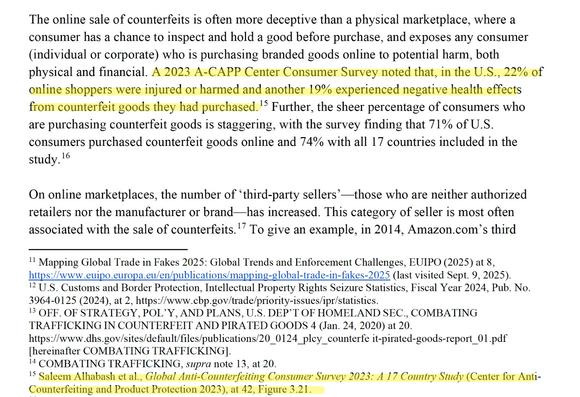
Twenty-two percent of people who have "indicated that [they] bought a product that [they] later found out was a counterfeit" is emphatically not the same as "22% of online shoppers."
I have to say, when I read this 22% quote I was skeptical. That just seemed REALLY high. My first thought was: "What was the methodology of the underlying survey?" Turns out that, even if the methodology was fine, this empirical assertion is simply not supported by the citation.

RE: https://bsky.app/profile/did:plc:hvwhptk4oerwsuzau66ikwfy/post/3m73m6rfuck2k
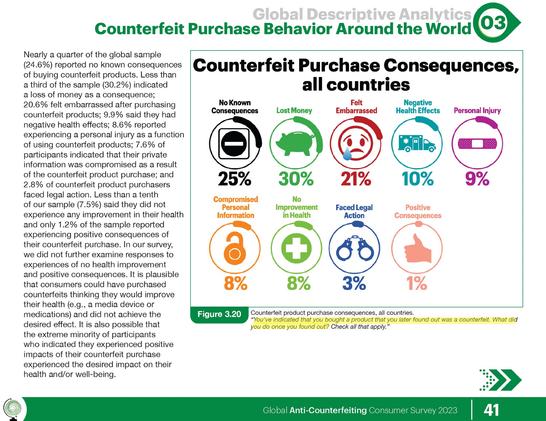
In their Louis Poulsen amicus brief, the SAFE "bar association"--whose officers include attorneys for the firm that "partially funded" that article--makes similar empirical claims, citing a different page of the 2023 survey report: www.scribd.com/document/936...
I assume this is a typo and they meant page 42, not page 41. But again, as explained above, page 42 does not support these empirical claims.