
For the first time ever, astronomers have unveiled the shape of a star’s explosion at its earliest stage.

The feat was achieved by ESO's Very Large Telescope just a day after the detection of this supernova, as the blast was breaking through the star’s surface.

This brief initial phase wouldn’t have been observable a day later. This will help shed light on how massive stars go supernova.

https://www.eso.org/public/news/eso2520/

Illustration: ESO/L. Calçada
#astrodon #astronomy #astrophysics #space #science

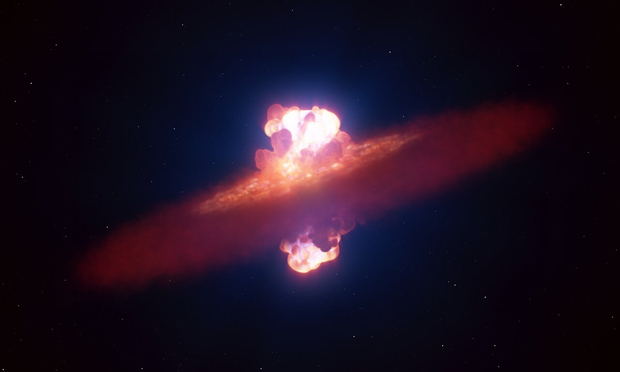
@esoastronomy "Artist’s impression of the initial shape of a supernova explosion"

Aren’t there enough fake images out there? You guys don’t need that.

@winfried @esoastronomy I thought it was really observed.. Had doubts, but coming from ESO made it credible. Disappointing.
@jotak @winfried The actual shape of the supernova can't be directly seen, as it's quite far away in another galaxy. But different shapes leave different signatures in the spectrum of the supernova when observed in polarised light, as we summarised in the second post and explained in more detail in the release. This illustration was made in close collaboration with the team, to make sure it matches the spectro-polarimetric data. The paper linked in the release includes a more technical diagram.