In 2011, Aaron Swartz was arrested after he downloaded millions of academic journal articles from JSTOR via the MIT network. He was charged under federal laws (including wire fraud and violations of the Computer Fraud and Abuse Act) with up to 13 felony counts, carrying the possibility of decades in prison, large fines, and other penalties. These federal charges eventually led to his death in 2013.

No AI company was ever charged under federal laws.
https://icy.wyvern.rip/notes/ad9ptt2s993v01j8

:privTri: Corveon :brdSmol: (@volpeon)

> OpenAI is planning to release a new version of its Sora video generator, which creates videos featuring copyrighted material unless copyright holders opt out of having their work appear. It's kind of hilarious that they go "if you don't want me to pirate your movies, you ne...

Iceshrimp.NET
The thing is: I do want copyright to change in the digital age. I find the charges against Aaron Swartz disgusting. I never want to see anything like that. But I see what has been called “the paradox of Open” unfold in the worst way in how corporations get their training data.
@johl also the piratebay
@martenson @johl that's because they were never American to begin with.
@johl "And when you're a corporation, they let you do it. You can do anything ... Grab 'em by the copyright. You can do anything."
@johl actually in the case of a businesses RICO could be applied. Guessing nobody tried to file a charge.
@johl I thought corporations were people?
@johl

Kind of like how, when individuals collate public data, they can get charged with doxing while, if a corporation does it on an industrial scale — even inclusive of adding non-public data — well, that's "just good business".

@johl

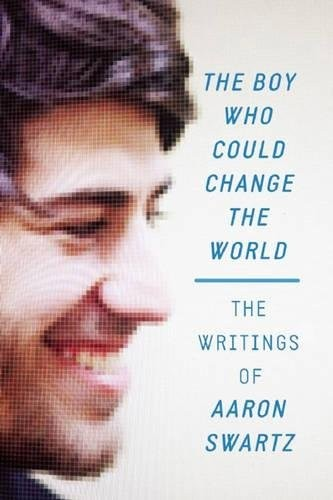
The Boy Who Could Change the World The Writings of Aaron Swartz, 2015

The Writings of Aaron Swartz
In his too-short life, Aaron Swartz reshaped the Internet, questioned our assumptions about intellectual property, and touched all of us in ways that we may not even realize. His tragic suicide in 2013 at the age of twenty-six after being aggressively prosecuted for copyright infringement shocked the nation and the world.

#books
#AaronSwartz

@johl there’s a name for this pattern: Corruption.
@johl Like it or not, the law is a bully looking for easy targets without the resources to mount a sufficient defense. Corporations are rarely in that category. Individuals, even ones with friends, or movements, or causes, can be easily intimidated because the amount of force applied to them is at scale, but their psychological resources are not scalable. Sadly for our boy.
@johl Swartz, clearly, didn't spend enough on political contributions
@johl Is anyone surprised? Swartz didn't want to make a profit but was risking the profit of a company. The AI corporations on the other hand are just stealing data and corrupting society from billions of humans for profit. That's obviously fair use. You cannot think that this is even remotely as bad as what Swartz did. (/s)
@johl “One law for the rich …”

@johl
For more info on Aaron, and the charges that led to his death, this is a good documentary.

https://en.m.wikipedia.org/wiki/The_Internet%27s_Own_Boy

#aaronswartz

The Internet's Own Boy - Wikipedia

@johl
For more info on Aaron, and the charges that led to his death, this is a good documentary.

https://en.m.wikipedia.org/wiki/The_Internet%27s_Own_Boy

#aaronswartz

The Internet's Own Boy - Wikipedia

@johl
For more info on Aaron, and the charges that led to his death, this is a good documentary.

https://en.m.wikipedia.org/wiki/The_Internet%27s_Own_Boy

#aaronswartz

The Internet's Own Boy - Wikipedia

@johl Anthropic settled a lawsuitr for those books revently.
@KarlHeinzHasliP Which is the result of civil lawsuits and not being charged with federal crimes.
@johl It's a rather striking comparison, and it raises crucial questions about how the law applies to individuals versus large corporations. In Aaron Swartz's case, his arrest and the charges against him were clearly disproportionate to the offense he had committed, and legal pressure certainly played a tragic role in his end. It's a tragedy, all the more so because his work aimed to make scientific knowledge more accessible—an ideal that, ironically, aligns with principles of open sharing and