
Hey, #Inkscape and/or #Fritzing gurus. A documented use of Inkscape is to create a custom outline for a printed circuit board that can then be imported into Fritzing: https://www.instructables.com/How-to-Make-Custom-PCB-Shapes-with-Inkscape-and-Fr/

This requires manually creating a file with two sublayers with specific settings, which is tedious and error-prone if you aren't a frequent flyer with Inkscape. How hard would it be to script something to do this automatically - take one SVG with the outline, and output one with the right layers?

How to Make Custom PCB Shapes (with Inkscape and Fritzing)

How to Make Custom PCB Shapes (with Inkscape and Fritzing): If you are a beginner and need a PCB with custom shape... and need it in the shortest time as possible... OR if you don't want to spent a lot of time learning how to work with advanced softwares, because you make eventually a board or other... this …

Instructables

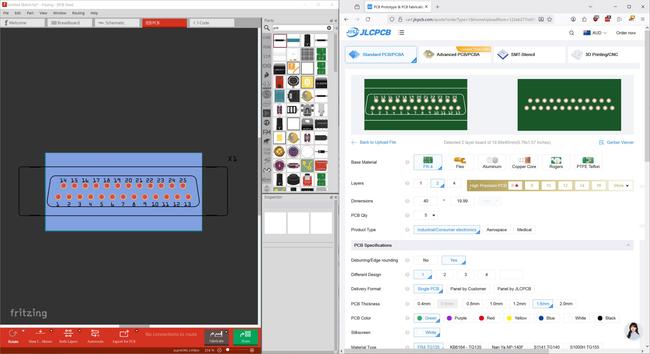
First experiment to check I understand what's going on: changing some basic parameters in an SVG file already set up to make a PCB cutout.

Every tutorial written about making custom PCB shapes for Fritzing tells you to make the board fill green and the outline white - as far as I can tell, this is because the person who wrote the first one wanted to look at green in Fritzing. Your PCB manufacturer doesn't care what colour the SVG was, it's just turned into CNC movement commands anyway.

@timixretroplays The same exists in programming. Someone dubbed it “programming by superstition.” E.g. the first tutorial for a web framework shows you how to declare a service in the service container and call from your controller. Calls it JobOfferService. Beginners call their services SomethingService. They become proficient in the framework and write new tutorials wherethey call their services SomethingService. Soon, everyone believes you have to call your services like this. >>
@oscherler it's not just programming, either. When new people join my org, I tell them that the first few months are the most valuable for them to poke at things and ask why they're done a certain way - before they're around for long enough to just accept things the way they are. I specifically welcome them to question and poke holes in the things I'm showing them in training, because nobody who's drilled a task a hundred times will think on their own to try something different on the 101st go.