 ickplant
A conundrum
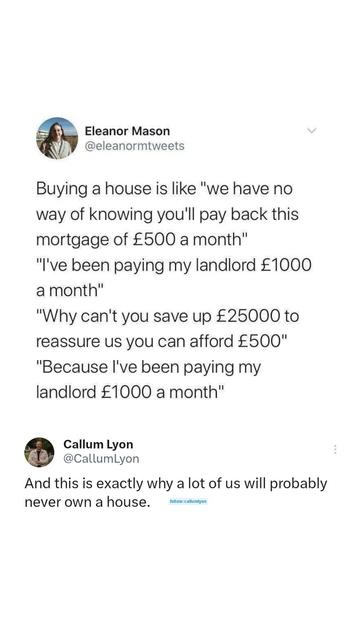
Then there’s all the expenses you didn’t know about before you bought the house. If you don’t have at least some DIY skills, you get to pay people a lot of money to fix things for you.
…BTW, the county just did a reassessment on your property and your property taxes have now doubled. In exchange, you get nothing. Congratulations.
I’m guilty of ignoring my water heaters. Had my backup start to leak and it cost $1500 to replace. So I immediately bought a new anode rod for my primary tank. Drained/flushed it and replaced the old rod which was completely gone. It was an easy task but you will need a cheap impact wrench, 1 1/16" socket and chain link anode rod to make it easy.
It’s something you need to do every couple of years. But I never do it.
Rental water heaters are some weird Canadian scam.
My ~70 year old water heater failed 5 years ago. I drove to the nearest hardware store, paid $700 for a new one, and installed it myself.
Comparing efficiency between electric and gas is complete nonsense. You need to compare operating cost. In my market, with very high electric prices, it’s $60/yr for gas tank, and $1,100 for electric tankless.
That’s true but when they double over 10 years and four schools in the area shut down due to “lack of enrollment”? Streets sure aren’t any better and my neighbor who works for the city has only had COL raises for the same past decade?
c’mon… something is going on.
Whats going on is decades of mismanagement of property taxes and city zoning. People fight tooth and nail to keep their property taxes low, and eventually the city has to do a big increase because they failed to increase incrementally. The bigger issue is how poorly we zone and design most north american cities.
The average car dependant suburb costs more to maintain than it generates in tax revenue. A denser area like mixed use neighbourhoods and “missing middle” housing fares far better and generates enough that it often ends up subsidizing the rest of the city, the same is usually true for denser downtowns. That trend is dying off as those denser areas demolish tax revenue generating businesses and homes to pave parking lots that don’t generate taxes to park cars from the suburbs that don’t generate enough taxes.
You can’t afford a home because for decades suburbs were given a massive tax break while denser downtowns (guess where the poors have to rent and ultimately fund the property taxes) have to subsidize car dependant expensive to maintain subdivisions (which is usually for middle class or wealthier people, especially when built new). Add in some racial demographics and we’ve basically engineered every city to have secret tax cuts for anyone rich enough to get into the suburbs.
The best part is, many cities are keeping the cycle going because the only way they are paying for maintaince of an old subdivision is by using the devleopment taxes and fees from a new subdivision. This is not sustainable and ultimately equates to kicking the can down the road to let a future generation figure it out (which is literally as simple as building cities densely again, as they had been built for 100s of years).
This hasn’t even touched yet on the urban sprawl, energy ineffeciency, and secondary effects of car dependancy that have all spawned from “the american dream” of suburbia. We seriously need to reconsider how we zone, build, and get around our urban spaces.
I agree with a lot of what you said but this is complete bullshit:
while denser downtowns (guess where the poors have to rent and ultimately fund the property taxes)
I have never been able to live in a “downtown” because I’m just a construction worker. So GTFO with “these poor inner city areas are funding the suburbs.” I’m in one of the nicer houses I’ve ever managed to live in and it’s primarily a shithole. You’re telling me that the people downtown are subsidizing my white-trash ass? No way.
See, it’s the opposite here. In the nearby city (pop 90k), the downtown areas are hellaciously expensive because they’re closest to amenities. The farther you get from grocery stores and bars, the cheaper it gets. It’s so weird to me that there are places where living next to shopping is cheaper than living far from shopping. It doesn’t help that the downtown apartments are being remodeled into luxe apartments and the suburbs and rural areas are where the affordable housing is being built.
The suburbs are cheaper, but you have to drive to do the shopping, and the rural areas are cheapest because everything smells like cow when it rains, and you have to drive to do the shopping.
In my area it means you can rent something out thats had nothing but the bare minimums of renovations for the past 40-60 years and still get a decent market price for the unit. The stuff that is farther out is newer, more spacious, and often considered in a safer area, so they can ask for more. You are getting a better unit farther out but you gotta pay for it vs living in something run down but saving on rent and transportation.
There exceptions of course, it really depends on the age and desirability of the neighborhood
The stuff that is farther out is newer
But built shoddier and rented out cheaper in my area, haha. You could get a newly remodeled apartment in a historic brick building for $$$ downtown or a new apartment in a building that went up in a couple months and is already leaking for $.
I think it depends enough on area that we really can’t make blanket statements.
Then there’s all the expenses you didn’t know about before you bought the house.
The cost of owning is significantly less than renting over the life of the unit. Repairs happen, but most of the time they aren’t time critical, so you can budget out the repairs over months.
…BTW, the county just did a reassessment on your property and your property taxes have now doubled
Idk where you live, but most states limit the rate at which an acessor can raise your housing price. In Texas, the cap is 10%. So your property taxes can rise, but the won’t double overnight.
You can also contest the increase. Harris has been fairly receptive to a simple “my neighbor’s house sold for X so my house should be worth about X, not X+20%”
Renting somewhere centrally located with good access to high quality transit and other amenities would likely be cheaper than owning.
I’d need to see an example. I’ve never heard of a place that was cheaper to rent than own after five years. The break point on rentals tend to be short term stays, and mostly because of the cost of real estate transactions themselves.
For public housing it can be cheaper. But that’s never going to be a centrally located high-rise.
I tell my soon-to-leave-the-nest kids:
Rent is the most you will pay every month. The mortgage is the least you will pay every month.
I’m loving them being here as full grown adults and enjoy my time with them and with our particular house they are seeing that lesson play out in real time. Some big expenses and I am the DIY dude. I don’t fuck with (big) electric or gas though, that shit can really backfire.
The other side of that is that my mortgage, even with rising property taxes and my house appreciating wildly in value, tracks less than renting.
If I could rent a place for the price of my mortgage with the cost rising at the level my mortgage does … I’d rent all day long
Yeah, that’s the thing. The market went upside down. Maybe 1993? Before that renting made sense even from a financial perspective in many areas. But now when housing is double or treble inflation? Nope. Sink money into real property at your first opportunity.
We have fucked up the entire “developed” world so much that if you start poor you stay poor and housing is a large part of that equation.
In my lifetime interest rates on mortgages went from high teens to the 3.whatever I have.
Home values skyrocketed and now the expectation seems to be this must continue.
Honestly I’m happier to pass my house on to my kid than turn a profit on it.
Rent vs mortgage - gotta put a caveat on that one.
Renting = landlord gets all the money but has to maintain the property.
Mortgage - bank gets all the money and you get a partial refund if you sell. You pay for the upkeep. A mortgage is not really an “investment”, you usually lose money on the deal if you live there. It’s cheap rent from the bank.
It basic math to see which one is better long term. Usually the mortgage wins because of of the partial return. However if you can’t do the upkeep yourself, renting is often a better financial decision.
There have been times when renting was the smarter financial decision. Like the housing bubble in 2003-2007. You could rent places for 1/2 what it would cost to buy them per month.
I always find this to be such a poor argument.
Yes unexpected maintenance can sometimes be a huge problem, especially in the first couple of years, but after that you can tap into home equity and repair say a roof. Everything else while expensive is still cheaper than renting. Using the OP’s example 1k vs 500, I can assure you you will never have consistent 500 repairs per month.
As for the taxes my city nearly went ballistic when the city increase the rate by 5%. At the end of the year it costed me $200. Per month that’s about $16. I’ve never lived in any apartment anywhere where rent didn’t increase by at least $50 per month each year. Even if someone had a home twice as valuable that’s still a very small monthly cost.
Additional once you get past the first 3ish years rent prices have greatly outpaced your mortgage and you will be saving a lot of money compared to of you were renting.
I’d like to wrap up with a question. If owning a home was such a sink of resources why do people become landlords?
Speaking to the post, I feel like there is a tipping point between OP and your points and the post is showing that. If you can convince the bank to loan you the money somehow you then start to build more capital which can pull you out of being “poor”. There are many variables and wildly varying degrees of this scenario, but once you start your ownership experience, some people can work it quite hard and build enough capital to own multiple residences and rent them out. (Those already in possession of capital are out of scope of OPs post.)
Rent is paying the landlord for everything every month. No repairs lately? Too bad, you’ll still pay for the possibility. The exchange is that you should never worry about repairs (or taxes) as the landlord handles everything. Once the landlord figures his margins are too tight, they raise the rent. Lots of variables here too and that makes blanket statements about which is better more difficult. I advocate home ownership, but I feel terrible for young people. Runaway greed by those that already had the capital has changed things. The young folks I know that are able to manage it all had help from relatives.
The act of convincing the bank and owning a home is getting more and more difficult. Impossible in many places and improbable in others without Herculean efforts. OPs post expresses this perspective.
I personally grew up quite impoverished and me and my wife did manage to get our home in medium COL area. We don’t have exceptionally high paying jobs nor did we have any help from our families. We just made a lot of effort to build our credit. We’re also not old at all under 30 to not dox myself too much.
A lot of people simply have some wrong assumptions about the amount needed to get a loan. We put down 3%, sure we didn’t get the most competitive rate and our payment is higher, but it worked out to the cost of our then comparable rent. There’s quite a few federal programs that ensure the opportunity for a low downpayment mortgage for first time homeowners.
after that you can tap into home equity and repair say a roof.
There’s no, “tapping into home equity.” There’s only extending the mortgage with more debt.
20 years ago my sister did all sorts of home improvements that she said were free because she was “tapping into equity”. Now she’s nearing retirement and complains she still has giant mortgage payments.
I never said it was free and I never said it wasn’t a debt. Like obviously it is a debt, anyone that reads “tapping into home equity” as meaning free money doesn’t understand basic finance.
It doesn’t have to extend your mortgage. You can take it out as a second line of credit as an additional loan to pay back monthly. Obviously the ideal would be to have the savings to cover necessary home repairs, but if you don’t this is typically the cheapest way to get a loan to do necessary maintenance.
Sounds like your sister used her equity to refinance her loan and recieved a payout for the difference. That’s going to restart your mortgage and is probably not the best way to go about accessing home equity.
So yeah don’t take on reckless debt you can’t payback. You can responsibly use your home equity for maintenance if you need to though.
Second line of credit or mortgage, its still debt.
Your suggestion translates to “Don’t worry about home repairs, just take on more debt to pay them.”
Once again everyone knows that is debt. Of course it is debt.
It just so happens to be the lowest interest form of debt you can take and even when added with an existing mortgage payment ia still insanely cheaper than comparable rents for the same property.
My statement is “yes homes have maintenance and that can come at unexpected costs. However you can access low interest debt if you need to. And even if you do you’ll still pay less than renting a comparable property for the same amount of time”
Please consider the whole and dont just take snippets out of context. Homes come with costs, still way cheaper than renting. You don’t have to take out a loan for home maintenance. You can, but you don’t have to.
Also, the 500 is just the mortgage payment. It doesn’t include the insurance and property taxes and, at least in the USA, private-mortgage-insurance (pmi) if the down payment isn’t at least 20%.
The monthly obligation can easily be more than that 1000. The savings is in locking the first half in at a set amount.
Yeah, and I think it's not about history, it's about mortgage initial payment, which is some% of target property cost.
And the idea that it's bad thing is just stupid. Anyone read about previous housing bubble remembers how people took multiple mortgages because you could let your house for more than you pay for mortgage per month, and as crisis hit, they couldn't repay. It was very much enabled by zero mortgage initial payments.
 Noite_Etion
 jubilationtcornpone
 Lemmyoutofhere
 MrVilliam
 jumping redditor [they/them]
 Comrade Spood
 UnderpantsWeevil
 NotSteve_