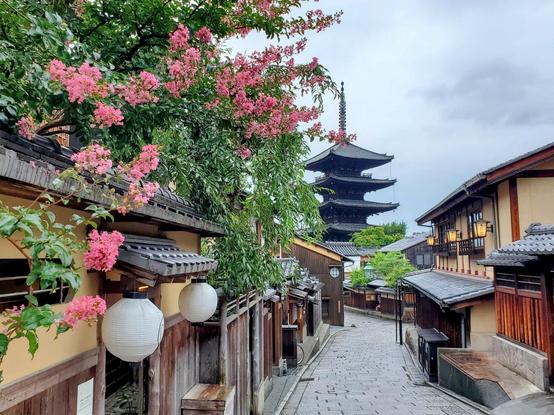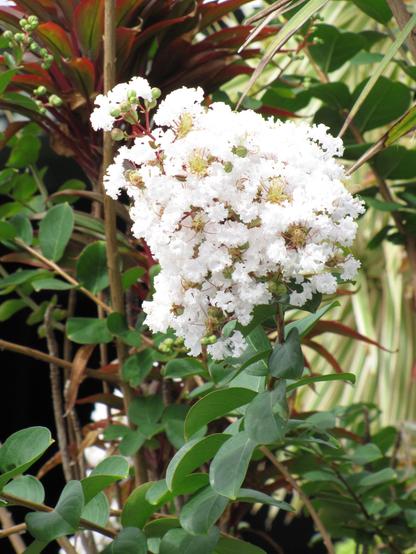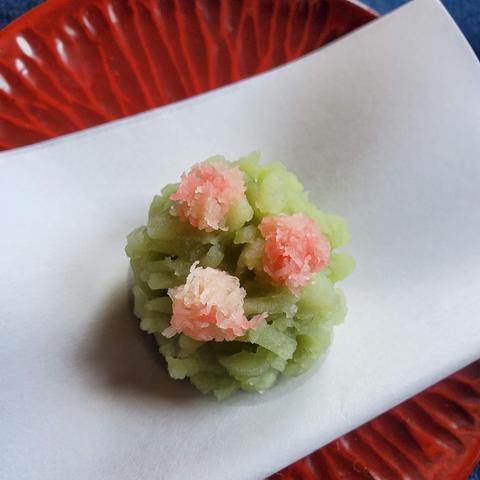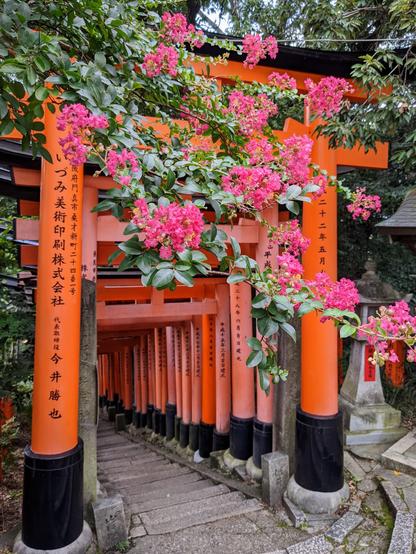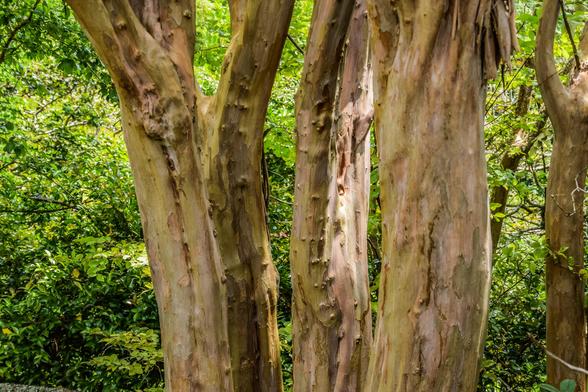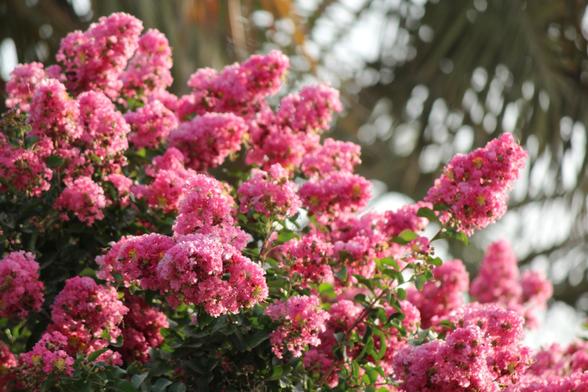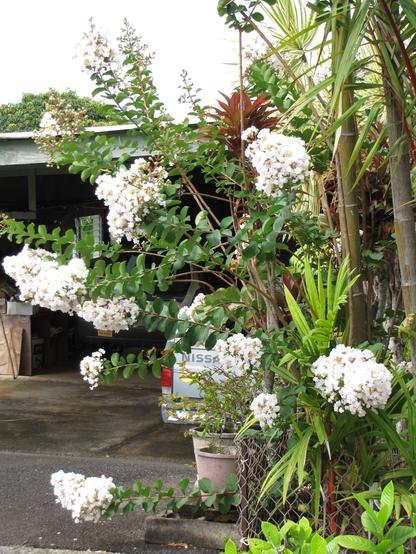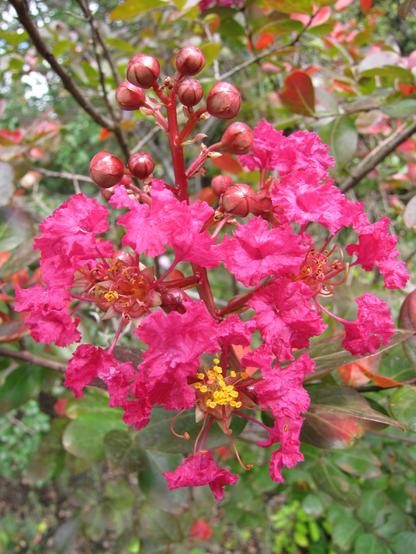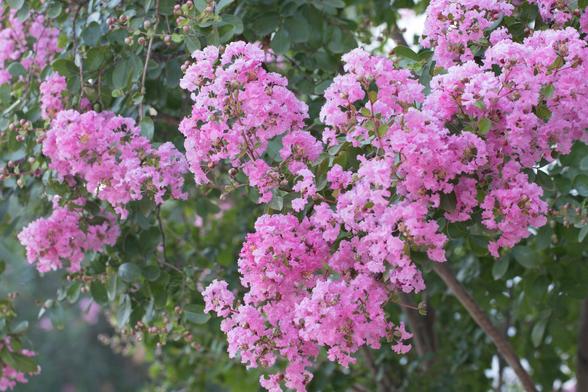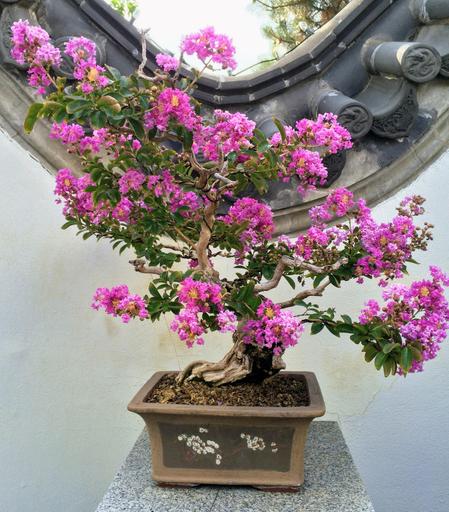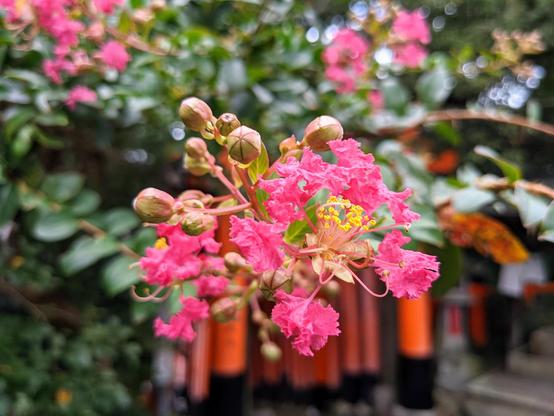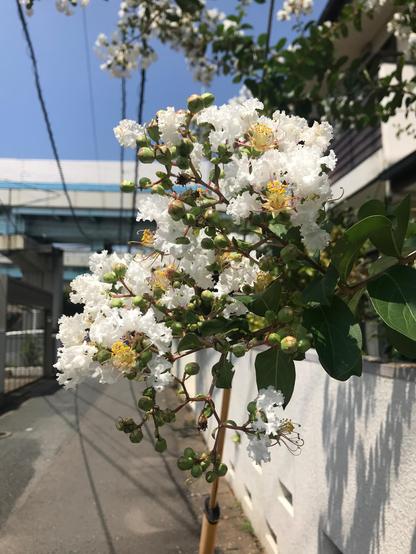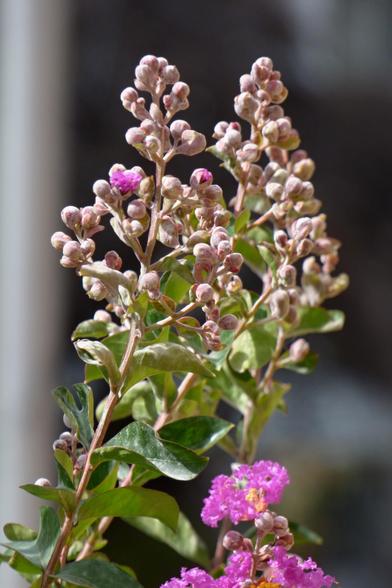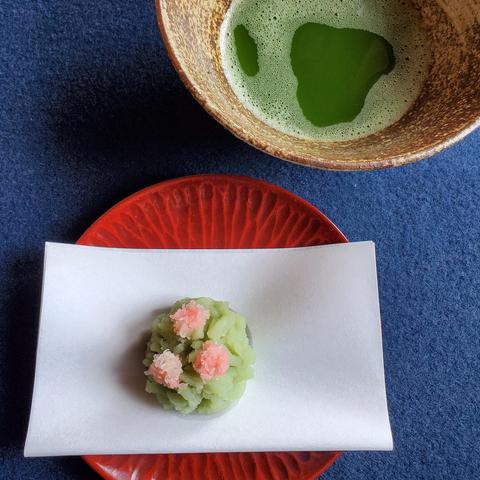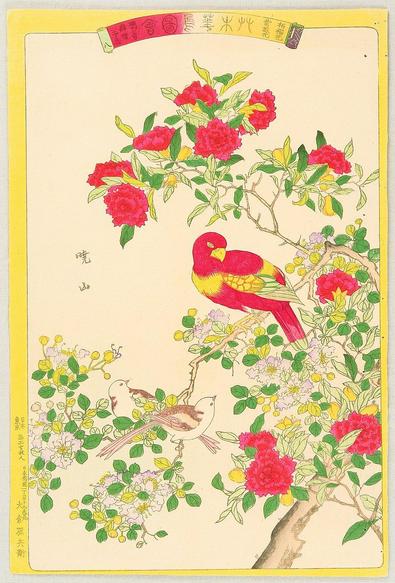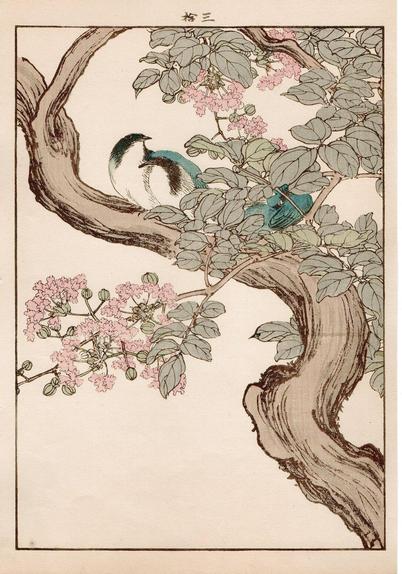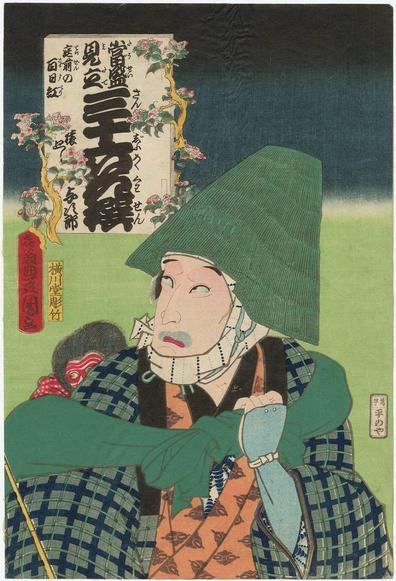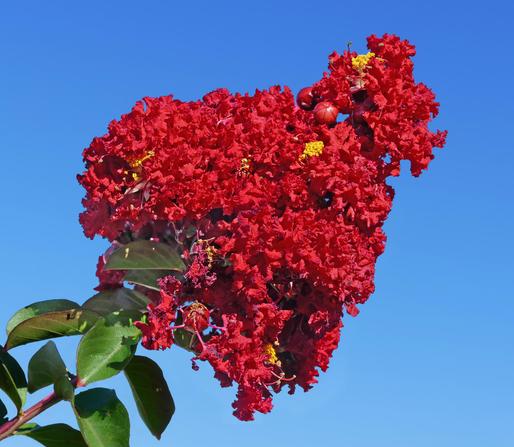
More commonly known as crape myrtle (百日紅), older generations in Japan fondly call the tree 'saru suberi' (サルスベリ the "monkey's slide").
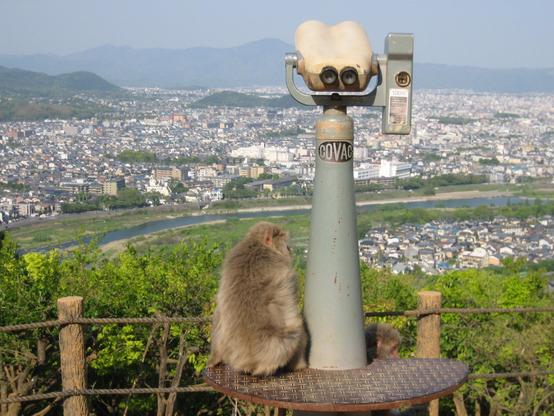
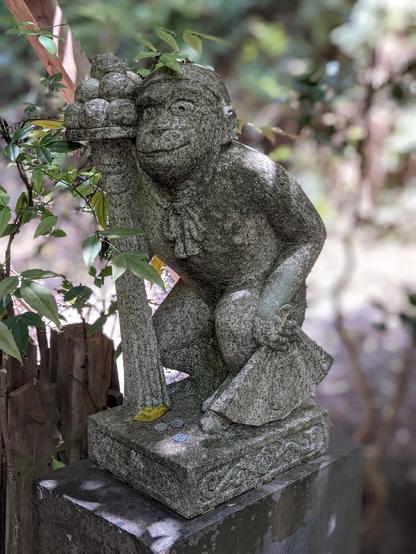
The bark of the tree is so smooth that even monkeys struggle to get a foothold!
Crape myrtle is also called 'namakemono-no-ki' (怠け者の木 the 'lazy tree'), because it sheds its leaves earlier and grows them later than most deciduous trees.
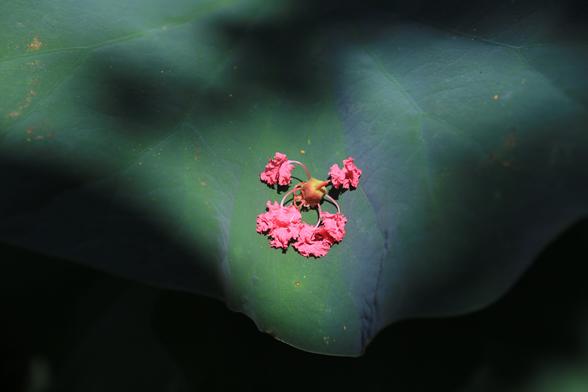
Flowers tumble down when the tree is shaken, so it's sometimes known as the 'ticklish tree' (笑いの木/くすぐりの木).
under the scorching sky
on the ground these flowers-
crape myrtle
炎天の 地上花あり 百日紅
-Takahama Kyoshi (高浜虚子 1874-1959).
In the language of flowers, 'hanakotoba' (花言葉), crape myrtle symbolise respect, speaking eloquently and innocence.
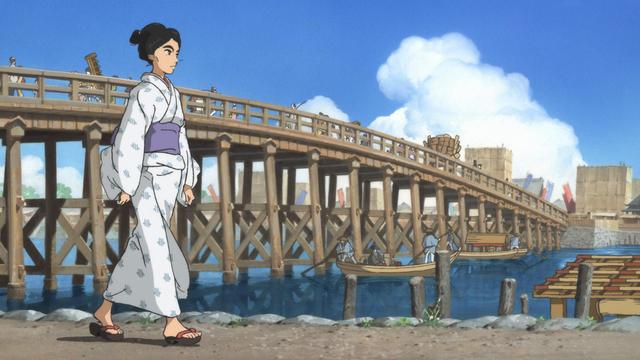
'Sarusuberi' (百日紅) is the name of a famous manga series by Sugiura Hinako (杉浦日向子 1958-2005).
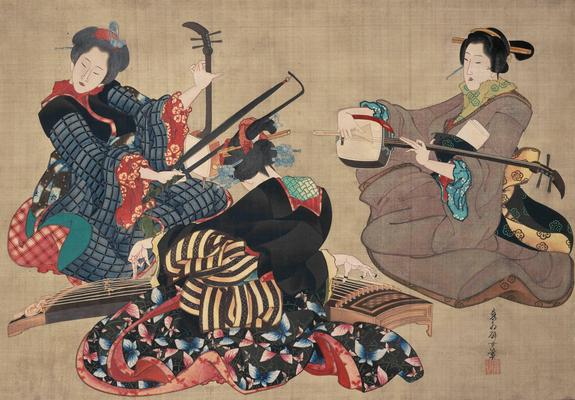
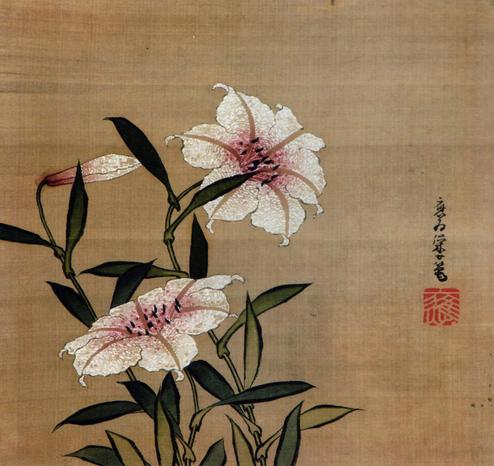
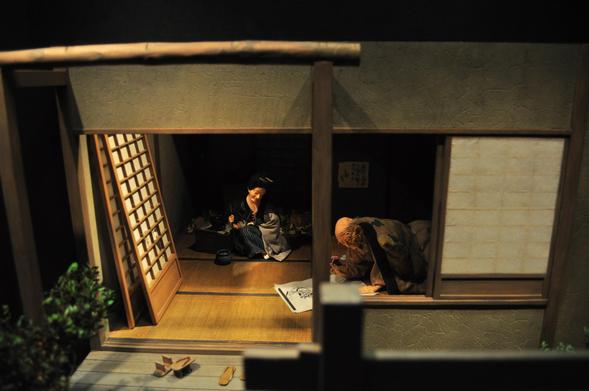
Known as 'Miss Hokusai' in English, it details the life of Hokusai's daughter, Ōi Katsushika (葛飾応為 1800-66). Sugiura compared the vigor of the crape myrtle to that of ukiyo-e.