#HackOfTheDay is free-form circuit remixing. I’m installing some Meshtastic devices which use LoRa radio (low power long range wireless). I want to use solar power but need to know how much energy I use. To do this i’ll install an electric current sensor between the battery and the device. But this device has the battery soldered directly to the circuit board, I need to get creative. 🧵
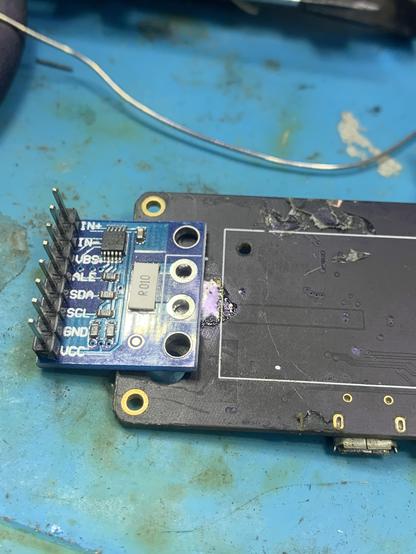
Removing the battery holder leaves me with two points to connect my sensor, the pad on the PCB and the battery holder. But I’d like to retain the firm attachment of the battery holder. My current sensor has two through-holes for these connections, but it doesn’t have pads on opposite sides, then i could just insert it into the gap. BUT: sufficiently advanced bodging is indistinguishable from planning!
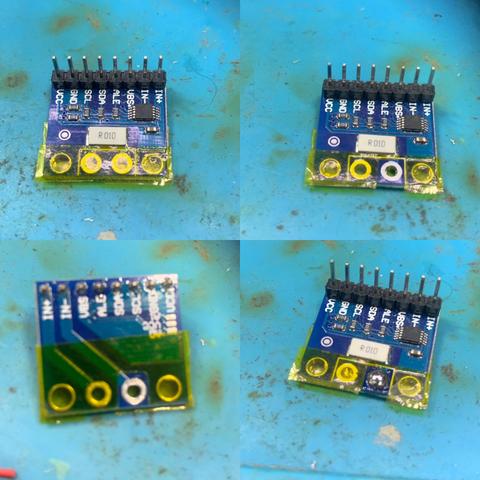
Polyimide is a plastic that is heat resistant. “Kapton” is a kleenexesque brand name that you’ll probably recognize. In adhesive tape form you might have seen this orange material surrounding lithium polymer batteries in phones and drones. What I’m going to do is cover both sides of my sensor with Kapton and then cut away two areas on top and bottom, in order to effectively get a “top pad” and “bottom pad” on my sensor.
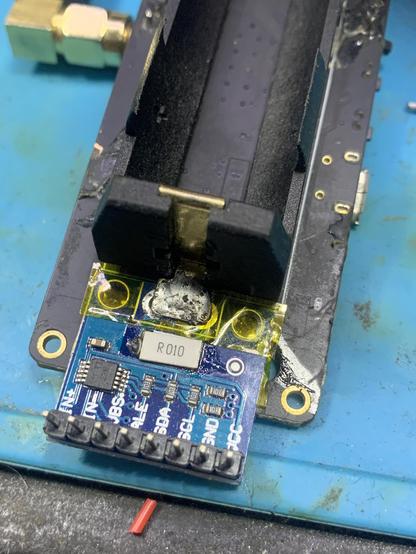
With my sensor now converted to a “wedge” I can insert it between battery and device. But did I make a short circuit? It’s hard to be sure because there is a very low resistance component between the two pads, so using a normal continuity tester is not probitive. So I hot air desolder the shunt resistor and confirm that, yes, everything connects the way it should, with no shorts.
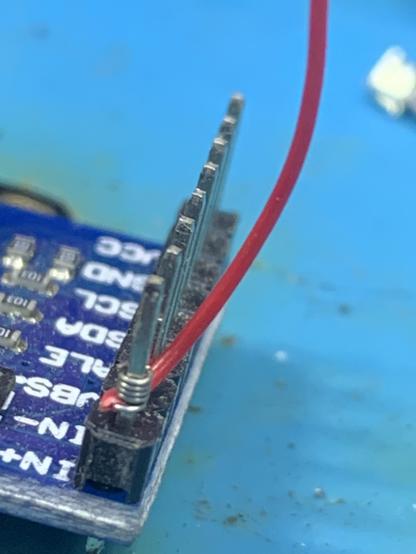
Another tool of the Bodger’s Art is wire-wrapping. Very thin insulated wire and a special tool are used to make temporary but strong connections between pins. You will find computers in museums from the 1950s and 60s made this way.
 Kit Bashir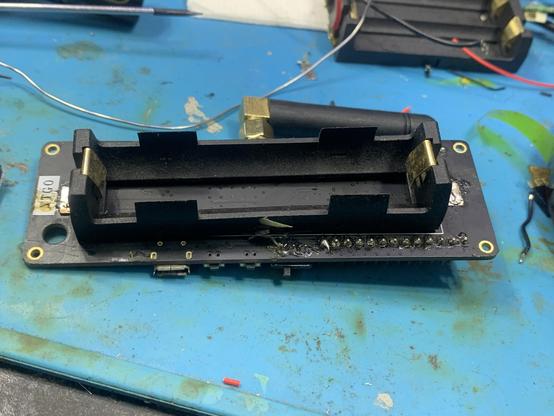


 JonnyB