A thing I'm seeing with increasing frequency from the younger members of our community is this like ...

Let me back up.

I work with some folks in their early twenties, and I am having a hard time relating to some of them. Some of them are having a hard time relating to one another.

And the root of this difficulty is propaganda, I think. All of them are constantly bombarded with video propaganda via social media. A lot of it is anti-community propaganda. Most of the media they consume is just about strengthening their disaffiliation with various outgroups. Even the stuff that's about celebrating people is, at least in passing, also about excluding or dehumanizing people.

And, for each of them, the memberships in these various in and out groups is unique. One of them has fallen in to a real trad Christian, 1950s fetishization, one of them watches a lot of stuff premised on the idea that nuerotypical people are an evolutionary dead end, and nuerodivergent people are the path forward...

It's... The specific content isn't what worries me. Like, both of those things aren't great, but the particular contents of the propaganda is irrelevant to my current point (because content can be addressed and deprogrammed.) Regardless of what flavor of self-isolating purity test content they've fallen in to, there are some common themes:

- policing other people's behaviors and desires
- shame for basically any expression of sexuality
- an outsized importance on excluding people

I'm sure there's other stuff, and I know this isn't unique to folks under 25, but it seems to be especially pervasive with them.

Social battles that I thought were long settled are not only coming back up, but also going the wrong way.

And I have to assume that this is, intentional and coordinated or not, an attempt to break any kind of solidarity that might build between people who are dissimilar.

And the worst part, for me, is that so much of this propaganda is being delivered effectively.

Effective propaganda designs itself so that any attempt to refute it instead reinforces it.

"Oh, you question the need for us to self isolate? Clearly you're secretly a member of that other group." No!

Fuck this.

We aren't here on this green and blue and increasingly hot orb for any particular reason that I can discern.

But we're here, and we're here together, and we're stuck.

So we owe it to ourselves, and to one another, to hold space for one another, to experience what this life has to offer, and to work together.

Now, you may be asking yourself 'Why would there be a bunch of propaganda targeted at younger adults and teens which appears designed to isolate them, to make them hate one another, and to make them suspicious of anyone who tries to unify them?"

And the answer, I think, is simple. We're living through the dying days of a failing empire. People are easier to control when they're alone. People are easier to keep alone when you've cultivated an idea in their minds that they're correct, and special, and the only way to remain both of those things is to remove anyone who isn't correct and special from their lives.

It's like, suddenly, the world around us is full of millions of microcults, each with its own understanding of language, and its own secret interpretation of common actions.
You couple that with the way that so many folks (my age and older, certainly, but especially 15-20 years younger) have become so completely dependent on the dopamine feedback cycle their cellphones deliver, to the point that some of the kids I've been tutoring present most of the same symptoms as gambling addicts, and you've got a recipe for a bad time.

I feel like that last bit needs to be unpacked.

I work with kids on a volunteer basis. I mostly do reading tutoring, which consists largely of giving these kids situations in which they are motivated to read, and then trying to remove obstacles.

The other part of what I do is focused on helping kids develop healthy and safe relationships with technology.

A lot of the kids I work with are autistic or have some other kind of learning difference that has left them falling behind other kids their age, but some of the kids I'm working with right now are seemingly NT and reasonably well adjusted. They're smart, but also they're between the ages of 8 and 12 and reading on a first grade level at best.

I work with their teachers and their therapists and their mental health professionals and their parents to figure out what can be done, what motivates them, where they're doing well and what they struggle with.

I did this kind of work less before covid, but some. Since covid, I've kind of stumbled smack in to the middle of it. (One of my closest and oldest friends is dating the director of the special education non-profit affiliated with our local Montessori school. The director is my wife's best friend. Their kids are among the group I'm working with.)

Pre-covid I was mostly working with the children of affluent families as a result of the area that we lived in. These kids mostly didn't have access to technology at all, outside of a classroom setting. Within the classroom setting, that technology access was heavily mediated.

Now I'm working with a combination of fairly affluent kids (it is a private school, after all) and very much not (we're in rural north GA, and associated with a non-profit that provides various needs based scholarships.) It is like I'm living in a different universe though. I don't know how much is covid (I never worked with kids in this area pre-covid), but discounting that, the biggest difference between the DC area kids I was working with 5+ years ago and the kids I'm working with now is technology access.

I'm in a kind of unique position, because I'm not a teacher.

I'm mostly playing games, making puzzles, curating books and video games and movies, and helping parents build strategies for encouraging reading.

I'm doing this with access to these kids teachers, but also their diagnoses and IEPs, and occasionally support from other professionals.

And what I'm seeing is terrifying.

The first thing I want to point out is that every parent tells me some variation on "oh he's so much better with this stuff than I am" w/r/t tech in general and it's just not true.

None of these kids are good with technology, not even a little bit. Some of them have grown adept at navigating the menus on a Nintendo switch, or have learned some tricks to cover their tracks when they're doing something they're not supposed to on a smartphone, but across the board they have a fundamental lack of understanding of even the basic principles of most of the tech they interact with.

What they're good at is getting to the thing that they want. They're good at this not because they are good at technology, but because they're desperate, and have nothing better to do.

Over the years, I've done some work with some people who were addicted to various drugs. Meth is the big one around here, but I've worked around and with folks with various chemical dependencies.

Saying these kids are good with technology is like saying those folks were good at chemistry.

What they're good at is getting a fix.

The tech of choice for most of these kids is YouTube.

That's what they want.

When they can get it, they use speech to text to search for what they are after, and then use pictures to pick which video they'll start with.

And then they just sit. Sometimes they'll skip a video or pick one off the list, but mostly they just sit and stare until they get caught.

None of these kids have intentional unrestricted YouTube access on any device, but they're desperate and they've got free time. They find all kinds of cracks and gaps that let them get to YouTube.

When they aren't on YouTube, they're on whatever slot machine mechanics wrapped around a children's media franchise mobile game has attracted their attention that month.

Most of the kids I work with don't have smartphones or tablets (some of them do) but they've all gotten pretty good at giving mom a convincing reason to hand hers over.

I've been struggling, lately, because most of the tools and techniques that I've used to motivate kids in the past aren't working anymore.

Their TV shows are hyper-stimulating. Their video games are hyper-stimulating and have a dozen baked in slot machine mechanics. (Even the benign looking games, hot wheels racers and the like, are full of random draw lootboxes.) Everything is designed to maximize their attention and keep them coming back.

We used to describe video games as "addictive" as if that was a good thing, when it was rarely true in even extreme circumstances. Now it's just true most of the time, and obviously bad.

When I was 8, I'd have rather done literally anything else than to sit quietly and do nothing.

I'd stare out the window, listen to music, read a book, draw, ask questions, tell stories, play solitaire. If I was going to need to be quiet and in the same spot for a long enough period of time, I would even do practice math problems to pass the time. Anything to keep things moving.

But these kids I'm working with now would rather sit and be miserable (and they are clearly, obviously miserable. Frankly, suffering to an extent that exceeds my expectations) instead of reading or writing or drawing or whatever.

I might be able to get their attention for a few minutes, but eventually it wanes and then they'd rather do nothing, when doing nothing is causing them a great amount of distress, than have to put the work in to do something else.

At first I thought I might be imagining things, so I started talking to parents and teachers and therapists and support folks.

And all of them have noticed the same trends, but from a lot closer. They've been boiling the frog, you know? Setting a new baseline each year for how attention span work, and really only ever considering this year's group against last year, or this kid against where they were a year ago.

They all agreed the problem was increasingly bad, but none of them had really given a lot of thought to the extremity of it or it's source (because it's not what they're working on, most of the time. Most of what they're working on is improving, so the "short attention span" thing gets chalked up as a generational divide or an old man yelling at clouds situation, until they stop and pay attention.)

I, on the other hand, took a few years off from working with kids and then came back to the same age group and found it to be a fundamentally different experience.

But then I pointed out the trends. I pointed out how these kids would rather do literally nothing than read a book. How the only thing that seemed to motivate them was the promise of access to video games or streaming services which, by and large, seem to be making the problem worse, and I started working with these professionals to build plans to dig out of this hole and ...

Nearly across the board they confided in me that they were also seeing these issues with older kids. The few who work with kids and adults mentioned that it was also starting to creep in to the conversation with the adults they work with, sometimes with seniors.

And that this increasingly dependent technology relationship seems to also frequently coincide with conspiracy theory belief, self isolation, etc.

Which is where we started the thread.

The effort / reward ratio is all out of balance. Reading is too much work for too little reward. 3/4ths of the video games they try are the same. Broadcast television? Forget about it. No where near rewarding enough.

So we have a generation of kids growing up with a severe and frequently life impacting dependence on a dopamine reward cycle facilitated by technology, and getting fed to algorithms designed to maximize engagement at all costs, which generally means isolating them from their peers and pushing them towards more and more extreme content.

They would increasingly rather do literally nothing, in spite of the fact that doing nothing leaves them in a kind of discomfort that is akin to spiritual anguish, than anything that requires more than a minimal level of effort.

And we have a bunch of adults who are barely out running the same beast, who are falling victim to the same patterns. With the adults, they usually have at least some defence mechanisms against this stuff. They can usually read reasonably well. But the algorithms are more aggressive, and the gambling mechanics come with dollars attached, and it's not just that the things they're consuming are hyper-stimulating, it's specifically that these things are aggressively isolating them from their peers and alienating them from their own decision making.

That last bit "alienating them from their own decision making" is the real crux of my concerns.

We're ceding our agency in the things we consume and the ways we communicate to machines designed to make a profit, and they profit off of us by alienating us further from our own intentions and agency.

And then "AI" enters the picture.

Most of the above to say this:

This is not an old man yelling at the sky. This is not "the youth are wrong, trust me a middle aged man."

People in their early 20s are struggling to form social bonds to a significantly greater extent than they were in the already socially isolated climate of 10 - 15 years ago, and are increasingly falling victim to technologies designed to capitalize on this.

People younger than that are developing such flawed relationships with these same technologies that it is fundamentally altering how they view and interact with the world.

And, all the while, we're being turned against one another.

@ajroach42 Oh. Stop. Stop. (I have to stop. I'll keep going in a minute.)
@ajroach42 about a decade and a half ago I (incorrectly) predicted we’d be in a similar situation but with VR – that never actually came about, but I imagined it would ‘trap’ people in an earphone/eyephone immersive world, and a lot of science-fiction writers had imagined this sort of outcome for much much longer. I think what saved it from being compulsive if not addictive was a couple of things: one; it isn’t as pleasant an experience as it should be, and two: there was never any such thing as an open VR platform which anyone could participate in freely all the time all day with everyone else, without ‘signing up’ or paying money to participate, because what ended up happening was each of the VR manufacturers were isolated from each other (app stores, vendor lock-in, walled garden, whatever the buzzwords are) so there was no free interchange with anyone else you knew unless you were also on that platform.

I often wonder what would happen if YouTube had to shut down for a day, or a week.
@ajroach42 noticed this trend in ourselves, even if we haven't gotten to that kind of extreme as these kids (probably cause we grew up very differently and having that influence early in life is probably more impactful). we used to read a lot and nowadays it's hard to get into. reading long form nonfiction isn't in the cards at all, a long article can be challenging. yeah we also have ADHD but it's not just that. we can still read fiction if we really get into something and then it can become all-consuming. happened a few years ago where we read more books in a few months than we had in the preceding 10 years. but we can only really make it happen every few years at best. really hard to get away from the fast reward feedback loop.
@ajroach42 They're kids. No obligations. They have time to go a month without. Give them a total embargo for a month, in a shared effort with their parents, and look what happens, they might open up for activities and social interaction. Teach them patterns of behavior, show 'em hobbies they can do. To be honest, these kids might never have known an alternative to their parents phones, you gotta give them a space without digital distraction to see that alternative.
@ajroach42 the wild thing is that I'm almost 30 and uhhhh this post feels like it pretty accurately describes me, and that's ignoring the fact that I disabled my YouTube watch history so I basically only have my subscriptions to go off, don't use TikTok, and I specifically avoid games with lootboxes and other gambling mechanics o.o
@ajroach42
I believe it, I've seen it with myself. I think I have a mild Internet addiction stretching back to 2007-ish
@ajroach42 what time scales are you talking about? post-2012? post-2020? or has this developed more recently?

@ghostynewt I started working with kids on reading and technology in 2006, while I was in highschool, in suburban GA as part of a volunteer program through FCCLA and skillsUSA

I continued after graduation, working informally through 2012 working with that same org and most of the same kids. We moved in 2012, and I took a few years hiatus. I picked it back up on 2015 or 2016 with another organization based out of the DC area.

When we got back to GA in 2020, I started with a group of two brothers that has expanded to 10 kids as of this year. The issues I've encountered with getting the kids to read started with the 2020 batch.

The microcult/anti-social cohesion thing was in the air in 2015 and earlier, but it didn't have much traction. The incels and MRAs were in the fringes and didn't have much power. Lots of folks were arguing about these kinds of topics on Tumblr, etc. But it wasn't nearly as all consuming.

I do not see much of this purity test/all or nothing behavior in my coworkers who are currently over the age of 25. I also rarely see them in their phones in the workplace. I see it a lot in my coworkers who are between 18 and 24, and I almost never see them without their phone out and an earbud in.

Much of the content mirrors the kinds of arguments that were in the air when I was that age, but with a level of extremity and certainty, a kind of all consuming identity shaping thing, that makes the stuff I grew up with look very small.

@ghostynewt when I've spoken with teachers and other professionals about reading ability and reading education, most of them have said something like "the last few years do feel harder" and then when I've drilled in for specifics and asked them about what books their first years and third years were reading ten years ago vs what they're reading now (or a similar question) they've pretty much all had a slow dawning look of terror cross their face.

One teacher I spoke with in particular said that her fifth year students in 2025 are at the same basic competency as her first year students in 2020, which was a fairly extreme case. A few other teachers talked about, or pulled reports from, 2010 - 2015 to compare to 2020 - 2025 and pretty consistently found that more than half their students were "on level" or "advanced" in the former range, and less than 25% are now. (In the same school, in the same demographic area, in a time of increasing affluence and funding for this school in particular.)

@ajroach42 startling to me is how much of my younger self- and my younger sibling- I see in this post.
I hope it's a comfort that, although I still struggle with just doing what's easiest, I'm surrounded by friends, very engaged with the world beyond what's in front of me, and I've basically taken anything algo driven off my own machines. Sometimes I fall into that trap, like you said, and just staring at a wall is better than doing anything that requires effort; but usually, after unplugging for a little while, reinforcing some good habits, that goes away.
@throatmuppet absolutely same, and I'm worried that these skills, to recover, will be lost.

@ajroach42 this is the bit that terrifies me. Combine it with all of this AI hype that's effectively telling you that you no longer need to *do* anything, and you don't have to read between the lines much to infer that the intended endpoint is that everyone is effectively an isolated consumer who's just trying to steal any spare moment to have dopamine beamed into their brain by the colourful lights.

It feels like a death of shared meaning, and an outright attack on the idea of shared struggle.

@ajroach42 I'd say nature-based learning sessions, or writing, reading, storytelling or art sessions -- without phones -- might be the solution. The kids will scream and make a fuss, or go into a funk -- but it's like being addicted to a drug. They'll have to go through DTs (V-DTs?) before they can break the addiction. Or perhaps even do nap time? That's doing nothing without a phone being involved. Playing cards might be good too. I mean, what do these kids do during a blackout? Stare at blank screens? It sounds like their imaginations are becoming atrophied. Sadly... What could spark them back to life?
@ajroach42 I guess it's best to minimize screentime, but I do a free software time-slot at a local free night school. The old machines are set up for people to see what they can get with an old computer.. but mostly kids and moms just do GCompris, TuxPaint, Tuxtype... That they can keep themselves entertained offline might be the biggest plus? One of the night school kids was over for a party and got two other kids (all ages 5 to 9) all banging on the keyboard with TuxType Comet Zap. Not sure how constructive it is yet But no money/privacy worries!!
@bsmall2 I love that. I'm not convinced that minimizing screentime is helpful, I just want it to be an active choice rather than a passive one.
@ajroach42 Yeah.. I'm flexible on screentime, but if they're going to be on screen it should be done right, I guess? They should be using apps that are ethically developed. I've only got glimpses to work with but my anecdotes give me warm fuzzies towards TuxType: you play to feed fish to a penguin, or protect the planet from comets.. I saw a girl on a Switch or something kicking wolves to death, in Japan! where the wolves are already extinct to the everlasting detriment of the ecology! Kids can spend a lot of time on GCompris....
@ajroach42 I came across one of my recent posts and thought of you...
https://kolektiva.social/@DoomsdaysCW/114602919724673450
DoomsdaysCW (@[email protected])

"It’s really important for a kid to be left alone"- When #TaikaWaititi made his feelings clear about the role of tech in children's lives By Sourav Chakraborty Modified May 03, 2025 04:54 GMT " 'Exactly, now they’ve all got iPads and it’s done for them! I think it’s really important for a kid to be left alone and left to figure it out for themselves how to pass the time. As a kid, I spent so much time bored and coming up with ideas of how to do things, so I’d write stories or I’d draw pictures or invent worlds through drawing or just in my head, just thinking about things. I think that a lot of my creativity has really come from being bored.' " [SO TRUE!!!] https://www.sportskeeda.com/us/movies/it-s-really-important-kid-left-alone-when-taika-waititi-made-feelings-clear-role-tech-children-s-life #SmartphoneAddiction #TechIsDumbingUsDown #NoAI #Imagination #LudditeClub #NeoLuddites #Luddites #LessScreenTime #MoreBoardGames #MoreGreenTime #MoreOutdoorTime #FlipPhones #MoreBooks #Smartphones #TechAddiction #TurnOffYourPhone #BePresent #ThinkForYourself #ResistTheMachine #NoSmartphonesForKids #MoreGreenTimeLessScreenTime

kolektiva.social

@ajroach42 One problem I see is that many mainstream video games aimed at kids are hyper addictive in the "Our crack team of neuroscientists have optimized this experience to maximize dopamine release which will maximize the volume of kids screams for their parents to pull out their wallets to buy more skins/loot crate/Roblox Robux or whatever it's called.

The nature of vido gaming has changed. I still own my #Atari 800XL from the 80s. You know why? Because I can walk up, plug in a cartridge, play for 5, 10, maybe 15 minutes, and walk away satisfied and with a modicum of stress relieved. And they have a finite ending. You play, you keep playing until you die, and then you STOP :)

Wow I'm in full bore old man mode here. YOU KIDS GET OFF MY LAWN AND PLAY GAMES LIKE PAC MAN AND DIG DUG LIKE I DID!

:)

@ajroach42 yep. "tech of choice" is an excellent phrase for this flavor of addiction behavior. Wherever the gap is, they'll work it - Pinterest? Ok, I'll take a hit - but to just sit blissed? YouTube, man.

And we can draw all kinds of lines between tech and behaviors and judgemental - my kid going to Scratch, or Ocarina of Time, same hunger, different, gateway? Idk. I'm replying to you instead of watching birds at dawn, idk.

@loppear @ajroach42 I think there is a very different character between a creative experience like MIT Scratch or even Minecraft a scripted experience like traditional game, or even a movie or TV show, and the endless slot machine of short videos being algorithmicly presented that are just text-to-speech synthesis of Reddit posts or other utter bullshit, or bullshit Roblox games which are just gambling trying to entice you to pay money to make a number go up. The difference for me is how passive the experience is, a game can be active social play, a video can be educational, but endless scrolling of bullshit rots the brain.

@ajroach42 stepped away from screens for a while and didn't want this to end as tossing my hands in the air or seeing all equivalency, as your thread importantly goes to reaffirming agency.

There are clear lines here, that my parents pointed out to me, that I hope I'm illuminating for my kid, in suspicion of manipulation: advertising, gambling, peer pressure... though idk how to draw the line of suspicion outside of conspiracy. Here we are again, older too.

Stay loose without losing it.

@ajroach42 OK, grampa, thanks for telling me MTV is super bad.

Literally all '80s I heard my choices in entertainment were destroying my brain, culture was abandoning traditional values, is that a boy or girl?, games I played were either "not art" (fuck Ebert) or Satanic.

We weren't competent to fix cars or repair anything (actually because they were computerized).

Programming was called useless until suddenly it was in demand, now it's "useless" again. OK.

@ajroach42 And we *were* divided into factions. Ha ha Breakfast Club, but I spent 6 years in constant hell because I was a Nerd/Stoner dual-class, and the Jocks and Young Republicans were allowed to beat us up. Not a joke, assault was not considered a crime.

Even/esp at my age, I *do* watch a lot of yustub or Twitch. It's the way we share half our culture, and the rest is in stupid places like reddit or f*c*b**k.

Put on a stream of something I like and get some work done, or veg out.

@ajroach42 It is true the younger generation are illiterate. Sometimes we say "functionally" but really they can't read more than a few words in a row and understand the meaning. Giving them a complex textbook is futile.

But there were millions of years of pre-literate people, then 4000 years where it was for the elites only, then 3 centuries where everyone had to read. Might be heading back to Roman times where you hired a scribe (bot) to read to you. Paging Marshall McLuhan.

@mdhughes I think you've misunderstood my statements here, but it also feels like you've done so intentionally so I'm not sure there's much point in the following clarification.

Largely, I don't have a problem with the content of the media these kids are consuming. In some cases, some of it sucks real hard, but mostly I don't mind it at all.

The fact that they're all basically illiterate is worrying. The fact that many of them would rather do literally nothing than anything other than passively consume algorithmic video feeds is worrying.

But my concern is for the ways that they, and to a lesser extent all of the rest of us, are being exploited.

@mdhughes I think that, if you're seeing the nerd/stoner/Jock divide as analogous to the kind of algorithmically enforced social isolation I'm talking about here, perhaps you haven't spent much time around the folks I'm discussing in these posts.

@ajroach42 I have kind of a wide net of follows/followers here and tumblr and such, and the nerd kids are still pretty fucked up and chased to death by their version of jocks, but now it's social media bullying which is maybe worse?

There's an OK show on Netflix, Adolescence, which shows Olds (younger than me) trying to understand what Kids Today™ are thinking, and failing.

@ajroach42 OK, gramps, the kids are being exploited but we were free minds and the CIA MK-ULTRA, Crack For Contras, promotion of "Modern Art", John Birch shit, was all completely innocent.

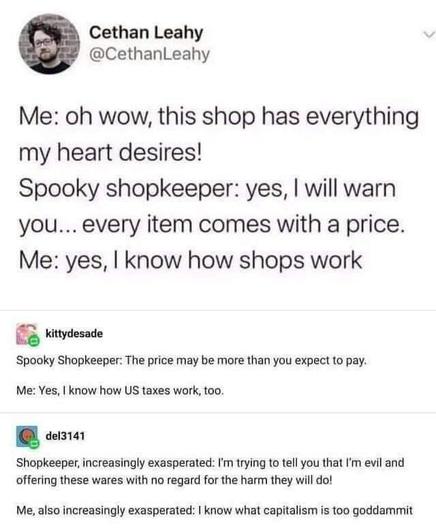
I feel like this is the cursed item shop thing.

Yeah, no shit last gen hates next gen's idiotic entertainments, and oh they don't Protestant work ethic like in our day, 6am to 9pm in the mines puts hair on an 8-year-old's chest!

They're not more addicted than GenX was to MTV.

@mdhughes except they absolutely are more addicted to their tech than GenX was to MTV.

That's what I'm saying.

Major psychiatric journals are publishing new studies about this every few weeks (and most of those are based on 5+ year old data, and pretty much all of them show a problem that is worsening and accelerating.)

I'm working with, at this point, dozens of professionals who are all pretty convinced that we've passed "this generation's preferred methods of entertainment are scary to us" and have entered "Oh, this is harming them on a fundamental level."

Some of these kids are exhibiting actual withdrawal symptoms when their tablet access is restricted. Two weeks ago, I had to pull a 10 year old off of an adult who he had pulled to the ground and was beating, because he lost his turn on his switch.

These aren't isolated anecdotes, they're symptoms of a widespread problem.

I get that you're devoted to this idea of being an contrarian curmudgeon on this issue, but I ain't enjoying it.

@ajroach42 And Dungeons & Dragons causes teens to run away or suicide (huh, might've been some other factors? NO! Blame the entertainment damaging their BRAINS!)

I am generally a contrarian and curmudgeon, sure, because most things are really stupid, and I have to sit thru it.

But kids being "addicted" to the only releases they have from a shit world, and it being hated by adults, is not new. The unending stream of anti-drug and juvenile delinquency propaganda from the 1950s on is not new.

@ajroach42
Interesting views and I concur that there is an issue with the under-somethings, and I do feel that accessibility of the internet, generally speaking, is the fault line. Instead of asking other people when you want to find something out (or going to the library) it's too easy to go online and believe what it says; there's no intermediary helping you understand the information. Ditto the whole "I want to be an influencer when I grow up" as if that's actually serious. The web and internet are massively beneficial but have also led to a widespread 'dumbing down' where the loudest media wins.

@AlisonW I don't think it's limited to kids, that's just where I've been most exposed recently.

I think we have reached a line in modern tech driven capitalism that will land us at A Brave New World in short order if we don't examine it and push back.

@ajroach42 The reason for the 'youth' reference is that they've not experienced much of an alternative. Newspapers are even more the mouthpiece of their owners, as are tv channels. Unless you grew up with having to do your own research / confirmation of what you heard then why would you suddenly start now it all appears to be done for you?

Smoke and mirrors 2.0

@ajroach42 I spent time w/ a mom & 2 boys 4 and 8 and ... YES. Kids YouTube and they're placid and occupied; w/o it the little one is constantly whining.
They did enjoy smacking lanternflies with fly swatter, but ... similar fast feedback.
@ajroach42 My kids would find their way into YT via ads in their other apps that embedded YT videos.