 Gork
GorkI would still download a car if I could. 🚗
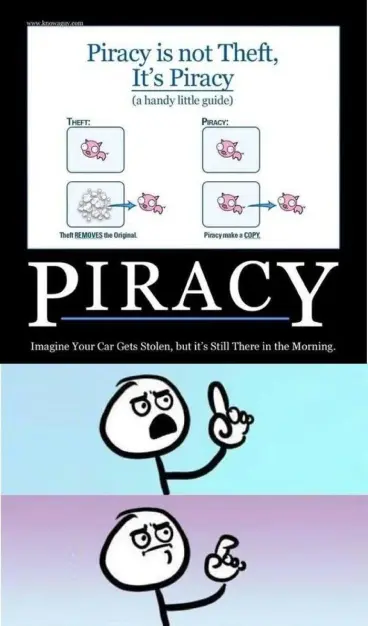
Disclosure: I have been sailing the seas for years, but…
This logic does no justice to the objective financial harm being done to the creators/owners of valuable data/content/media.
The original creator/owner is at a loss when data is copied. The intent of that data is to be copied for profit. Now that the data has been copied against the creator/owners will, they do not receive the profit from that copy.
Yes yes the argument is made that the pirate would not have bought the copy anyways, but having free copies of the content available on the internet decreases the desire for people to obtain paid copies of the data. At the very least it gives people an option not to pay for the data, which is not what the creator wanted in creating it. They are entitled to fair compensation to their work.
It is true that pirating is not directly theft, but it does definitely take away from the creator’s/distributor’s profit.
the pirate would not have bought the copy anyways, but having free copies of the content available on the internet decreases the desire
Also, the person deciding whether or not they “would have” paid for it, has a strong incentive to kid themselves that they wouldn’t. Imagine if cinemas worked that way, and you could just walk in and announce that you weren’t going to buy a ticket anyway and since there’s a seat over there still empty it’s not going to cost them anything for you to sit in it. They’d go out of business by the end of the week.
Also also, either the thing you’re copying has value that arose from the effort of creating it, or it doesn’t. If it’s of value, then it’s reasonable to expect payment for it. It’s it’s not of value, then you shouldn’t miss not having it.
Also also, either the thing you’re copying has value that arose from the effort of creating it, or it doesn’t. If it’s of value, then it’s reasonable to expect payment for it. It’s it’s not of value, then you shouldn’t miss not having it.
Doesn’t this contradict the whole rest of the argument? It either has value or it doesn’t. It being available for free somewhere doesn’t change the value. If it’s not of value, then they shouldn’t miss you having it.
Again, the point is you were saying (or agreeing) that copies being available for free decrease the value. You then later say it has intrinsic value.
I’m not arguing that they don’t have intrinsic value. I’m arguing that you undermined the point of value decreasing if it exists for free by admitting this. It doesn’t. It’s worth something no matter what someone else paid, and no matter what you paid.
A game decreasing in price over time isn’t doing so because it’s worth less (usually, with the exception of online games). They’re decreasing the price to capture customers who don’t agree with the original valuation. It doesn’t change value to the consumer based on the price changing. The object is not suddenly less valuable when there’s a sale and more valuable again after. It has a degree of “goodness” no matter what. The price doesn’t effect this.