 originalucifer
my kid is movin to AU
my kid is movin to AUhttps://moist.catsweat.com/m/australia@aussie.zone/t/1312427
my kid is movin to AU
my kid is movin to AUhttps://moist.catsweat.com/m/australia@aussie.zone/t/1312427
Be careful of the summer sun.
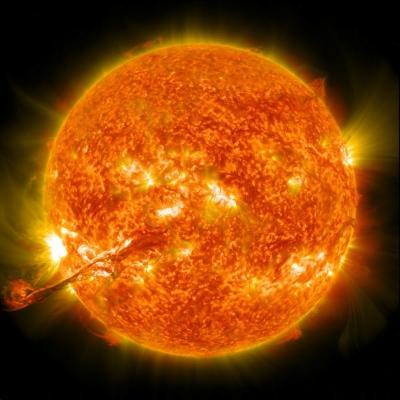
The sun isn’t always a fixed distance from earth. It’s closest in January, which is winter in America but in Australia that’s summer. So they should be ready for hot summers with a high risk of skin cancer.
There’s probably more to worry about in the tropics (invasive species like kane toads and fire ants especially) but I don’t live in the tropics so I’ll leave that to someone else.
The sun isn’t always a fixed distance from earth. It’s closest in January
Forgive me if I’m just missing a joke, but it’s not about the distance, it’s about the angle. In the summer the angle means the days are longer, and sunlight travels through less atmosphere (and is therefore less attenuated) before it reaches you and gives you sunburn.
No, it’s not the angle. The sun’s orbit isn’t exactly symetrical, it’s a bit lopsided. In January the sun is about 5% closer to earth.
In the Northern hemisphere this is during winter, so it’s the best of both worlds. In Australia though it’s the reverse. We get extra dim winters and extra bright summers.
Ummm...
"No, it’s not the angle."
Wrong. Axial tilt IS what causes our seasons, NOT the distance from the sun.
Speaking of the sun, "The sun’s orbit isn’t exactly symetrical..."
The sun's orbit? Around what? The centre of the Milky Way?
You’re not 100% wrong. Zero_gravitas answered my comment about the apsis with a comment about the seasons, and I called them wrong even though technically they were just referring to the wrong topic. I was right though, the perihelion occurs in January and the anhelion occurs in July, and that this means the sun is closer to earth during Australian summer than it is during American summer.

 Tenderizer
 Fuse
Fuse