 Health3
We've just added DHEAS to Health3! This crucial hormone influences several body systems according to research. Here's what science tells us about DHEAS and why tracking your levels matters: 🧵
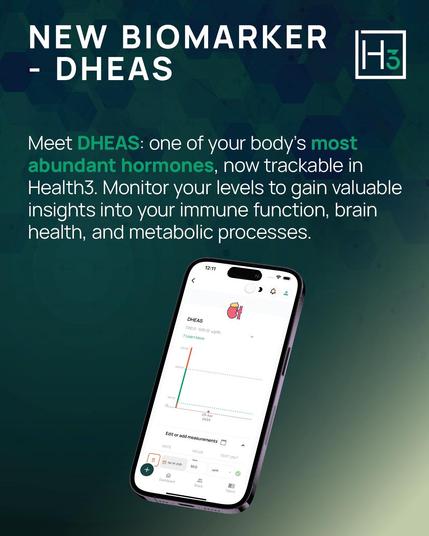
We've just added DHEAS to Health3! This crucial hormone influences several body systems according to research. Here's what science tells us about DHEAS and why tracking your levels matters: 🧵
📊 WHAT IS DHEAS?
Dehydroepiandrosterone sulfate (DHEAS) is one of the most abundant circulating steroid hormones. Produced mainly by your adrenal glands, it serves as a precursor to both male and female sex hormones.
📊 AGE-RELATED PATTERNS:
Research shows DHEAS peaks in your 20s, then declines approximately 1-2% yearly after age 30 (Samaras et al., 2013). This well-documented decline has been studied in relation to various aspects of aging.
📊 RESEARCH-BACKED FUNCTIONS:
Studies show DHEAS:
- Influences immune function and inflammation (Prough et al., 2016)
- Has associations with cognitive function (Sorwell & Urbanski, 2010)
- May potentially affect other metabolic processes*
*Research ongoing in metabolic areas
#HealthResearch
📊 CLINICAL CONNECTIONS:
Research indicates DHEAS levels may be altered in:
- Adrenal insufficiency (significantly reduced)
- PCOS in women (often elevated)
- Stress conditions (variable effects)
Tracking provides context for these health situations.
#HormoneMonitoring
📊 INTERPRETING YOUR LEVELS:
Normal ranges vary by:
- Age (decreasing with age as shown by Samaras et al., 2013)
- Sex (typically higher in men)
- Laboratory methods
Health3 provides relevant reference ranges based on these factors.
#LabResults #PersonalizedHealth
Start tracking your DHEAS levels in Health3 today. Understanding your hormonal baseline and changes over time can provide valuable context for discussions with healthcare providers about your overall hormonal health.
🔗 www.health3.app
#HealthTracking #HormoneHealth