 The Conversation U.S.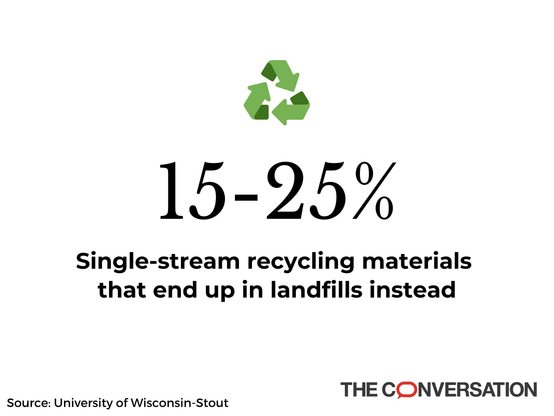
How it works: Mixed recyclables are shredded and sorted in recovery facilities using magnets, screens, and gravity. But contamination can ruin the sorted plastics.
A breakdown of U.S. recycling by millions of tons shows about two-thirds of all paper and cardboard gets a second life, but only about a third of metal, a quarter of glass and less than 10% of plastics do ⬇️
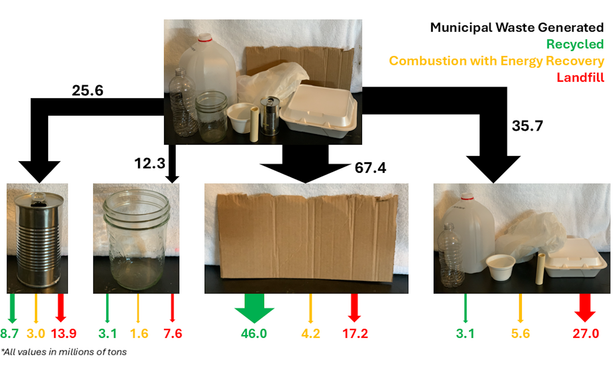
Plastic is a major challenge, but the numbers within the triangle on the container show what kind of ease it breaks down.
PVC (3), LDPE (4), and Polystyrene (6) are hard to recycle due to harmful additives and their tendency to tangle machinery.
Easier plastics to recycle: PET (1), HDPE (2), and Polypropylene (5) are more commonly recycled, though they still need to be separated properly.

What the numbers on the bottom of plastic bottles and containers mean
Advanced methods like chemical recycling (e.g., solvolysis) break down plastics into reusable monomers, but these methods raise concerns about toxic fumes.
And mixed plastics (like yogurt cups and milk jugs) can’t always be recycled together. New technologies are helping improve this, but we need better habits too.
Wash containers, avoid plastic bags, and know your local program’s rules. Small changes make a big difference!
The goal? A circular economy where materials are reused and waste is minimized.
https://theconversation.com/how-single-stream-recycling-works-your-choices-can-make-it-better-250017
