This is Sechi Katō (1893-1989) in 1918. It's her graduation photo from a women's college in Tokyo.

Eventually she would become the first woman principal investigator at RIKEN, Japan's national chemistry & physics institute. She faced incredibly daunting hurdles before then...

1/7

#WomenInSTEM

...Katō had left school early to help support the family by being a school teacher. They were struggling after her father died.

Her mother and 2 of her siblings had died when she was a baby: The house on the family farm caught fire after collapsing in a massive earthquake.

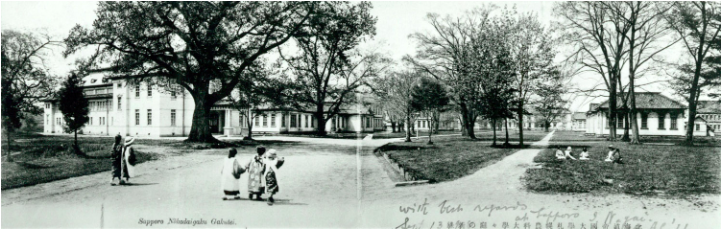
However, her stepmother, Kin, encouraged her to move to Tokyo & continue studying. After spending days at the door of Hokkaido University's president begging to be admitted, Katō became the uni's first woman student...

2/7

...Uni was hard. Women's schools hadn't prepared her enough. Classes were in several languages. Gender barriers were massive, and she was bullied. She had to keep teaching on the side.

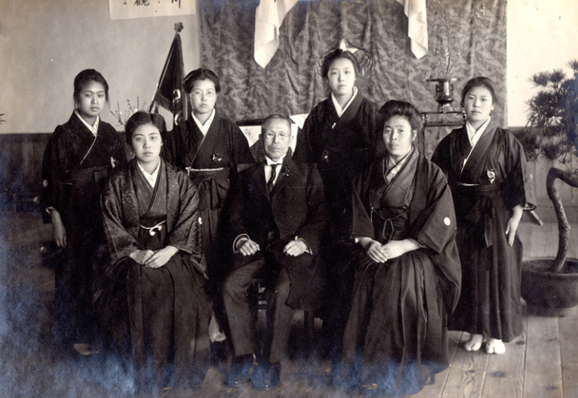
Katō thrived nevertheless. Here she is in 1921 with teaching colleagues. That year, she graduated from uni & could leave teaching. She married & gave birth to her son.

Now she faced additional barriers as a married woman. Forging a scientific career with a marriage and children was another first in Japan...

3/7

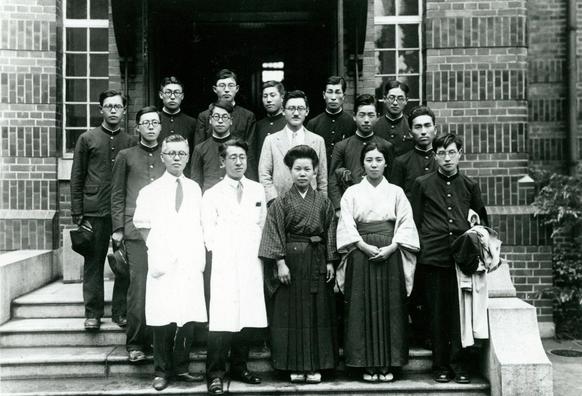
... Katō's career in science began when she graduated & became an assistant at the Uni's department of agricultural chemistry.

This photo shows her with colleagues at Hokkaido University - Katō is the woman with the white shirt in the front row.

In 1924 and 1931 she gave birth to her 2 daughters. Her stepmother, Kin, lived with the family to help her manage work and family...

4/7

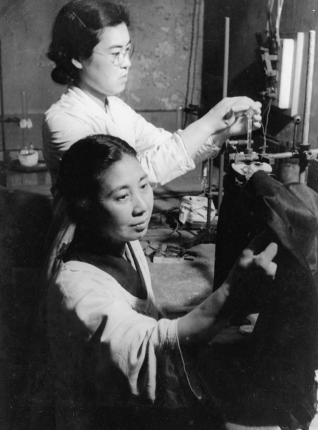
...In 1922 Katō started studying and working at the prestigious RIKEN – here she is in the lab.

She co-authored her first publication in 1923. Katō got interested in quantum physics. Watching a physicist do an optical experiment gave her the idea of using the equipment to study molecules. So began a long series of experiments in absorption spectroscopy.

During World War II, RIKEN turned to war-related studies. In 1945, Katō's son died in the battle for Iwo Jima...

5/7

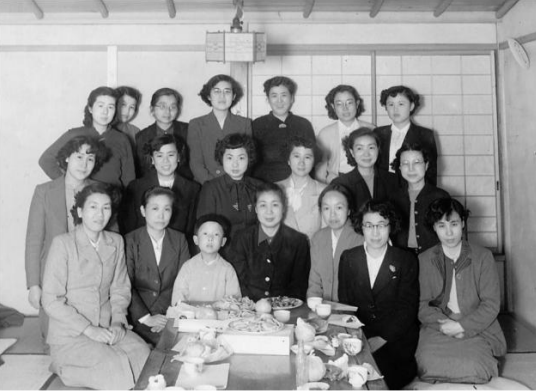
...In 1953, Katō became the first woman principal investigator at RIKEN. Here she is at a celebration for her achievement.

After the war, she studied the new antibiotics, penicillin & streptomycin, including developing pure streptomycin crystals....

6/7

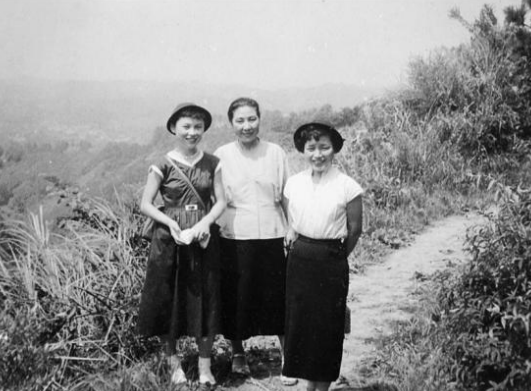
...Katō employed women in her lab - here she is hiking with co-workers in 1955.

She worked to progress women in science in Japan, including helping found the Japanese Society of Women Scientists in 1958. After retiring from RIKEN, she gave monthly science seminars to women for 15 years.

She died of a stroke aged 95 in Tokyo.

RIKEN has a program for women early career researchers named for her.

I've just created a Wikipedia page about her: https://en.wikipedia.org/wiki/Sechi_Kat%C5%8D

7/7

Sechi Katō - Wikipedia

PS.... Katō was awarded a doctorate in science in 1931 from the Kyoto Imperial University. She was the third woman in Japan to gain a Doctorate in Science, and the second in chemistry.
@hildabast Katō and the woman next to her seem to be wearing a kimono with a hakama (pants / skirt(?)) over it :-)
At least as far as I can tell as an amateur kimono fan :-)