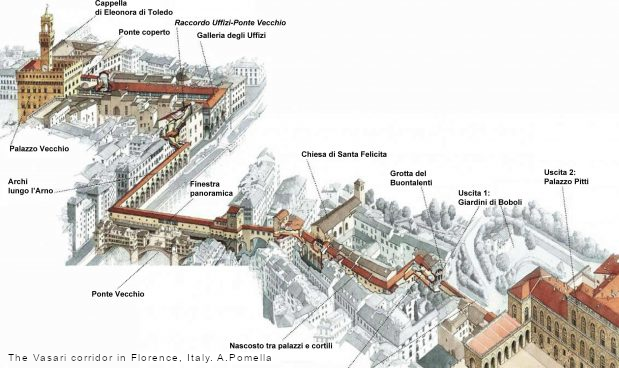
Let’s talk about resistance after a conqueror takes power. Specifically let’s talk about this bendy yellow building, and what it shows us about the moment the Florentine Republic finally fell to its kleptocratic/proto-capitalist banking-fortune Medici conquerors 1/?
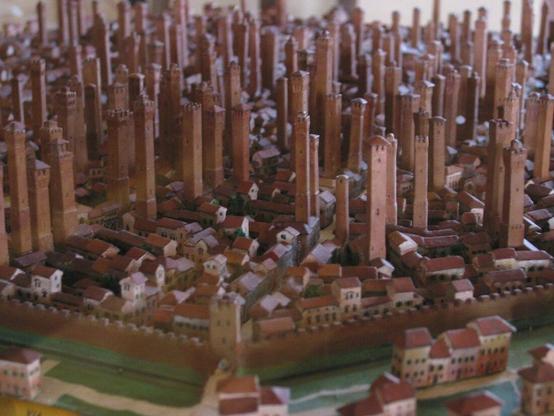
Last week, I talked about how Renaissance towns used to be full of tall stone towers, built by rich families as mini-fortresses, & Florence got sick of people hiding in their fireproof towers while setting fire to rivals’ houses & letting things burn, so they made everyone knock the tops off https://buff.ly/4fYnHCH 2/?
The Lost Towers of the Guelph-Ghibelline Wars – Ex Urbe

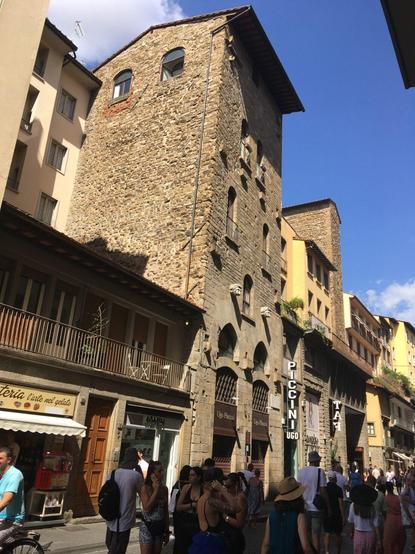
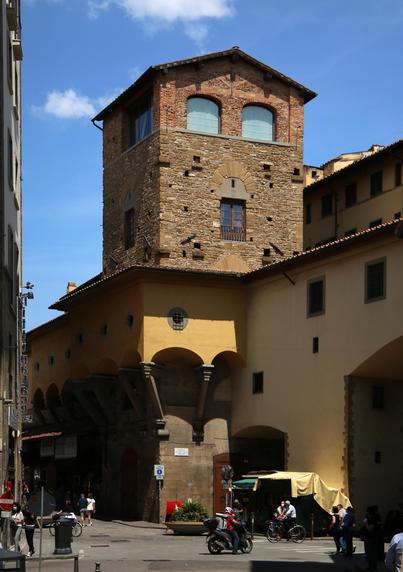
Centuries later, the stubs of former towers were still conspicuous, and owning one was a mark of prestige, that you were rich & powerful *before* the tower ban. Tower nubs symbolized patrimony and stability. With can now recognize our yellow thing going around one of these nubs. Why? 3/?
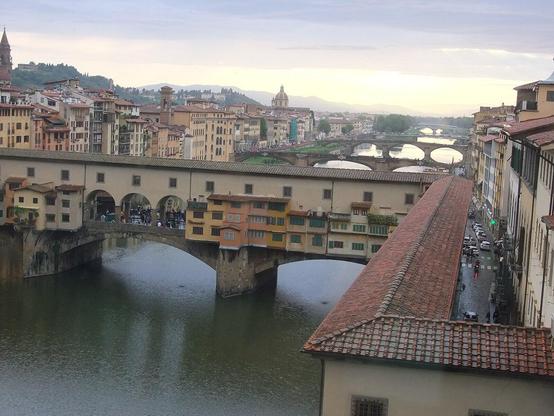
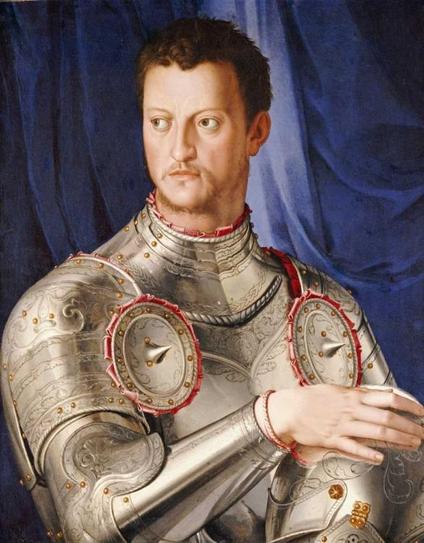
The iconic Vasari Corridor was built by a conqueror who feared his people. This lovely yellow walkway over the bridge connected the old seat of government (which he symbolically had to occupy) to the new palace where he lived, keeping him from assassination behind solid walls. 4/?
It was an architectural show of force, as all the families with property in the way were pressured to submit to the new duke’s demand to let him build his walkway over their roofs or even through their homes. It was also a show of fear, perhaps best personified by the fact that 5/?
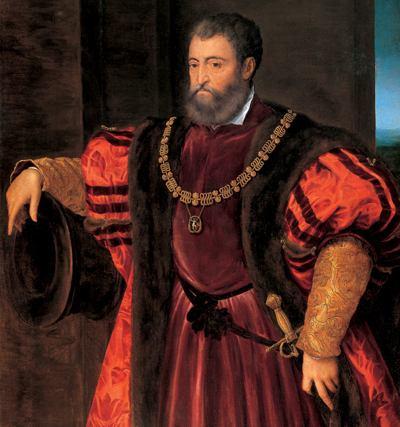
around the same time that Duke Cosimo built this fortified commuter lane to avoid his people, his neighbor Duke Alfonso d’Este of Ferrara used to walk around his city buck naked (with his dick in one hand & a sword in the other) to show off his confidence that no one dared touch a d’Este. 6/?
@adapalmer *laughing* Ada, you have the BEST stories. (And you were saving this one *just for today*, weren't you? :D )
@stonebear It did feel topical. 😄