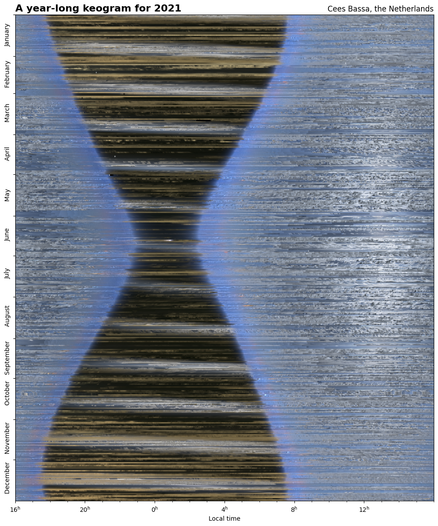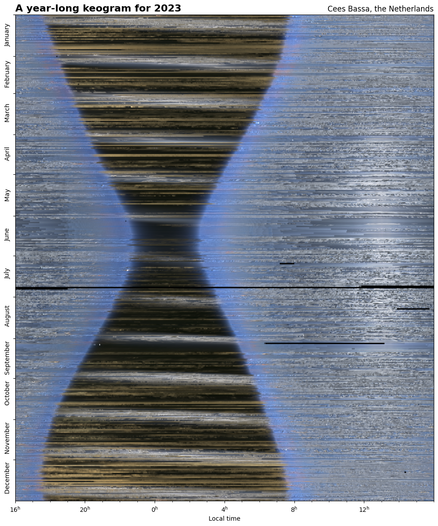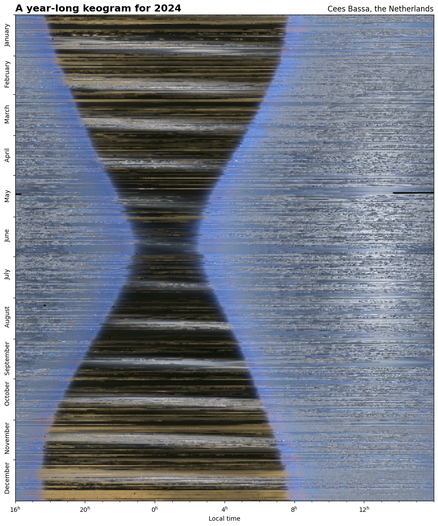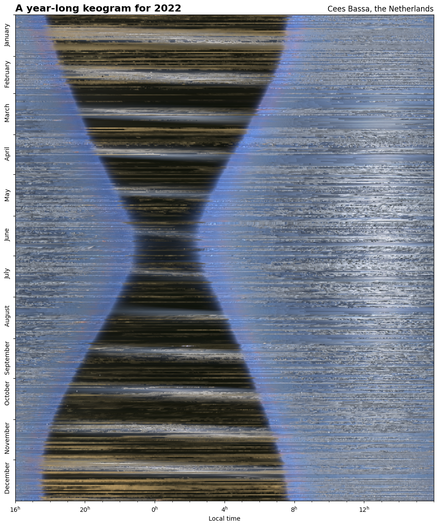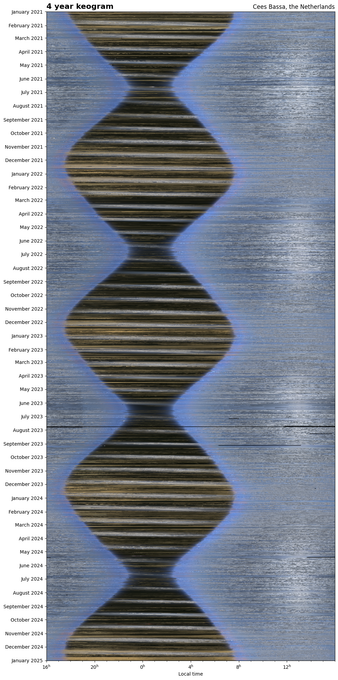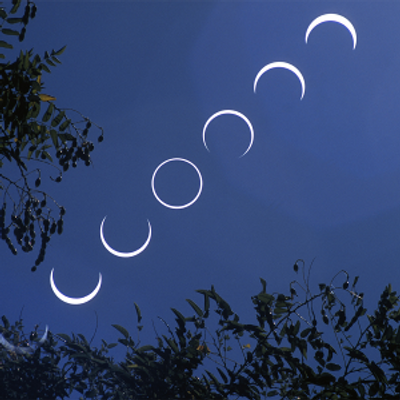
For the 4th year in a row, my all-sky camera has been taking an image of the sky above the Netherlands every 15 seconds. Combining these images reveal the length of the night changing throughout the year, the passage of clouds and the motion of the Moon and the Sun through the sky. #astrophotography
The year-long keogram is constructed from daily keograms, where each daily keogram takes the central pixel column of the all-sky images of each successive image to show motion in the sky. This video shows the all-sky images for a 24h time span and the resulting keogram shown below.
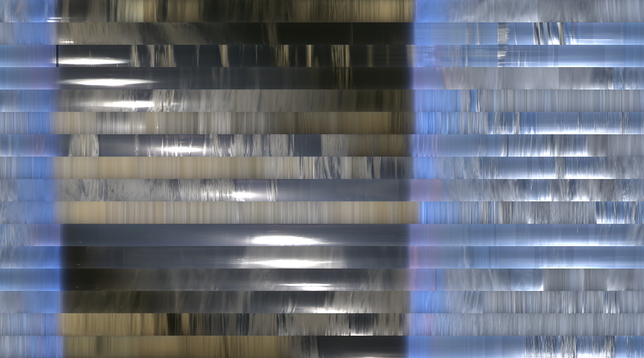
Zooming in on the daily keograms, the motion of celestial objects becomes clear. These daily keograms from January 16th to February 2nd 2024 show the Moon moving across the sky. It starts at sunset near first quarter, culminates around full moon, and ends at sunrise near last quarter.
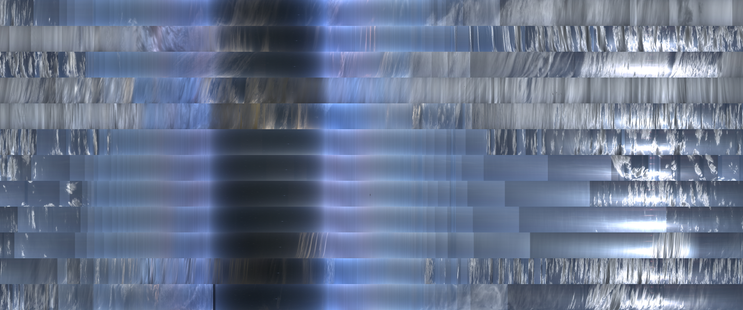
Similarly, the stars move across the sky. During June, when the nights on the Northern hemisphere are short and the sky does not fully darken, the bright star Vega is high in the sky. Over these 12 daily keograms, we see Vega moving slowly left by 4 minutes every day.
During 2024 there were two nights with Northern Lights that were relatively clear. The keograms of those nights captured the colors and motion of the Aurora Borealis. Keograms were specifically designed to study the Aurora: https://victoriaweather.ca/keogram.php.
School-Based Weather Station Network -- Keogram, Single Image of All Day Sky Cloud Conditions

Weather Station Network of Climate Modelling Group of the School of Earth and Ocean Sciences, University of Victoria, Victoria, British Columbia, Canada

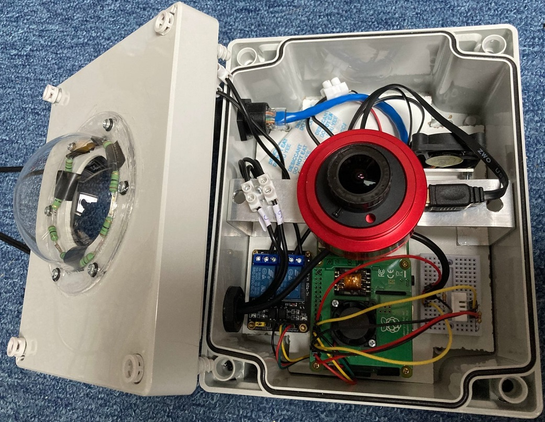
The all-sky camera consists of a ZWO ASI178MC color camera with a 2.5mm F/1.2 fish-eye lens. A small Raspberry Pi computer operates the camera and sets the exposure time and camera gain based on the sky brightness. It also controls a dew heater and a fan to prevent condensation on the acrylic dome.
I am amazed that this setup has been running smoothly for over 4 years now with almost no problems. The 24/7 operation is required to be able to make these year-long keograms, and I am happy that I can just leave the camera running for such a long time without things breaking (knock on wood).
It is interesting to compare the shape of the 4 separate year-long keograms. The shape of the hourglass stays the same, but the diagonal bands of the Moon moving over the sky change from year to year.
Combining the 8.4 million individual exposures (2TB of data) into a single keogram covering the 4 years from 2021 upto 2025 shows the repeated change in length of the night, and also highlights the small differences in sunset and sunrise times due to the eccentric orbit of the Earth around the Sun.
@cgbassa very nice! Do you mind if I ask what software you use? I have a ZWI that's been failing continuously with AllSkeye and it's default software this last year (overheating the computer, freezing up)...
@AstroHyde My software is based on that of the Raspberry Pi allsky software repository: https://github.com/AllskyTeam/allsky I tested out their code back in 2020 and am still using the framework (web controls, automatic start etc), but wrote my own capture code in python to use different exposure logic. (https://github.com/cbassa/asm/blob/master/capture)
GitHub - AllskyTeam/allsky: A Raspberry Pi operated allsky camera

A Raspberry Pi operated allsky camera. Contribute to AllskyTeam/allsky development by creating an account on GitHub.

GitHub