1/
📢 New Report: No Escape: The Weaponization of Gender for the Purposes of Digital Transnational Repression.
We examine how gender shapes digital transnational repression—where governments target, suppress, and surveil activists across borders using digital tools
📖 Read the full report: https://citizenlab.ca/2024/12/the-weaponization-of-gender-for-the-purposes-of-digital-transnational-repression/

No Escape: The Weaponization of Gender for the Purposes of Digital Transnational Repression - The Citizen Lab
Building upon our prior research and the contributions of other scholars to this field, the aim of this novel study is to understand the security risks and harms caused by digital transnational repression against exiled and diaspora women human rights defenders.
2/ Our report findings draw on the lived experiences of 85 women human rights defenders originating from 24 home countries and residing in 23 host countries.
This map shows countries of origin of the participants
3/ Key findings:
1️⃣ Exiled WHRDs face politically motivated digital attacks using a variety of technologies
2️⃣ Top perpetrators of gender-based DTR: gov of home country,or state-related actors
3️⃣ These attacks are gender-based
4️⃣ Targets are WHRDs involved in transnational advocacy
4/ The Hidden Toll of Gendered Digital Transnational Repression:
🔸On mental health & wellbeing,
🔸Sense of security & social relations
🔸Activism and professional work
5/ Participants shared that the responses of host states were insufficient, leaving them feeling compelled to manage the situation on their own. As a result, they developed their own coping mechanisms and resistance strategies.
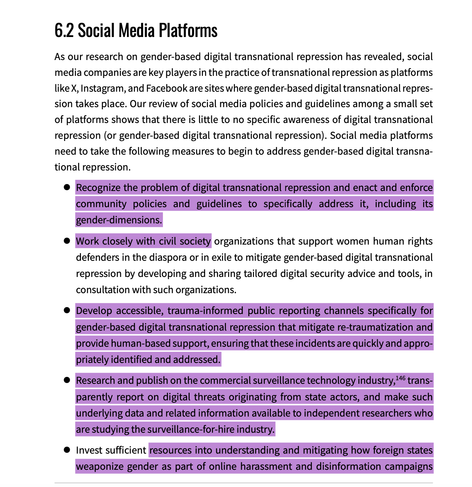
6/ Social media is essential for exiled WHRDs, but also a space where they face significant threats.
🔹 Content moderation often fails, especially in non-English contexts
🔹 Platforms were unresponsive to gender-based digital transnational threats
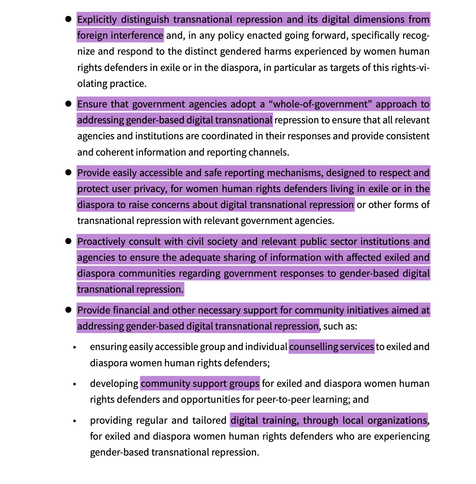
7/ Recommendations:
Host states must respond effectively to address transnational repression, including its digital and gender dimensions, ensuring institutions receive training on gender-based digital repression and immigration-related issues.
 Noura Aljizawi