 Dare Obasanjo
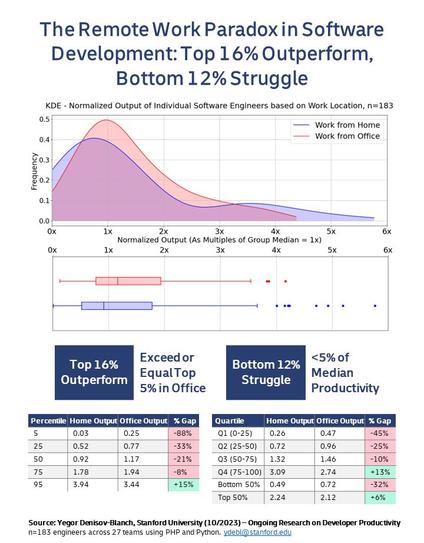
The datapoint that the top 16% of remote workers outperform the top 5% in-office while the bottom 12% of remote workers underperform the bottom 5% in-office seems intuitive.
If you’re a top performer then gaining 1-2 hours a day from not commuting makes you more productive. If you’re the kind of person who needs help to get the basics done, then being on Slack versus in the office is worse.
RTO is penalizes top performers due to underperformers not being able to handle the freedom.
 Bartleby's Corpse