So, I listen to several podcasts by people who are the children of Indian immigrants to the US, and I swear there's a very slight accent feature, where the K sound is closer to a G. So, e.g collection is closer to gollection, or company is toward "gompany." Is this a thing? Possibly it's actually a California accent, since most of them are in the Bay Area, but I don't think I've heard it elsewhere.

In general, is there a study of kids-of-immigrants' linguistic features?

There's stuff like this with older Jewish kids of immigrants I've observed in my family, but it's hard to disentangle from older NY/New Jersey accents plus sprinkling Yiddish, and a hard-to-duplicate way of saying "oy." But I don't know that I've noticed specific consonant or vowel shifts like that.

@ZachWeinersmith

I've wondered about this, even with regional things. I was born and raised in the Midwest, but my parents were both from the northern Rockies region.

I always thought that my grandparents pronounced things funny, so I clearly didn't have the same accent they did, but friends pointed out that my vowels sounded funny compared to everyone else's.

@ZachWeinersmith I'll second the NY/NJ/Jewish monkeywrench. My father grew up around San Francisco, adopted before he could speak by a woman from a french family who had arrived in 1850 and a Jewish man who had recently fled Germany (this was 1945). He (my father, SF native) has what some people clock as the hint of a NY accent.

🤷‍♂️

@ZachWeinersmith Geoff Lindsey has an interesting video on this kind of aspiration. https://youtu.be/U37hX8NPgjQ
Speech is really SBEECH!

YouTube
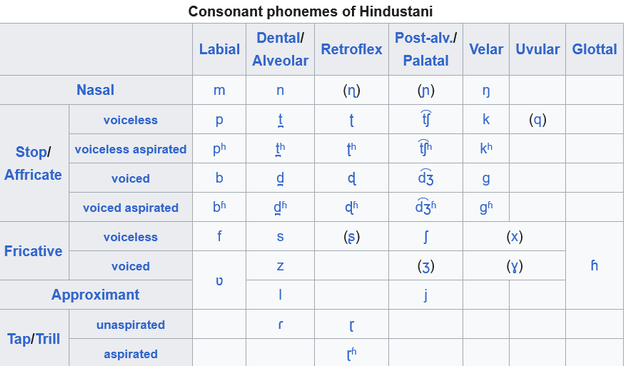
@ZachWeinersmith Wikipedia says Hindustani phonology has both consonants, so it would be strange
@timhenke @ZachWeinersmith however Tamil doesn’t. A sizable chunk of Bay Area Indian immigrants are Tamil. https://en.m.wikipedia.org/wiki/Tamil_phonology
Tamil phonology - Wikipedia

@trshash84 but that's exactly the wrong way around!
@timhenke yeah. Many people have no idea what to do with those extra letters and might over correct… speaking as a Tamil person…
@ZachWeinersmith Is that feature what linguists call "initial voicing"?
@ZachWeinersmith A Galifornia accent, you mean?
@ZachWeinersmith Wikipedia mentions this exact thing as being a feature of Indian English: unaspirated p, t, and k. https://en.m.wikipedia.org/wiki/Indian_English#Consonants
Indian English - Wikipedia

@ZachWeinersmith Oh that's definitely a thing, all over the world, in all combinations. I don't know any studies, sorry. Looking forward to reading what you find!

@ZachWeinersmith I don't know about second generation speakers generally, but Hindi and related languages distinguish between voiceless aspirated and unaspirated consonants. To speakers of languages, like English, that don't make such distinctions, an unaspirated , voiceless consonant sounds like a voiced consonant. That might explain a sound that’s between an English /g/ and /k/.

https://en.wikipedia.org/wiki/Hindustani_phonology#Consonants

Hindustani phonology - Wikipedia

@ZachWeinersmith Yes, this is a thing -- reduction of voice-onset-time, a phonetician would call it.

And there are tons of studies of immigrant community linguistic features! I know them mostly in the UK context, though.

Here's an early one: https://eresearch.qmu.ac.uk/bitstream/handle/20.500.12289/32/Lambert_ICPhS_1312_2007.pdf?sequence=1&isAllowed=y

(although it found no difference in voice-onset time between immigrant and control groups)

There have been more since then out of Jane Stuart-Smith's lab.

@ZachWeinersmith Not sure it's just 1st-gen kids. It's also common in Indians speaking ESL to hear W-V transposition: examples like "wery" or "vordcount".
@ZachWeinersmith Funny, my partner and I were having a very similar conversation last night while watching “Interior Chinatown” (which is great). A lot of my childhood friends were first generation Canadians whose parents were born in China (or Hong Kong), and I’m pretty convinced there are some distinctive features.

@ZachWeinersmith
[I am not a linguist, but...]
I believe it's the difference between aspirated (puff of air coming after the sound) and unaspirated. We do this in English, but only in some combinations - eg the difference in the "p" in "pot" vs "spot".

My understanding is that Proto-Indo-European distinguished between these sounds, but European languages don't anymore. I guess some Indian languages still do (or nobody would know the distinction ever existed).

In any case, I guess the Indian speakers you're hearing are using the unaspirated sound when you're used to hearing the aspirated sound. They're not saying "bot", they're saying "spot" without the '"s", and your brain never learned* to distinguish them.

[*or rather it forgot how to distinguish them, since I believe babies start off hearing more distinctions and then prune them back.]