 Casey Liss
What API controls these quick links?
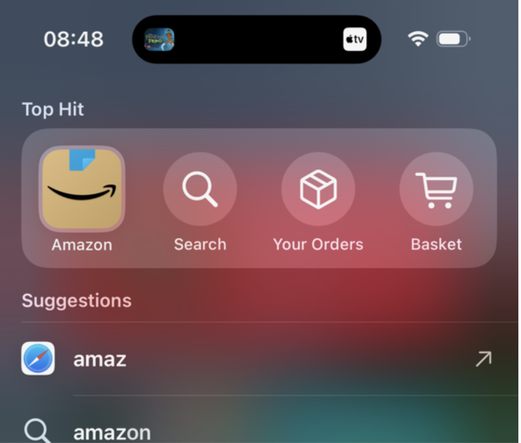


@matt1corey @brandonhorst @caseyliss It is App Shortcuts, and they've taken the Open action & made parameterized instances of it with App Shortcuts.
This is a combination of parameterized phrases from the first year of App Shortcuts & the Spotlight integration from the second year.
Here's where they start to talk about it: https://developer.apple.com/wwdc22/10170?time=851 Then the rest is in Brandon's linked video.
You can also use Suggested Entities to show nicely-designed entities in Spotlight as well
@matthewcassinelli @matt1corey @brandonhorst Oh wait it looks like maybe this is what I want, for iOS 18 anyway
https://developer.apple.com/documentation/appintents/openurlintent
@caseyliss @matthewcassinelli @brandonhorst For most of my OpenIntents, I have the deep link logic directly in the Intent code - this is an example of an OpenIntent that opens a Ledger in Bills to Budget, and navigates to a specified screen, but it can also be done with an AppIntent that has ‘openAppWhenRun' set to true.
It is a parameterized AppIntent -- it still doesn't look anything like the fancy Amazon shortcut, though

@matt1corey Is `navigator` a singleton? Where is it coming from?
(A summary is perfectly acceptable; I don't necessarily need to see code)
@caseyliss Ah, important detail -- ’navigator' here is an ObservableObject that I create at the root of my SwiftUI tree, and inject into the Environment. It drives the navigation of my root NavigationSplitView and NavigationStack’s, and has methods to show sheets and inspectors, so I can control this from anywhere.
I also add that (and other things) into my `AppDependencyManager`, so I can ‘inject' them into my AppIntents using the @.AppDependency mechanism

 Brandon Horst
 Matt Corey
 Matthew Cassinelli


