New book from physicist MV Ramana of the University of British Columbia: "Nuclear is Not the Solution: The Folly of Atomic Power in the Age of Climate Change" is out now. https://www.theguardian.com/environment/article/2024/sep/04/mv-ramana-why-nuclear-power-not-solution-energy-needs

Physicist MV Ramana on the problem with nuclear power

Nuclear is costly, risky and slow, Ramana says. Why then, he asks in his new book, do governments still champion it?

The Guardian

@chrisnelder The question is then what? In Ontario it is certainly not solar or wind. My simple 1GW 24/7 model of Ontario’s wind says we would need $21 billion in $50kWh storage to navigate the >10 week summer wind slump. All at a time when Ontario’s air conditioning load is highest. In Ontario we heat and cool with nat gas.

https://energyasicit.ca/WindModel/

@icanbob @chrisnelder We can't and don't have just wind though. Solar and wind complement each other, with wind being stronger in winter and solar being stronger in summer. And on top of that we have over 1 GW of hydropower. Our current nuclear is being refurbished, but we'll eventually have to replace 10 GW worth over the next 25 years. Battery costs are plummeting, so it'll be cheaper to replace it with renewables than with new nuclear.
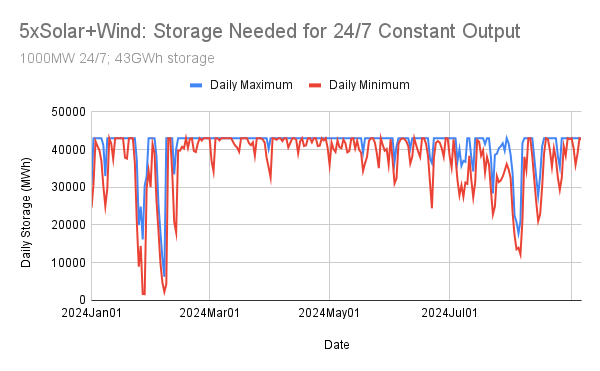
@dan613 @chrisnelder I’ve been at this for over 45 years and have heard all the standard “you need to’s”. I prefer actual real world data. In Ontario there are 2 seasonal wind lulls; one in hot summer and other in dead of winter. Solar can help smooth the summer chasm but struggles with the winter one. My 1GW 24/7 combo model for Ontario still would need 43GWh of storage per GW. Using NREL numbers for flow batteries that is $17.2 billion/GW.
@icanbob @chrisnelder What learning rate did you use in your model?
@dan613 @chrisnelder Not that sophisticated. My model simply takes IESO published hourly data for Ontario and aggregates it. I impose a 1 GW 24/7 requirement. When wind produces more than 1GW I simply dump the excess to 100% efficient storage up to a limit. When storage is full any excess is “dumped to the grid”. When wind doesn’t supply 1GW I draw the difference from my “magic storage”. The level of storage is set such that I never go negative.

@icanbob Simple models like that do not reflect how the grid is actually managed. Grids are never powered by one type of generation, and never need 10 weeks of storage.

For a deep discussion about how grid modelers actually think about this, listen to Ep. 188. https://xenetwork.org/ets/episodes/episode-188-getting-to-a-100-percent-clean-grid/

[Episode #188] – Getting to a 100% Clean Grid | The Energy Transition Show

Can we coordinate replacing fossil-fueled assets with clean, zero-carbon assets so that both systems remain functional and affordable during the transition?

The Energy Transition Show
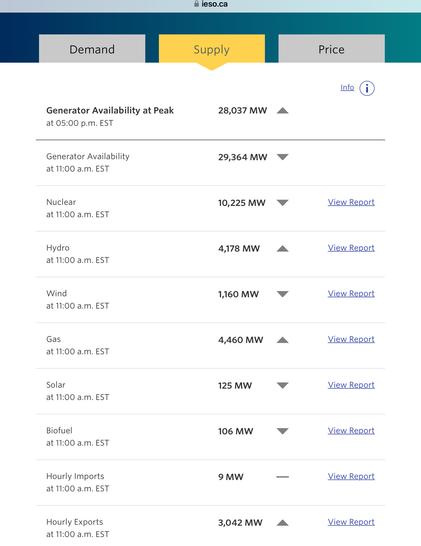
@chrisnelder Of course not. However we also cannot make cost comparisons which are effectively apples to strawberries. The cost of making a renewable grid work carbon free is not often counted. Nor are the very real seasonal chasms that need to be bridged. The reality on Ontario’s grid is that without the gas generation it would not work. The real enabler for a carbon free grid is a carbon free replacement for the gas.
@icanbob @chrisnelder same for Alberta: solar, wind and storage alone won’t cover the several weeks in winter, unless you go crazy with the storage and make the entire solution *very* expensive, even with new storage technologies like thermal sand and pumped water.