 IPng Networks
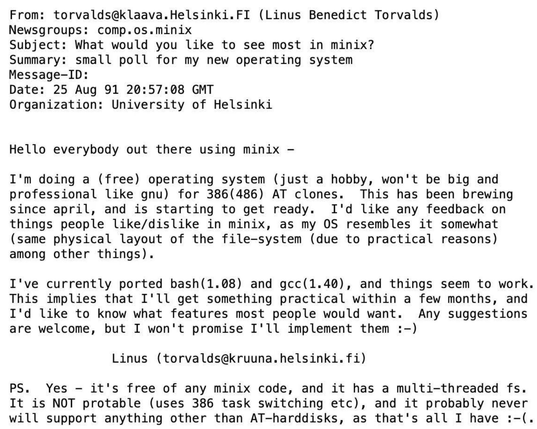
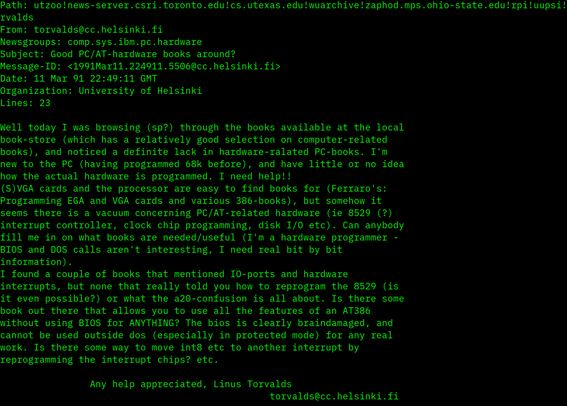
Happy birth date, Linux!

@daniel @IPngNetworks Probably not. The history of OS acceptance, simplified, is that each new class of computers created a window that many OSes tried to fill. By the time the class of computers was well established it was dominated by a small number of OSes, which became impossible to displace.
The desktop was established decades ago and is in decline. even mobile devices are now established enough to make it difficult to displace the dominant OSes.
@daniel @IPngNetworks The reason for this is a common feature of technology development: infrastructure inertia. As an OS becomes established a huge infrastructure grows around it. To justify throwing away the infrastructure, a new OS would have to provide a significant innovation to attract users. But there has not been that level of innovation since GUIs.
Linux was sort of an exception because AT&T’s court case with UC Berkeley created a non technical vacuum.
@sils @IPngNetworks
Have a look at the usb gadget driver in linux. It was named as such as no one would use it for anything serious.
From the official doc: "Most Linux developers will not be able to use this API..."
 Trammell Hudson
 Daniel
 Marty Fouts
 Silas
Silas A. Fleury-Gobert
 Hauke Thießen
 JohnMoyer
 Louis Couture
 Max Lee