🫸THE LEANING TOWER OF KYŌTO🫷

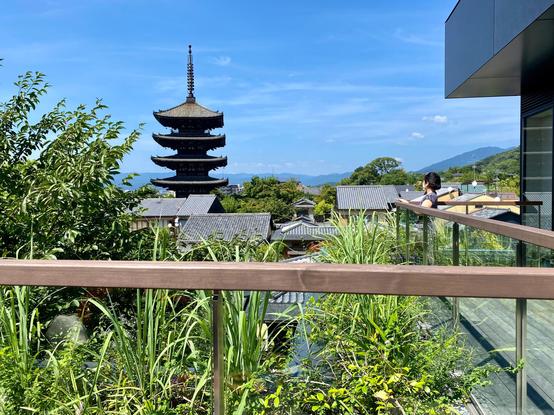
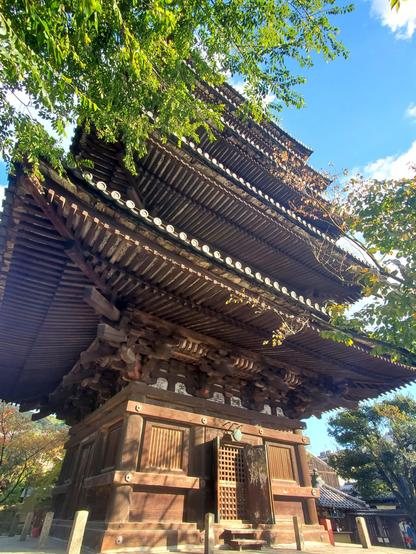
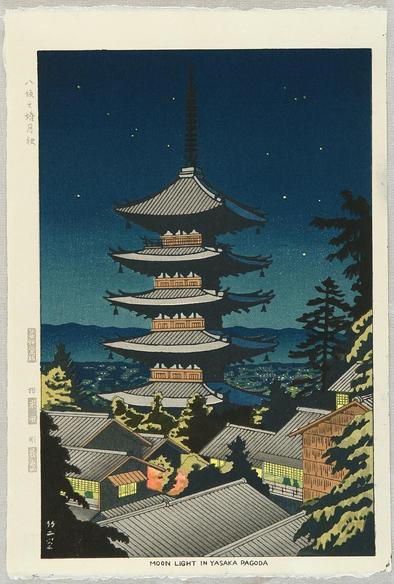
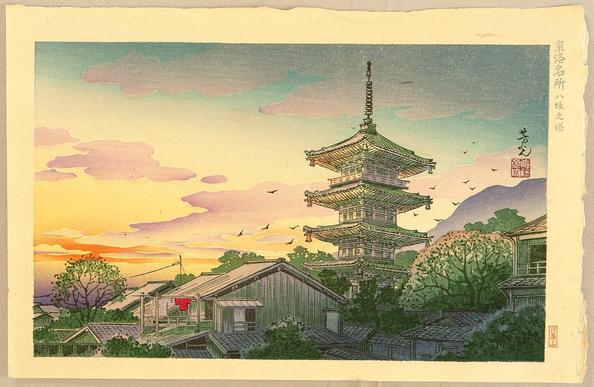
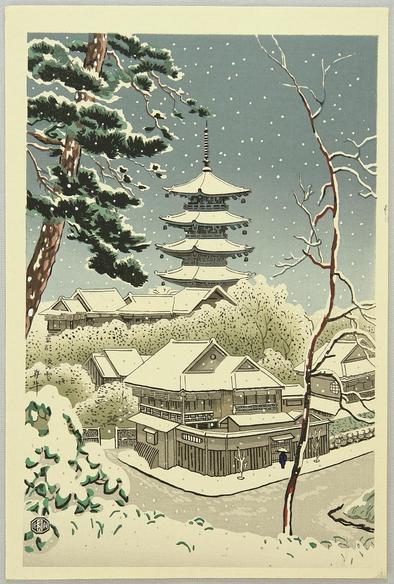
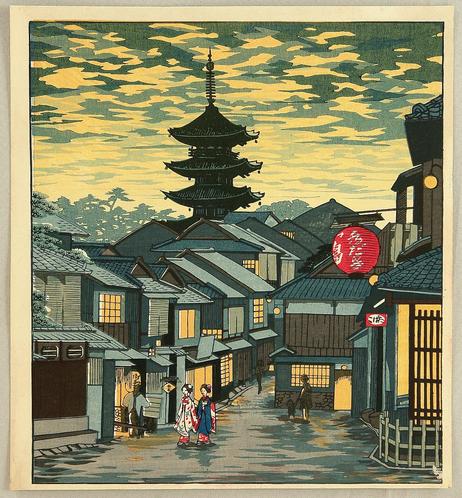
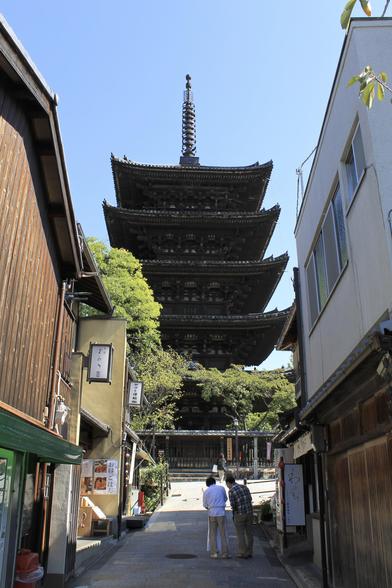
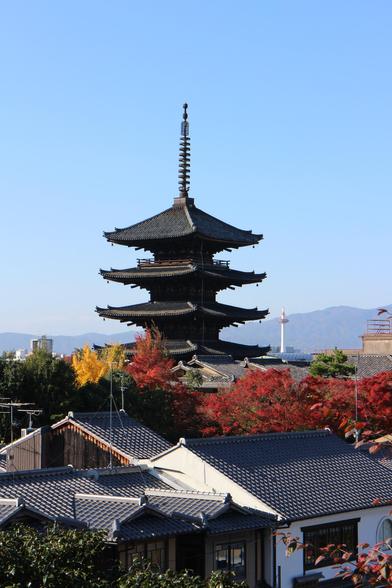
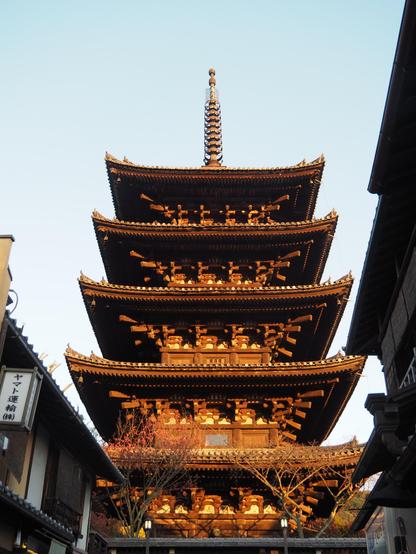
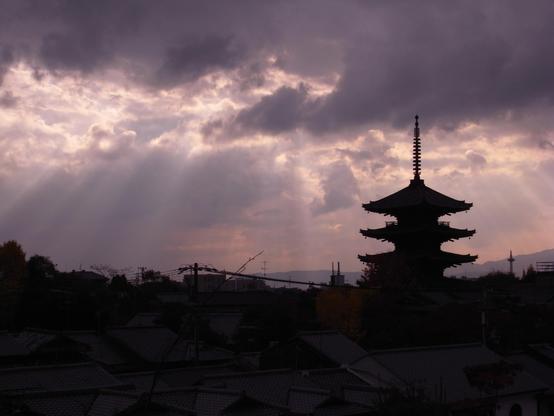
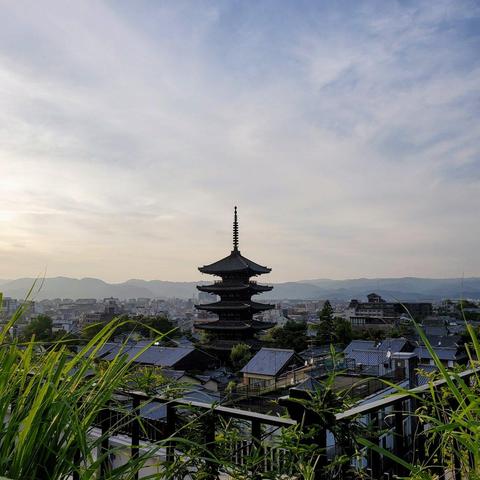
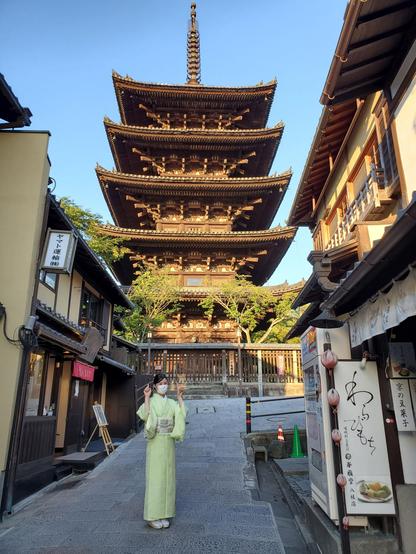
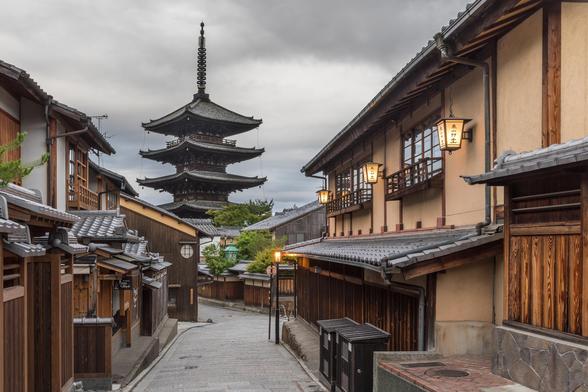
Looming over the rooftops behind our Flower Teahouse is one of Kyōto's most iconic symbols...the 46m tall Yasaka-no-tō (八坂の塔).

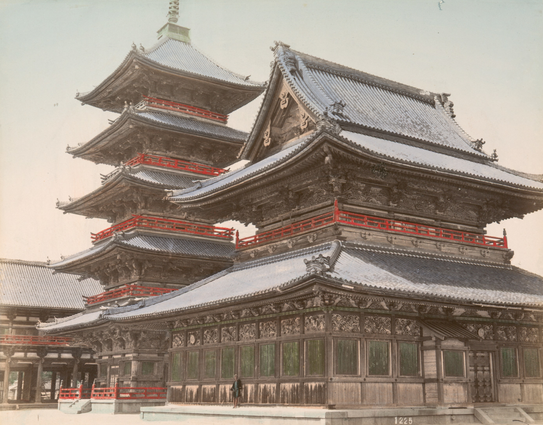
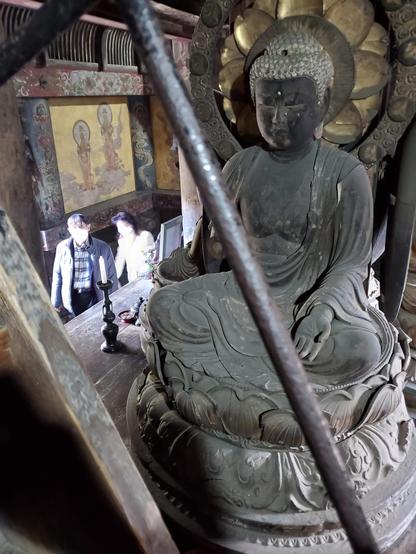
The pagoda, last rebuilt in 1440, is all that remains of Hōkan-ji (法観寺), considered by some to be the city's oldest temple.

Some theorize that the Yasaka clan, an immigrant family from the mainland known for their horse breeding, founded Hōkan-ji as a worship site in 588.
#Kyoto #京都 #YasakaPagoda #八坂の塔 #Sannenzaka #Higashiyama

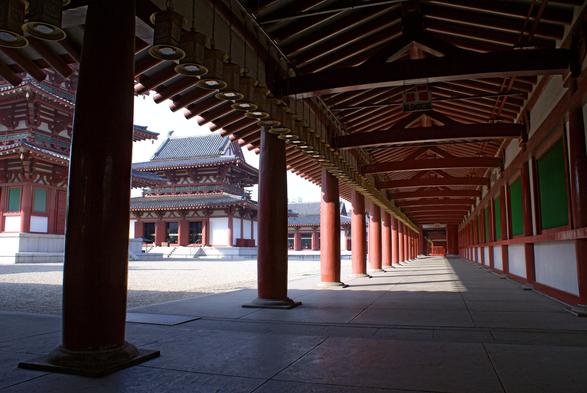
A more romantic origin story describes how Prince Shōtoku (聖徳太子 d.622) came to the Kyōto Basin to find lumber for the construction of Shitennō-ji (四天王寺).
In thanks for the wood felled he enshrined 3 grains of Buddha's ashes in a stupa, that later grew to become Hōkan-ji.

Hōkan-ji's importance should not be underestimated, for many consider the temple to be the beginning of Buddhist culture in Kyōto (long before the city existed).

By erecting a stupa here, Shōtoku also set a precedent for enshrining the ashes of the dead after cremation in Japan.

Historically regarded as symbol of the city, during the 'Age of Warring States' (戦国時代 1467-1600) victorious lords would fly their standards and crests from the pagoda, advertising their dominion over the capital and country at large!

#Kyoto #YasakaPagoda #八坂の塔 #京都

So why 'leaning tower'?

Well in 948, shortly after being completed, the pagoda began to abruptly tilt.
Some believed it be a curse placed on it by the rival temple of Enryaku-ji, but many placed blame on the sloppy work of the head carpenter's son!

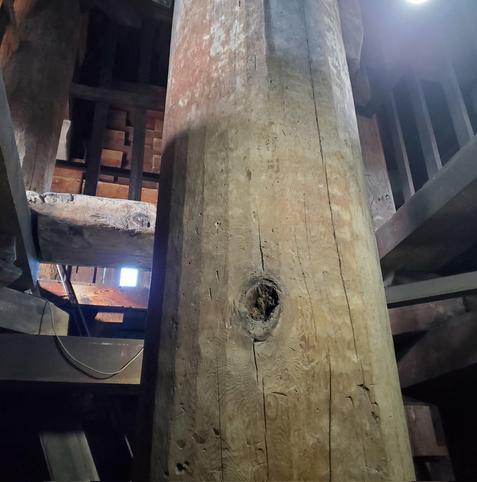
Eventually it was discovered that the carpenter, his health failing and worries about his son's work growing, had placed a statue of the deity Kōshin in the central pillar...

#Kyoto #京都 #pagoda #YasakaPagoda #Japan

The carpenter asked the god to protect the construction project, but before his death failed to tell anyone what he had done.

Left unworshipped and forgotten, the god Kōshin no longer corrected the sloppy work of the carpenter's son and without the protective magic the structure drastically began to lean.

The panicked prayers to Kōshin went unheard and the temple monks worried the pagoda might actually fall!

#Japan #Kyoto #京都 #YasakaPagoda #八坂の塔

Four years passed and all efforts to correct the pagoda's lean failed.
Then, in 952, Jōzō Kisho (浄蔵貴所), a monk affiliated with the nearby temple of Ungo-ji (雲居寺), solved the problem with a single incantation!

Jōzō Kisho's 'spell' caused the ground to shake. A breeze blew from the north west and within seconds the pagoda was gently blown upright.

This is not the only wonder attributed to Jōzō. He is most famous for bringing his father (briefly) back to life!

#浄蔵貴所 #folklore #YasakaPagoda

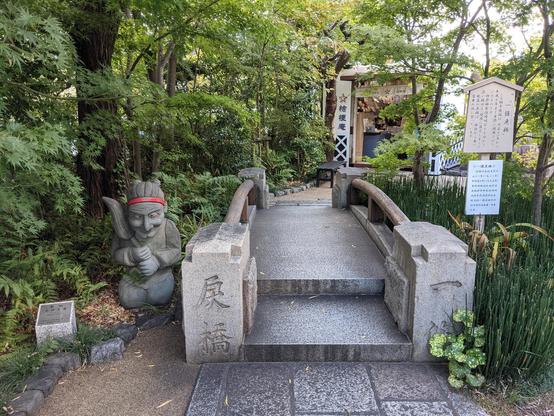
In 918 Jōzō learnt his father was dying & rushed back to Kyōto from Kumano.
He was too late, but managed to catch the cortège at Ichijō-bashi. Here he uttered an incantation and his father returned to the world of the living so he could say goodbye.

The original pagoda was deliberately burnt in 1179 during one of the many skirmishes between the monks of Yasaka-jinja (八坂神社) and Kiyomizu-dera (清水寺).

Rebuilt in 1191 by Minamoto-no-Yoritomo (源頼朝), the temple began to fall into permanent decline from this point.

Destroyed by lightning in 1291, the pagoda was rebuilt in 1309.
Fire struck again in 1436. Shōgun Ashikaga Yoshinori (足利義教) funded reconstruction in 1440.

#Kyoto #京都 #Japan

Yasaka-no-tō is the oldest pagoda within the city proper. Although Hōkan-ji burnt in the Ōnin War, the pagoda survived.

Due to its commanding position, warlords had regularly used the pagoda to advertise their authority and dominion. It was also used as a giant billboard😂

In 1618 the Kyōto Shoshidai (京都所司代 'chief magistrate') Itakura Katsushige (板倉勝重) finally banned its use in this way.

#YasakaPagoda #八坂の塔 #Japan #japanesehistory #Hokanji #Higashiyama