 nixCraft 🐧
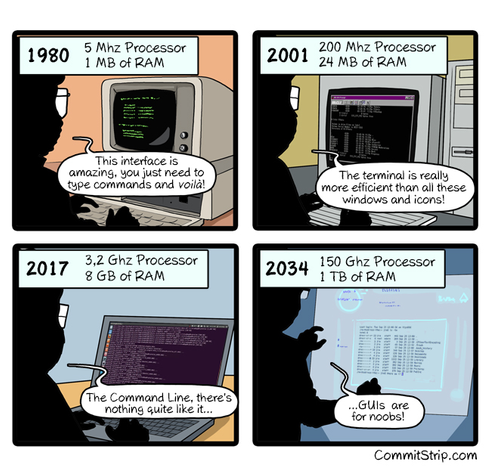
Terminal forever <3 https://www.commitstrip.com/en/2016/12/22/terminal-forever/? #unix #linux #macos #freebsd
@flup 1970 would be 0, the 2038 bug is a signed 32-bit integer rollover so it'll become maximally negative.
2106 would be the unsigned 32-bit integer limit, but I'm not sure how much that's used.
@flup And 32-bit programs running on 64-bit systems. Like some manager was told they need to upgrade to 64-bit so they just replace the hardware and OS, but continue running their proprietary 32-bit software. It probably won't be as impactful as Crowdstrike's f-up, but it'll be a lot harder to get what is impacted up and running again.
Oh crap, and what about 32-bit protocols? Like the system that lets airlines rebook passengers on another airline. Sorry, you're 135 years late for your flight.

 StarkRG
 Ian Chard