 Patricia Aas
52/ Ok, I think I get it. MMT says that a deficit isn’t a sign of government overspending, inflation is. (And here they are clearly talking about the overheated economy inflation) So as long as the spending doesn’t cause inflation, it doesn’t matter if you run with a deficit even over a longer period (she mentioned decades).
So basically she is sort of saying that deficits aren’t real because taxes aren’t real.
This is more like the water in a radiator system (my analogy). You can add in water or remove water, but the system isn’t the water. And adding water (money) only becomes a problem when the pressure in the system gets too high and water starts spilling out somewhere.
Basically, money isn’t “real”. It’s… just water in a radiator system in a building. The building and the radiators and the people living there are the real things.
(h/t @joelving and the 5 other people who have brought it up)
https://mastodon.joelving.dk/@joelving/112720891429481986
Peter Toft Jølving (@[email protected])
@[email protected] @[email protected] Most economic forecasting models are relatively simple and don't require supercomputers (because the models are oversimplified). Steve Keen takes a System Dynamics approach and has many more feedback loops in his models. He's also one of the fiercest critics of mainstream economics I know of, for many of the same reasons @[email protected] is. Worth looking up, if it interests you.
https://debunkingeconomics.com/episode/does-modern-monetary-theory-make-sense

Does Modern Monetary Theory make sense? | Debunking Economics - the podcast
Modern Monetary Theory states that’s, because the government of a country is the monopoly supplier of money, it has an unlimited capacity to pay for things and...
https://en.wikipedia.org/wiki/Reserve_currency

1. Through exports
2. Printing money
3. Borrowing from banks
https://www.norges-bank.no/en/topics/liquidity-and-markets/Foreign-exchange-purchases-for-GPFG/
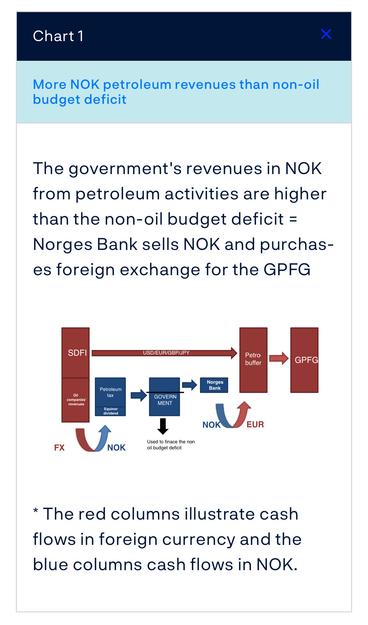
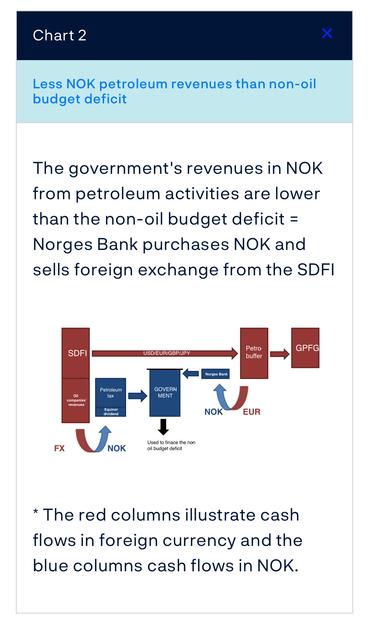
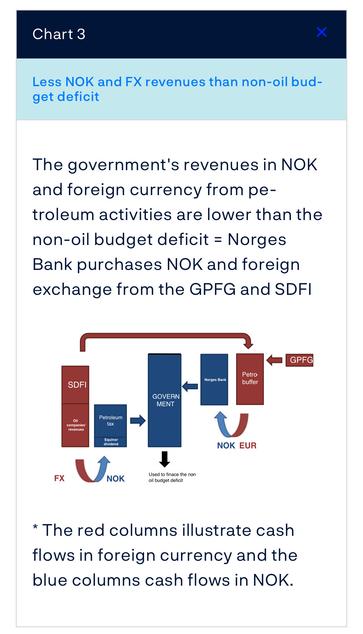
Norges Bank’s foreign exchange transactions on behalf of the government
The Norwegian government receives revenues in both NOK and foreign currency from petroleum activities. Some of these revenues are used to finance a planned central government budget deficit. Norges Bank carries out the necessary foreign exchange transactions associated with petroleum revenue spending. These foreign exchange transactions are planned and smoothed over the year and are pre-announced each month.
62/ I feel so smart when I read news articles that agree with me 🤓 🤣
“And an interest rate increase will not help, he believes. - The higher the interest rate goes, the more landlords have to raise the rent, and then the interest rate increase is inflationary. It does not have the same effect as in the housing market, where prices fall if interest rates rise. The interest rate is not a good weapon to deal with this kind of inflation. It makes matters worse, he says.”
https://e24.no/norsk-oekonomi/i/93zl4d/uenige-om-leieprisene-det-gjoer-vondt-verre

65/ After spending ages on inflation, I’m apparently breezing through chapter 3 “The National Debt (That Isn’t)”
Basically, in the same way tax isn’t real (in that it is just a mechanism to remove money from the economy and/or create demand for the currency. MMT says that the deficit isn’t real. Very clear that it is the US they are talking about. To generalize to more countries she picked the UK and I would’ve preferred another more “normal” country.
 BenAveling
https://social.vivaldi.net/@Patricia/112718351291256230
Patricia Aas (@[email protected])
10/ I am trying to understand chapter 2 again, it is called “Think of inflation”. She is speaking very much from a US perspective, and so my attempt to map to Norway in my head is not always working. But I think Norway fits the criteria: 1. Has its own currency: NOK Norwegian kroner 2. The currency is not tied to a foreign currency (as opposed to Denmark who has now tied its currency DKK to the Euro) 3. Does not have debt in a foreign currency. (I don’t think we do, we have a massive sovereign wealth fund instead, which is only (mostly?) invested abroad)
 Peter Toft Jølving
@Patricia @BenAveling MMT'ers would balk at your description of MMT as something you do. MMT (the theory) is descriptive and not restricted to reserve currencies.
What they mean when they say "the national debt isn't real" is that it's a misnomer designed to invoke fear, when in reality it's just the amount of private and foreign savings in USD.
The same goes for NOK. Whatever money the government has not yet claimed in taxes can hardly be called a debt, and it certainly can't be repayed.
https://hachyderm.io/@Paxxi/112722564886670819
Pär Björklund (@[email protected])
@[email protected] I remember reading about how trade deficits aren't really a problem for the US because of being the reserve currency. This covers it a little bit https://www.investopedia.com/ask/answers/061515/what-happens-us-dollar-during-trade-deficit.asp
https://social.vivaldi.net/@Patricia/112721829837311925
Patricia Aas (@[email protected])
57/ The parts of MMT that I like are the descriptive parts. Where they just talk about How Stuff Works In Practice. The problem I have (and tbh they are by far the worst here) is that when they slip over from descriptive to prescriptive it’s like they don’t even notice. They go straight from How Stuff Works to My Opinion without skipping a beat. And then I start to wonder if they can even tell the difference.
@Patricia @BenAveling @Paxxi yeah, I do seem to remember her glossing over it pretty quickly (it's been a while since I read the book).
I remain confident, even though I can't "prove" it, because I remember sooooo many discussions and Twitter before it went 💩, where critics would attack MMT saying "MMT is printing money" or "MMT is impossible to do unless so and so" and them having to untangle the monetary analysis (what they see as MMT) from what had previously been ruled out as impossible.
I guess you're right, that's a prescription, but it seems kinda meta to me. And very much in the "you can't not do it"-bucket if you accept that deficits in themselves don't matter to a currency issuer.
 Marius
I have always found this the weak spot of MMT. This distinction only matters if we had a good mechanism to predict the inflationary pressure of individual policies. More accurately than just taking the money cost of the policy times some (uncertain) Keynesian multiplier.
@Zamfr @Patricia @BenAveling @Paxxi How do you figure that's a weak spot? I mean, I agree that it can be difficult, and exact quantification is impossible, but we're talking about a situation where the alternative is not considering it at all.
Often, it won't be all that difficult. In the depths of a recession, when construction has ground to a halt, you can do a lot of road and bridge repair work without driving up the cost of construction, because there is so much slack there.
@joelving @Patricia @BenAveling @Paxxi
People discuss that without MMT, just as well. Every recession in every country brings a debate about stimulus, usually with construction as centrepiece. Exactly because it is the clearest example of resources being underused - people, organizations, equipment, materials, as a package.
By weak, I don't mean that MMT is obviously wrong here. But after rethinking debt and money and taxes and everything, it seems to end up at the Keynesian position.
@Zamfr @Patricia @BenAveling @Paxxi do they? In those terms? I at least, haven't seen that.
They'll discuss the need for stimulus to "protect a sector/businesses/jobs" and then they'll talk about how to finance the stimulus, but always in a PAYGO paradigm.
I have never seen a politician say that we don't need to find as much money elsewhere because there's a lot of slack in a sector. Never.
@joelving @Patricia @BenAveling @Paxxi
Proponents may claim that a policy 'creates jobs', implies hiring otherwise unemployed people and resources. Opponents claim 'crowding out', it would over-bid resources away from other uses.
Or 'shovel-ready' - stimulus will hire now from a currently underemployed construction sector, not years later when market might be hot (inflation-prone) again.
Just examples. Most stimulus debates can be translated to an MMT frame, but the debates themselves stay
@joelving @Patricia @BenAveling @Paxxi isn't that more a matter of terminology? Especially in a recession, it is common that a costly policy is enacted to support some part of the economy, the deficit is then raised as a stimulus measure, and the central bank buys that debt as 'expansionary monetary policy'
That may be paygo framing, but the effect is the same and the reasoning is the same, just split in multiple steps and using different words.
@joelving
Yeah, but that effect is negated again when the CB buys the bond. It's a Rube Goldberg machine for printing money, but it's the same thing.
MMT simplifies that machine away in their models, as descriptive choice. They argue, not unreasonably, that it is not needed to understand most of what's going on.
They also seem to intend this as prescription: they expect better policies without central bank independence. I feel they don't grapple with the politics of that though
@Zamfr oh yeah, sorry, I missed you said "central bank buys the debt". I agree with you completely then. And to Patricias initial point about mixing description with prescription that is indeed another case of it, though I again think that it's hard to argue against, if you accept the premise.
However, at least in Denmark, that's a very controversial move that will have you labeled fiscally irresponsible, indebting future generations, yada yada in no time.