 WriterRaven
Creatures wearing armour made of metal or soaked in water have disadvantage on the saving throw.
On each of your turns before the spell ends, you can use your action to launch another lightning lance.
At Higher Levels: When you cast this spell using a spell slot of 4th level or higher, the damage increases by 1d8 for each slot level above 3rd.
Unbalanced Shove (draft)
4th-level Transmutation | Sorcerer, Warlock, Wizard
Casting: 1 action
Range: 60 feet
Components: V, S
Duration: Instant
You conjure a mass of arcane force around one creature you can see within range and grasp it to hurl your target. The creature must succeed on a Strength saving throw or be thrown up to 30 feet in any direction, including upward, and then fall prone.
If the target collides with terrain or an object, they take force damage depending on their size:
• Medium or smaller: 3d10
• Large: 4d10
• Huge: 5d10
• Gargantuan: 7d10
You may attempt to throw the target into another creature instead of terrain or an object. The second creature must make a Dexterity saving throw. On a failure, they take the same amount of force damage and fall prone. On a success, they take half damage and are otherwise unaffected.
Conductor (draft)
2nd-level Transmutation | Tempest Cleric, Sorcerer, Warlock, Wizard
Casting: 1 action
Range: Self
Components: V, S
Duration: Concentration, up to 1 minute
For the spell's duration, you surround yourself in an aura of lightning. You gain the following benefits:
• You have resistance to lightning damage.
• When you cast a spell that deals damage to another creature, you may change that spell's damage type to lightning.
• When you hit a creature with a melee attack, or are hit by a creature with a melee attack, that creature takes an extra 2d8 lightning damage. If you are in stormy weather or beneath a similar magical effect, such as that of a Call Lightning spell, they must also succeed on a Constitution saving throw or be paralysed until the start of their next turn.
Merciful Soul (draft)
3rd-level Necromancy | Cleric, Paladin
Casting: 1 action
Range: Self (30-foot radius)
Components: V, S, M (a healer's kit with at least 1 use remaining; the spell consumes 1 use)
Duration: Concentration, up to 1 minute
You make an offering of medicines and bandages from your healer's kit to emanate a holy aura with a 30-foot radius. The aura moves with you.
For the spell's duration, creatures within the aura other than you have advantage on death saving throws. In addition, if a creature in the area other than you succeeds three death saving throws, they regain 1 hit point instead of becoming stable.
While concentrating on this spell, damage you cause with spells and weapons doesn't kill; you knock your target unconscious instead. (You can still cause a creature to die in other ways, like shoving them off a cliff.)
Cloak of Judgement (draft)
6th-level Abjuration | Sorcerer, Wizard
Casting: 1 reaction
Range: 120 ft
Components: V, S
Duration: 1 round
When you take damage from a creature you can see within range, you can use your reaction to cast this spell and wrap yourself in a shroud of Darkness. Casting this spell takes a toll on your magickal abilities: when you cast it, you can't cast spells other than cantrips until the end of your next turn.
Until the start of your next turn, you become immune to all damage and effects from the triggering creature (including the damage that caused you to cast this spell), and automatically succeed all saving throws they require you to make (you can still choose to fail). Any effects they imposed on you immediately end. The triggering creature takes necrotic damage equal to the damage you would have taken.
Tactical Brilliance (draft)
8th-level Conjuration | Cleric, Sorcerer, Wizard
Casting: 1 action
Range: Self (120-foot radius)
Components: V, S, M (a pure white gemstone worth at least 500 gp)
Duration: Instant
You unleash a surge of Light that envelops everything nearby, reshaping the battlefield to your whim. Casting this spell takes a toll on your magickal abilities: when you cast it, you can't cast spells other than cantrips until the end of your next turn.
You teleport each creature within range, including yourself, to unoccupied spaces of your choice within range (this does not require line of sight). Chosen spaces must be on the ground or on a floor. An unwilling creature must succeed on a Wisdom saving throw to avoid being teleported. You begin teleporting creatures after you know which ones avoid this effect.
You may also teleport objects of your choice within range that aren't being worn or carried.
Let's talk about the nations of #Auvia a little more.
We begin with Rhizel, a nation at war with itself in many subtle ways. What looks like a unified whole to its neighbours has fragmented over generations of internal politicking.
Rhizel is divided into a set of small kingdoms, each of which is - for the most part - self-governed by local lords and ladies. These rulers all agree on one thing, however: they will plot, scheme, and fight to keep the power they have.
#Lore24 01/06/24
There is one place in Rhizel that is considered sacred ground to all of the feuding nobles: Crownsheart. A grove in the center of the nation, where all who would lay a claim to leadership may look upon the gilded crowns of their people's history.
These crowns tell stories of their own, but none have worn them in generations, for none have been found worthy by their guardians since the Last Kings. Few now remember them, save by that name.
Citizens of Rhizel have the right to freely travel between its kingdoms by ancient law of the First Kings - even if many rulers disapprove and impose stringent measures on travellers. Espionage is common enough that many travelling citizens and adventurers are carefully screened, subject to searches by local authority, and even discreetly observed when they are granted permission to enter a kingdom's borders. No matter where you go, a Rhizeli is always watched...
Nine kingdoms govern Rhizel, each with its own order of banneret knights. They are as follows:
• Cyntarra (Knights of the Rose)
• Du Khah (Heavensblades)
• Magna (Knights of the Round)
• Nescha (Queensguard)
• Prezha (the Chevaliers)
• Rehga (the Gilded Shields)
• Vhersi (Order of Tempresa)
• Vrann (Landsknights)
• Zerin (the Accoladed)
The Banneret Fighter and Paladin Oath of the Crown are both Rhizeli in origin, though not every knight is a Banneret - or a paladin.
There are distinct classes of people in Rhizeli society, which are divided into two groups: highborn and lowborn.
At the top are the families of nobility. Their exact number varies from kingdom to kingdom, but they are the leadership. With large families full of politicians and knights, they strive to keep the kingdoms in working order.
Which often means keeping themselves in power, and the lowborn in their place. Rhizeli nobles see their station as gods-given right.
In almost every kingdom, Rhizel's knights, a step below the nobility, are themselves divided into noble and commonfolk. Knights born to noble lineages are expected to do great deeds for their house, while those less fortunate have fought, killed, studied, trained, bowed, and scraped to get to where they are today.
Some might say the latter are the better fighters by virtue of experience alone. They are often correct, though Rhizeli nobles would refute this.
Artisans, merchants, and tradesfolk are afforded a little more respect from Rhizel's highborn than the common masses. But like the knights, these too are drawn to the divide. Each has their own clientele, tending to the needs of the high or low - but not both. Where one seamstress might be paid handsomely to tailor exquisite silks, another makes cotton-and-leather gloves that will last for years under a labourer's hard work.
The commonfolk are Rhizel's lowest on the nation's societal hierarchy, and they are in no way the least. These are the people that keep the nation turning: farmers, miners, innkeepers, fisherfolk, carriage-masters, labourers, servants. Few among them earn a higher education than the basics.
Many are dissatisfied with their lot: why should the highborn be the only ones who have the luxuries, and the low struggle to survive because they weren't born into wealth and power?
In times of war, Rhizeli kingdoms field armies composed of two divisions: experienced knights, and conscripted commoners. The latter are arranged into squadrons and placed under the command of a squire, trainee knight, or other knight of lesser rank.
On rare occasion, a squadron may acquit itself on the field of battle, earning praise from their commanding officer. For many, battle is a chance to change a Rhizeli's life.
Sometimes that's for the better. Often... well.
In many of Rhizel's kingdoms, nobility is reserved solely for the families that already have it. Major and minor houses rise and fall in their kingdoms' internal politicking, and few lowborn have the power to change their fate.
In some kingdoms, however, nobility can be earned. Through great deeds in service to one's kingdom, whether martial or otherwise, a lowborn might change the fate of their entire family, earning the comforts that are denied many of their peers.
The rise of a new noble family begins with the patronage of one of their kingdom's major houses. The family is elevated to the status of minor nobility, and afforded land and titles.
The land the new nobles own comes from the house that elevated them, as an investment in their future. In exchange, the new minor house is often - but not always - expected to repay the debt via a political marriage, the training of knight-candidates, or a tithe upon one year's resources.
Of course, being raised into the ranks of nobility, even as a Minor House, is not without its risks. Unprepared, new nobles can insult without meaning to, and the consequences can be dire. They vary from a simple duel for honour to the governing Major Houses exiling the house entirely, depending on who has been slighted.
Indeed, to be Rhizeli is to live in a realm where danger lurks in every shadow, in the light of day, and upon each word no matter how carefully chosen.
Cyntarra is the northernmost of Rhizel's kingdoms, and is charged with maintaining the nation's northern border. Khava lies on the other side; as such, the Cyntarrans ensure that trade with the Khavans is upheld smoothly. All Khavan imports go through Cyntarran trading posts.
Perhaps this exposure to another people and their way of life has led Cyntarra to be one of the most progressive of the kingdoms, even though its neighbours Nescha and Zerin decry them as foolish.
The major houses Lunaire, Whisperwind, Aysanne, Morningsnow, and Tenorra rule Cyntarra together. Each has their own agendas, of course, though they often find themselves in agreement on their kingdom's policy - or can determine a course of action by majority vote.
They have the support of several dozen minor Houses, many of whom have enough reputation and diplomatic acumen to seat a representative at the court. The major Houses, however, have the final say on decisions.
Of all the knightly orders present in Rhizel, Cyntarra's Knights of the Rose are the most freeform in their organisation. Highborn and lowborn are often seen shoulder to shoulder, much to the chagrin of the former. This mingling drives Cyntarran knights to train hard and fight harder, the better to outdo their comrades and prove themselves superior.
However, the drive to excel has a tendency to lend itself to rash action. The Knights of the Rose are fewer than most.
All Rhizeli are afforded basic education in several widely-applicable fields, though higher learning is often kept to nobility as a perhaps twisted form of the goddess Yatherie's creed that states knowledge must be earned. The minor Houses usually provide teaching and training to the commonfolk, however: as the major Houses have the responsibility of running their kingdom, the minor Houses must take on duties of their own.
Teaching magicks is oft unheard of, however.
Magickal education is the responsibility of the major Houses. They all have one or more spellcasters among their ranks. However, even these are limited by whether they gained their magic by birth, study, or other means, and so none of them truly has the whole picture of what magic really is.
Of course, this doesn't stop each major House in a Kingdom from using this to teach the ways that they know. Some have developed a reputation for it, which inspires awe and fear.
The divide between Rhizel's highborn and lowborn can be overcome in a variety of ways, no matter which kingdom you examine. But there are always those who, perhaps rightly, believe the barrier between the two sides must be torn down, and all peoples given the right to luxuries that the highborn hoard for themselves.
These instigators concoct their plans outside of nobility's reach, or so they would have you believe, but none have seen their plans come to fruition.
Yet.
To join the ranks of Rhizel's knights is considered a great honour for the knight and their family as a whole. But doing so is only the beginning for some. Knighthood brings expectations, no matter whether you are a simple front-line soldier, a courtier fighting with words, or holding the role of the local watch commander.
Bannerets are a different sort altogether. These knights have excelled above all, and fight under their own banner instead of that of their House.
Banneret knights fill many roles throughout Rhizel's kingdoms. They command companies of lesser knights, serve as military advisors to the major Houses, train new recruits, and more besides.
In some cases, however, a banneret may elect - or be commanded - to leave their kingdom behind, wandering #Auvia to find their own purpose in life. To this end, many walk the adventurer's path, eschewing the luxuries they had in their homeland for a more rugged and dangerous existence.
#Lore24 20/06/24
"Heard another one's packed up and left. Off to slay monsters and win 'emself a good ending to their tale."
"What, y'reckon the new Tenorra banneret was pushed for it? Lotta folks sayin' they jumped at the chance to go questin'."
"The birds upstairs say it was either leave or get a postin' on the southern border for dallyin' with the Lunaire gal what was knighted the same day. Nothin' comes from watchin' for the Aeskellians to come."
- Typical lowborn tavern conversation
In most cases, Rhizeli nobility enter arranged marriages to strengthen the standing of their House. Contracts of marriage are common, detailing any deals made between the Houses.
If someone of minor nobility marries into one of the major Houses, they typically take the major House's name regardless of who proposed the deal. This contrasts with lowborn families and other nations, where if you accept your paramour's proposal, you take their surname regardless of gender.
"For all their claims of having the right to rule, the highborn are people too. They make mistakes, sometimes costly ones, when they don't stop to think beyond, 'how can this benefit me?' This, my friends, is why they fail. Every misstep is an opportunity.
We watch, we anticipate, we take what the people need. Rhizel will belong to her people one and all.
We are the Torchbearers. Rhizel's light in the dark."
- a message pinned by dagger to a wall in a lowborn market
Artisans who cater to Rhizeli highborn often enjoy the patronage of one of the major Houses. As to who they work for, that can change in the cut and thrust of political intrigue, but their workshop will always feature a House's emblem.
In Cyntarra, you can find the following emblems:
• The moons, waxing and waning (Lunaire)
• The sun behind a snowcapped mountain (Morningsnow)
• A gilded bell (Tenorra)
• A bouquet of flowers (Aysanne)
• Four winds entwined (Whisperwind)
Much as artisans use their House's emblem to denote who they serve, all Rhizeli military units include a designated standard-bearer, in order to be recognised on the battlefield. Each standard depicts the House that mustered the unit, and distinct iconography to set it apart from its peers.
To be a standard-bearer is a great honour to a knight, and a target on your back to a conscript, for adversaries target standard-bearers to disrupt the efforts of Rhizeli tacticians.
Rhizel can, of course, play host to adventurers of all stripes. Examples of the most common adventurers of Rhizeli origin are:
• Bard, a musician or storyteller frequenting taverns
• Fighter (Champion, Banneret), a knight in service to their kingdom's army
• Paladin (Oath of the Crown or the People), a citizen loyal to their leadership or their countrymen
• Warlock, a lowborn dissatisfied with their lot, hiding their powers from highborn who would see them snuffed out
Less common adventurers of Rhizeli origin include, but aren't limited to:
• Barbarian, but having Khavan ancestry and being raised by Rhizeli
• Ranger, guarding settlements outside the kingdoms' major cities
• Cleric, likely with a connection to a temple of the Seven or someone who frequents it
• Sorcerer, recruited from lowborn families and pressed to work
• Wizard, in direct service to one of the major Houses
• Rogue, leader of a band of renegades working in the dark
"Fresh off the khariot, are ya? Well, 'venturers, lemme give ya a piece of advice. You want honest work what does good by good people? Y'steer clear of the districts what've got better roads. That way lies easy royals, sure, but they come at a greater cost.
"Taverns, bounty boards, an' occasionally the birds upstairs're usually the ones what have decent work for folks like you and yours. But if'n y'need help gettin' from A t' B, can always send for ole Forrester, yeah?"
All of Rhizel's kingdoms use the same currency: "royals", gold coins with a stamp of a crown on one side and the coin's Kingdom of origin on the other. The Rhizeli highborn care not for "lesser metals", and only ever use gold in their transactions.
The lowborn care not for coinage they rarely, if ever, have. They use a barter system, trading goods and services as needed. Minor Houses raised up from their roots routinely use the barter system when working with lowborn.
International trade is useful for Rhizel in a wide variety of ways. For example, gold ore for coin and ornamentation comes from the mines of Thau, as there is little to be found locally.
However, the overwhelming majority of Rhizel's major Houses treat other nations and their people with disdain. They see the Khavans as barbarous savages, treat Aeskellians as criminals, and the more distant lands as anything but equal. To the highborn, only Rhizeli are fit to rule #Auvia...
#Lore24 30/06/24
#Auvia is home to a number of weapons and fighting styles that travellers from other lands may consider unusual or outlandish, but are common in some nations or the hands of adventurers.
For example, adventurers specialising in hand-to-hand combat often wear fistblades: paired fingerless leather gloves with short dagger-style blades attached to the back of the hand. Their design frees the hand for other purposes, but few wield a fistblade and another weapon at the same time.
#Lore24 01/07/24
Despite their utility, fistblades are difficult to properly make and maintain. If the leather is weak or of poor quality, the blade will simply detach from its housing. If the blade is badly forged, it will snap under pressure.
Fistblade | Martial Melee Weapon
Cost: 40 gp. Damage: 1d8 slashing or piercing. Weight: 2 lbs. Properties: Light, special
While wielding paired fistblades, features and abilities that apply to your unarmed strikes also apply to your fistblades.
Spears and axes are most common among thrown weapons, relying on solid balance and sheer strength to get them where they need to be. For those inclined to precision strikes, however, the humble knife is ideal - unless you have the coin to acquire more elegant weaponry.
It was in pursuit of grace and elegance that a Zesh-Muran dwarf, Koto-Lyn the Battledancer, sought the aid of craftsfolk to create the first kotors: discs balanced to return to the wielder when thrown.
Owing to a lack of common metals in Zesh-Mura, kotors are usually made of wood at their core, and sharpened stone or glass to serve as their blades. Metal mimicries have been made in other nations, but a Zesh-Muran will most often swear by Koto-Lyn's designs.
Kotor | Martial Melee Weapon
Cost: 25 gp. Damage: 1d6 slashing. Weight: 2 lbs. Properties: Finesse, light, thrown (range 30/120), special
When thrown, a kotor always returns to your hand after the attack resolves.
Some weapons found in #Auvia were first fashioned in generations past from simple farming tools. The humble gardener's scythe, its blade purely intended for the harvesting of wheat, served as inspiration for the warscythe: a polearm comparable to the glaive in composition, but wielded very differently.
Despite what tales of Rhizeli rebellions might say, the warscythe is not easily disguised as a common wheat scythe, nor are the two interchangeable in their purposes.
#Lore24 05/07/24
Warscythes are designed to be adaptable to the wielder's fighting style. Their blades feature a keen point akin to a spear in addition to their carefully-honed single edge.
Warscythe | Martial Melee Weapon
Cost: 40 gp. Damage: 1d6 piercing. Weight: 4 lb. Properties: Versatile (1d8), special
When wielded in two hands, this weapon gains the Reach property and its damage type changes to slashing, in addition to the increased damage from the Versatile property.
Aeskellian sailors and soldiers alike use a wide variety of weapons and fighting styles. Some of these migrated across #Auvia to other nations, where curious folk took them in hand and made them their own.
The wielding of dual swords, one large and one small, originated in Aeskell and was co-opted by many, including a group of Zesh-Murans who sought to perfect the technique and refine it. These days, it is best known as "Sa Dua" - two blades - despite its piratical origin.
#Lore24 07/07/24
The name "Sa Dua" comes from the Zesh-Muran word for 'blade' and the Aeskellian for 'two', reflecting its piratical heritage and disciplined refinement. Traditionally, a longsword and shortsword are seen together, but other combinations exist. For example, rapier and dagger, paired axes, or paired hammers.
Fighting Style: Sa Dua
You can use two-weapon fighting as long as one of your one-handed melee weapons has the light property, instead of needing both to be light.
Use of an anchor as a weapon is the stuff of Aeskellian legend. The song of how Captain Tief took up his ship's anchor to battle a fiend of Zhel is often one performed by Aeskellian tieflings. And upon hearing it, it gave one enterprising smith an idea.
Nowadays, war anchors are kept on most sailing ships. In the event that the usual anchor is sabotaged, war anchors are bound together and used as a replacement. But until then, they make excellent bludgeoning weapons.
Raucous - and often crude - songs of anchors being used for things they shouldn't be may have been inspired by the development of war anchors as weapons.
War Anchor | Martial Melee Weapon
Cost: 35 gp. Damage: 1d12 bludgeoning. Weight: 12 lb. Properties: Heavy, two-handed, special
You can use a war anchor in place of a free hand when you attempt to grapple another creature, and have advantage on Strength (Athletics) checks made to shove creatures you grapple this way.
The humble crossbow: a weapon for hunting and warfare alike, valued for its simplicity among hastily-formed military units. Said units are most commonly drilled in firing in formation: after the first rank fires, they take a knee and reload, giving the second rank full visibility to fire.
Thaun combat engineers, seeking reliable ways to conduct heavy barrages without committing forces en masse, found an alternative: all of their crossbows feature automated reloaders.
Thaun auto-crossbows feature bolt cases fitted atop the weapon. When the crossbow is fired, mechanisms inside draw the string back for another shot, and then the loader-case drops a new bolt into place.
Each loader-case costs 5 sp and holds up to 10 bolts. While there are bolts in the case, an auto-crossbow ignores the loading property. You can use your action to swap an empty case for a loaded one. Auto-crossbows cost 25 gp more than standard crossbows of their type.
All across the Wild Untamed of #Auvia, the need to defend one's home is constant. Most settlements haven't the coin or expertise to train and outfit dedicated guards, so they do their best with what they have, or can afford from travelling merchants. It's not much, but everyone practices with their weapons of choice.
Fighting Style: Civilian Militia
Your attacks with simple weapons (excluding your unarmed strikes) score critical hits on a d20 roll of 19 or 20.
#Lore24 13/07/24
Druids of the wild often take up wooden staffs, which serve multiple purposes in their travels. A staff made from wood sacred to the druid's people serves them well as a focus for their spells. Some reinforce their staffs with carefully shaped stone bands, marking them as a weapon and focus both.
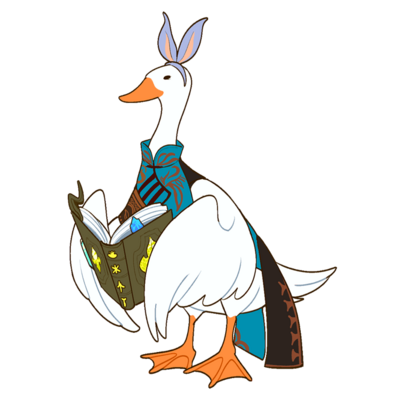
Giving up the staff's inconspicuous nature is often worth it for a druid willing to get up close and personal with their adversaries, and thus deliver a resounding BONK or two.
 Rubik
Rubik
Bonk GIF - Bonk - Discover & Share GIFs
Click to view the GIF
@Rubik Druid testing their reinforced staff, 2024, colourised
Not to be outdone upon the discovery of druidic staffs, the magical academies of Ioh-Né developed a counterpart to the weapon.
Banded Staff | Simple Melee Weapon
Cost: 5 gp. Damage: 1d8 bludgeoning. Weight: 6 lb. Properties: Two-handed, special
A stone-banded staff can be used as a druidic focus, while a metal-banded staff can be used as an arcane focus. Druids are proficient with stone-banded staffs, while sorcerers and wizards are proficient with metal-banded staffs.
Many in #Auvia think of the shield as a defensive tool, but some know well that when built to last, a shield can be a weapon in its own right. A well-timed shield bash has saved many an adventurer's life.
If you are proficient with shields, you can replace one of your attacks with a shield bash when you take the Attack action. This is a melee weapon attack that deals 1d6 bludgeoning damage. On a critical hit with a shield bash, you may knock the target 5 feet away from you.
#Lore24 16/07/24
Some who favour shields in battle take their use of it as a weapon even further than shield bashes. They sharpen the outer edge of the metal or stone, adapting their tactics to allow for opportune slashes with their off-hand.
A sharpened shield must be made of metal or stone, and can be used to attack in the same way as a shield bash, dealing 1d6 slashing damage. On a critical hit with a shield slash, the target takes 1d4 slashing damage at the end of their next turn.
The bow is widely used across #Auvia, whether for hunting, warfare, sport, or all of the above. But Khavan archery is a cut above the rest, even without reliable access to forges to make metal arrowheads.
Due to their training by hunting creatures of the wild, the archers of Khava excel in attacking in unusual ways. Their cavalry archers strike and move, while their foot soldiers ambush from concealed positions, high ground, or otherwise where their foes least expect.
#Lore24 18/07/24
New Feat: Khavan Accuracy
Prerequisite: Proficiency with shortbows or longbows, and either a Khavan Cultural Origin or training under a Khavan archer
Your relentless Khavan archery training grants you the following benefits:
• Increase your Strength, Dexterity, or Wisdom by 1.
• When you make a ranged weapon attack against a hostile creature that's at least 10 feet below you, you gain a +2 bonus to the attack and damage rolls, and may move up to 10 feet after attacking.
Adventurers often develop the solutions to problems they face in their travels across #Auvia. When their unorthodox ideas take root and develop a community, a new weapon or tool is routinely the result.
The rope-arrow is one such idea. Originally assembled to embed ropes to climb much like hurling a grappling hook up a cliff, it can be used to attach a rope to anything the arrow can pierce - even a monster's hide. Darts can also be fitted with ropes in the same way.
#Lore24 20/07/24