
EVs won't save the planet. Ultimately, the material bill for billions of individual vehicles and the unavoidable geometry of more cars-more traffic-more roads-greater distances-more cars dictate that the future of our cities and planet requires public transit - *lots* of it.

--

If you'd like an essay-formatted version of this thread to read or share, here's a link to it on pluralistic.net, my surveillance-free, ad-free, tracker-free blog:

https://pluralistic.net/2024/06/26/unplanned-obsolescence/#better-micetraps

1/
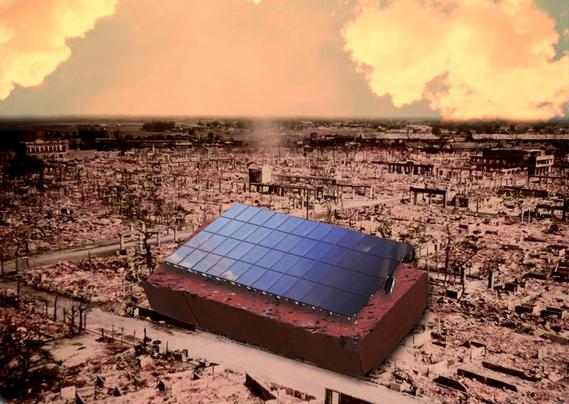
Pluralistic: Cleantech has an enshittification problem (26 Jun 2024) – Pluralistic: Daily links from Cory Doctorow

@pluralistic two unintended consequences of the move towards electric vehicles is that they are at their best on short journeys, not travelling transcontinental.
And they are also at their best at speeds under 40 miles an hour, becoming very greedy over 60.

Both of these factors will help modal shift to mass transit across longer distances and should help to reduce average traffic speeds.

@peterbrown @pluralistic Almost all passenger vehicles become "very greedy" over 60, regardless of fuel type. EVs just put the power number conveniently on the dashboard so you can see it for yourself.
@targetdrone @peterbrown @pluralistic ... because air resistance becomes very significant. It would be much better if cars could drive very close behind each other, so the first car pushes the air out of the way, and the rest ride along in the slipstream. This would require very advanced self driving or perhaps even better just mechanically coupling the cars together so they all move as one long unit...
@dominic @targetdrone @peterbrown @pluralistic huh, never considered coupling cars together... into a... train. Damn, we already had the answer all along, again!
@ahoyboyhoy @dominic @peterbrown @pluralistic The concept has been bandied about for decades. One car acts as a pilot, and as cars enter the road traveling in the same direction, they would auto-navigate to follow the previous car just inches apart. The problems are in the safety: what happens when a system fails, or a pilot makes a bad decision, etc. Plus nobody would want to be the pilot, because they still have the expense of breaking wind.
@targetdrone @dominic @peterbrown @pluralistic not to mention that we could just build more rail and then focus additional efforts on last mile optimizations.