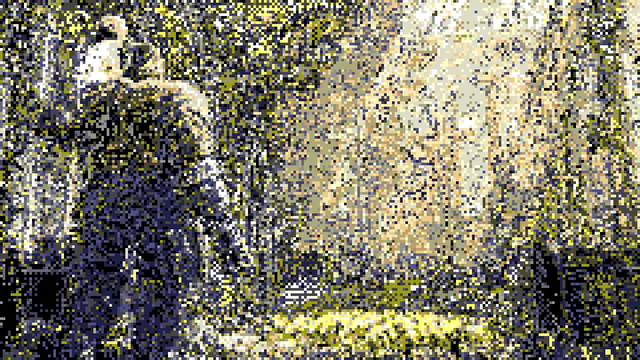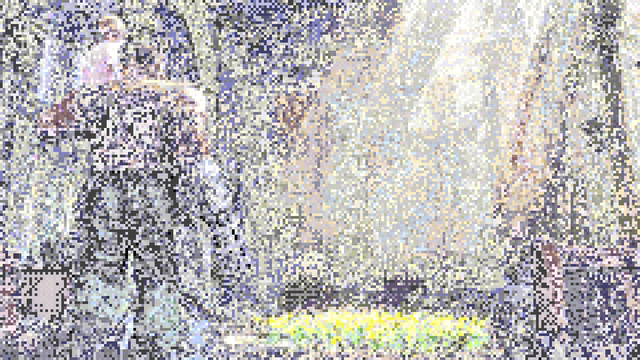
so @TomF talked me into making it so blending colors on the #Mega68k console is true blending rather than resolving back to one of the 64 palette colors (so that the output is always 64 color)

i made a utility that takes an image and converts it into a tile layer with only 16 base colors with the framebuffer overlaid using all 64 colors with alpha blending and i can't help but wonder if this isn't too powerful
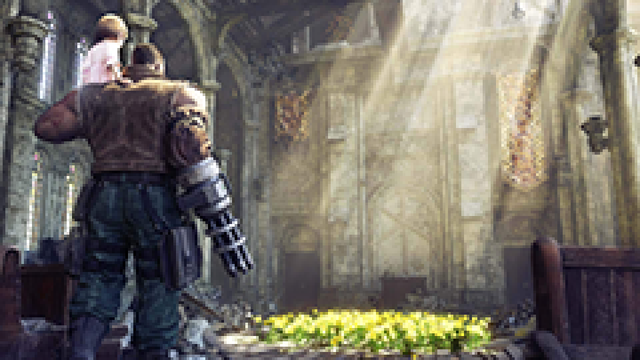
i mean you can only do this with static images, so i guess it's like a sort of secret 4096 color mode that you can only use for that?

grabbed a background from opengameart.org (https://opengameart.org/content/backgrounds-3) processed it and slotted it into the battle scene i've been working on and

yeah, i'd say that works pretty well?

#PixelArt #Mega68k #FantasyConsole

Backgrounds

backgrounds for RPG battle   Patreon: https://www.patreon.com/nidhoggn Twitter: https://twitter.com/nidhoggn Enjoy :)

OpenGameArt.org
in case its not clear you overlay the 4th image in the original post on the 3rd and you get the result. like this:
@eniko if I’m understanding correctly this is sort of how the Amiga HAM (Hold And Modify) mode worked to give you 4096 colours, except you couldn’t use it with other elements
@sinbad I don't know enough about the Amiga to verify that but @TomF mentioned that same thing so probably!
@eniko @sinbad @TomF Sounds a bit different (if I'm understanding the above) to HAM.
How HAM works (not googling, I'll try from memory):
You have 6 bits per pixel.
Two bits decide between colour index, red channel, green channel and blue channel.
The other 4 bits decide either one of the 16 colours from a palette of 16, or set the the specified channel to a 4 bit colour, preserving the other two channels from the pixel to the left.

@eniko @sinbad @TomF So you get all 4096 colours at once, but it can take up to 3 pixels to get the right colour (each pixel in a row only changes one channel).
That results in colour fringing and made it hard to animate.

There was also Extra Half Bright. You get a palette of 32 colours, but 6 bits per pixel. There's an extra 32 colours that are all half as bright as the colours you set. Since the display was planar, one bit plane could work as a shadow layer.

@kojack @eniko @TomF sure but same idea though: take a paletted system and apply some delta modifier afterwards to add more colour depth

[edit: comparing it wasn’t a neg or anything btw, I think it’s cool that these ideas come back around in a similar form and this one is cool]

@sinbad @kojack @eniko Yup - but fortunately in this case the modifier is from layer to layer, not from the pixel to the left. Which was bloody awful to deal with if anything had to move!
@TomF @sinbad @kojack yeah and if you need dithering even that's easy to apply in a position independent way if you use ordered dither