🎉Good news! The new paper ‘Drought stress influences foraging preference of a solitary bee on two wildflowers’ in @AnnBot by Annika Rose-Person and co-authors is now #free for a limited time. (1/7)
👉 https://botany.fyi/6cr97d
#AoBpapers #Pollinators #PlantScience

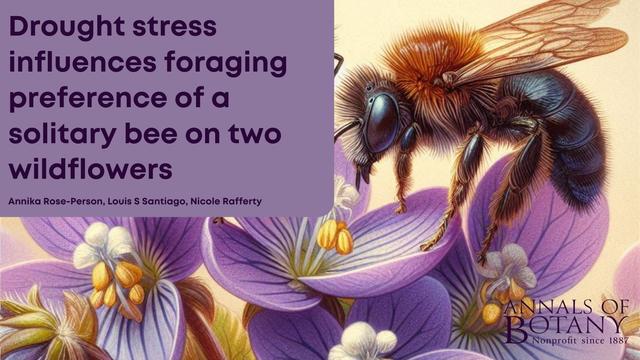
Drought stress influences foraging preference of a solitary bee on two wildflowers
AbstractBackground and Aims. Pollinators provide critical ecosystem services, maintaining biodiversity and benefitting global food production. However, pla
🌸🐝Pollinators are crucial for biodiversity and global food production. But drought, worsened by climate change, can affect plants and pollinators alike. (2/7)
Authors grew 2 wildflowers in greenhouse under water stress to mimic drought & measured flower size, display size, nectar volume, and nectar sugar concentration. They observed how Osmia lignaria bees chose between droughted and non-droughted plants in controlled foraging arenas. (3/7)
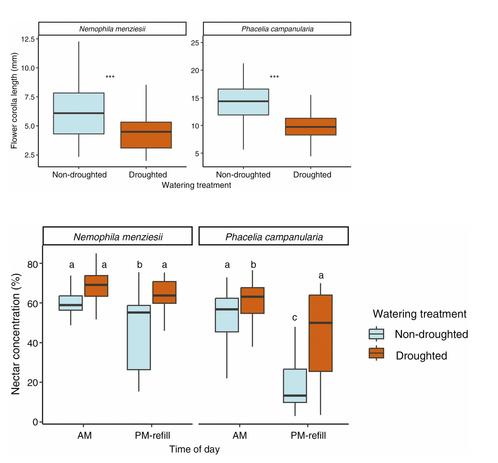
They found Phacelia campanularia is more drought-tolerant than Nemophila menziesii and that droughted plants had smaller flowers and floral displays, and produced less, but more concentrated nectar. (4/7)
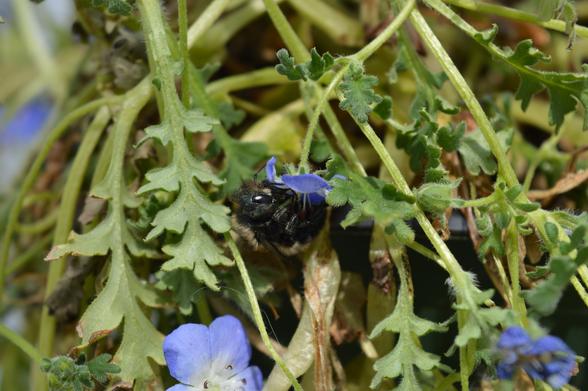
Bees preferred non-droughted Nemophila flowers. Preference for non-droughted Phacelia flowers was seen only in the afternoon, not in the morning. (5/7)
 Annals of Botany