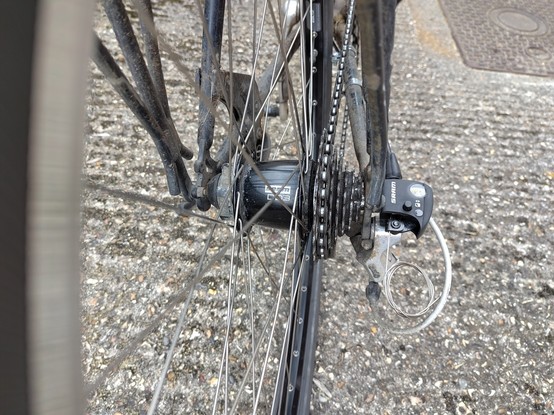
I'm not a big cyclist but I #cycle to work every day and have done for nearly 20 years. I always service and #repair my own bikes, but this is the first time I've built a whole wheel. Somewhat over the top for my old mountain #bike, but for fun as part of the project I've put a 3 speed hub in and removed the front derailleur. It took a bit of creative cable routing but it's on and works great. Apart from frame welding I've now done every bike repair job I can think of and that has made me happy.
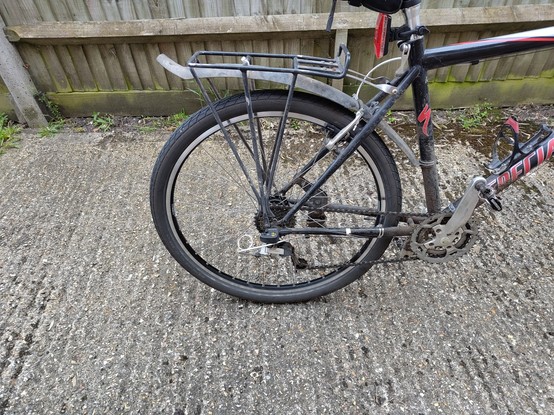
So what did I learn about the skill of wheel building? Well, I didn't need all the specialist tools. If I was building wheels regularly I can definitely see the need for them, but don't let the lack off wheel building tools stop you. I was a bit daunted but determined, so I did it and would encourage anyone who is curious to have a go. Tension, dishing and trueing are the three big things, but there are tool-free solutions for all of that.
I was worried about spoke tension, but comparing deflection and the tone (pluck the spokes and listen!) with another similar wheel was good enough. I also didn't know how to manage dishing, but in the end dishing is about getting the rim central in the bike, so I built it in the frame and used the frame itself as my reference point and just used a ruler. Finally, for trueing, I just gripped the frame tight with my hand and used my thumb to feel where it was out.

There's a lot of info online about wheel building, but most of it is about *how* to use the tools, not *why* or what to do without them.

Building wheels fast, repeatedly and to high quality for different sizes and needs is a skilled task best undertaken with the right tools.

But building or repairing a wheel for your bike at home is within your reach with very few tools.

I already had a tool for the rear cassette, a spanner, a screwdriver and my thumbs. I bought a spoke key.