I am deep in the rabbit hole of looking into an apparently deeply scammy looking zsh plugin manager called "zi".

I think it's an extremely bad idea to use "z-shell/zi" or anything else from the same "creators". There's an entire field of red flags here.

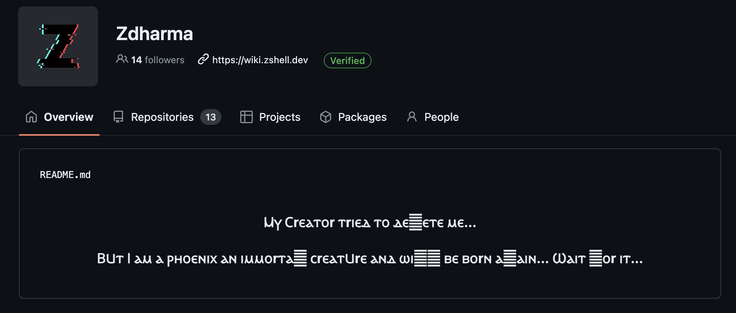
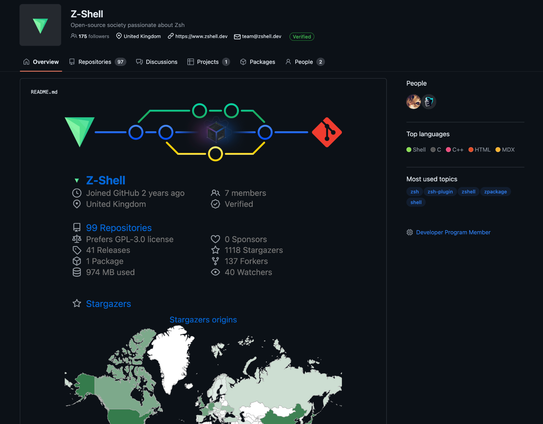
I'll start with its origin: it's apparently a fork of zinit, which was a project created by zdharma (Sebastian Gniazdowski).

I say apparently because the "fork" was created by bulk importing all the original zinit code: https://github.com/z-shell/zi/commit/2f749f9c3f49d872d4d277a450d36d8a6e64ac08.

This happened a few weeks after zdharma disappeared off the internet and deleted all their repos. That makes it a bit less of a red flag—it might be the only way to rescue the code—but rescue forks should still acknowledge they are forks.

zinit code logic · z-shell/zi@2f749f9

✨ A Swiss Army Knife for Zsh - Unix Shell. Contribute to z-shell/zi development by creating an account on GitHub.

GitHub

Making a rescue fork of an abandoned project is normal (e.g. https://github.com/zdharma-continuum/zinit).

You know what's not normal? Creating an organization with the same name as their deleted GitHub username so that anyone who comes to find the old repos finds the projects you now control.

Props for making it look creepy as fuck, though.

GitHub - zdharma-continuum/zinit: 🌻 Flexible and fast ZSH plugin manager

🌻 Flexible and fast ZSH plugin manager. Contribute to zdharma-continuum/zinit development by creating an account on GitHub.

GitHub

That's not their main org though.

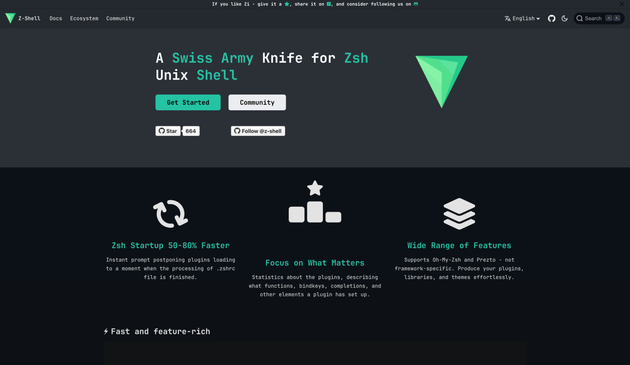
Their main org is called...z-shell. This is the first thing that threw me when I stumbled on this—this isn't official zsh docs, but it's all hosted at wiki.zshell.dev, which feels like an attempt to _seem_ official.

Here's the site: https://wiki.zshell.dev/

They're good at throwing together believable looking project websites, so long as you focus on the visuals. Lots of flashy imagery (some of these icons are animated, too) to distract from sentences like "Instant prompt postponing plugins loading to a moment when the processing of .zshrc file is finished."

Oh, it's not a "wiki" in any sense except that I guess you could submit a PR to it on Github, if you were wondering.

Z-Shell

Swiss Army Knife for Zsh Unix shell

The project is a plugin manager for zsh, because that's what zinit was, though they don't make that clear here.

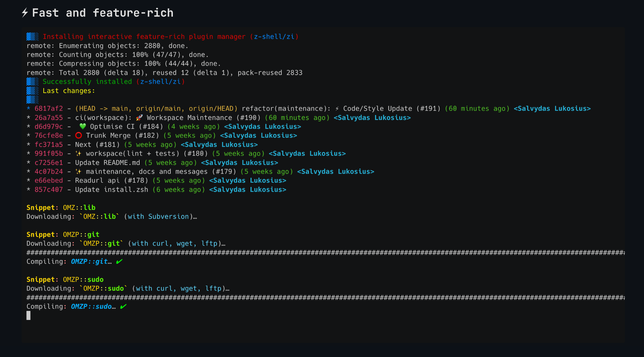
There's a minute long asciinema on the page of the installer script running, which shows that they like flashy colorful outputs but doesn't really give me any impression of the claimed "speed" (https://asciinema.org/a/509113). Why would this be your "see it in action"?

Also their install script starts with "Installing interactive feature-rich plugin manager (z-shell/zi)". Gotta love that.

A Swiss Army Knife for Zsh - Unix shell.

https://github.com/z-shell/zi

asciinema.org

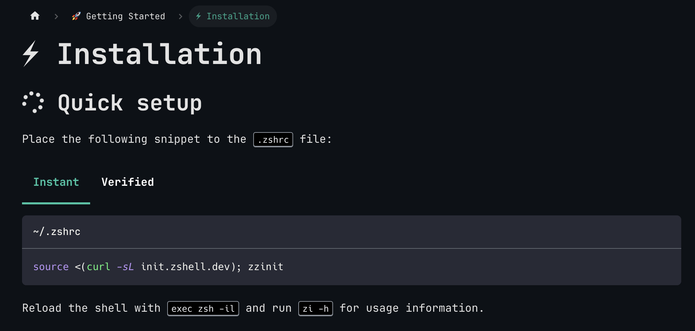
So how do you install this?

Well it's easy, you just...wait, you WHAT?

You um...you add a curl directly to your .zshrc. You're sourcing this from the website _every time you open a shell_.

That's gotta be the slowest possible option, to say nothing about the security concerns.

That page is a redirect to the init script on Github. At the moment. It sure could change.

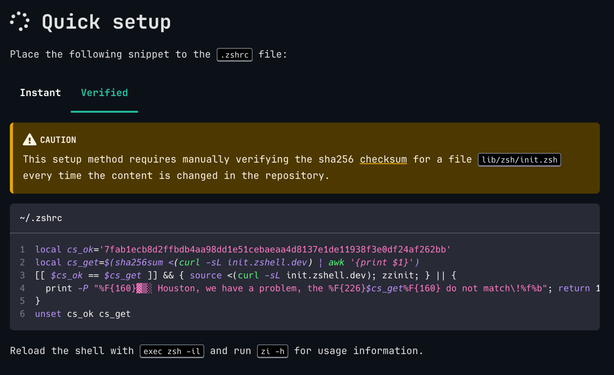
But if you're concerned about that, they have "verified" installation instructions, and I...I can't even.

Just put a hardcoded checksum in your zshrc and if the script you download doesn't match it, refuse to do anything.

Why wouldn't you just download the current version? Why constantly re-download it on every shell invocation just to check that it's unchanged?

...I can't even

Anyways by this point the picture I have is that the "devs" don't know what they're doing.

There's a non-malicious explanation for all of this, and indeed, I think a non-malicious explanation is in order. They're cosplaying as open source developers.

Actually building a useful project is hard. Grabbing someone else's, throwing up some flashy pages, and borrowing credibility from other projects with look-alike names is far easier.

I wouldn't trust any code from this site, malice or not.

Oh, and that ain't all they cosplay as.

They also run a "marketing firm" staffed by generic AI faces, for instance.

...I told you I was *deep* in this rabbit hole

Let's back up. Who are the devs of zi?

Well, they have a "Contributors" doc. Let's take a look.

At first glance, it's a lot of them.

(yes, I see the project logo. We are going to come back to that. It's a whole separate thing. Seriously.)

You're probably not surprised at this point to learn what isn't on the list: any mention of zdharma or the original project this forked off of.

You might also be unsurprised to learn that the vast majority of these "contributors" have exactly one commit. It's not even clear to me all of them want their profiles under "Contributors" here, though plenty of them seem kinda scammy.

It seems like the real owner of the project is Salvydas Lukosius, aka "ss-o".

Salvydas is a busy guy: according to his LinkedIn, he has three jobs, one of which might be his actual job (the other two are scams including the marketing firm I showed earlier).

Unshockingly he's real into AI, btw. WiseHub offers "Generative AI to boost your business" on their generic marketing page.

We can identify some signatures of Salvydas's on the pages for these businesses, like putting some arbitrary words in all CAPS, including "FAQs" that were clearly generated by an LLM, and my favorite...well, just see for yourself.

So what, right? This is all _probably_ harmless, if it's just business cosplay.

After all, I can't imagine anyone actually engaging a marketing firm that uses "RESULT$" right on their website. And I have no idea how anyone would find and stumble into these fake businesses.

But Salvydas isn't lying about one thing. He's good at "SEO".

By which I mean, his project is beating zsh.org itself in my search for "zshell"

This is how I found it. I was searching for some info on zprof, because what better to do with my weekend than track down the slowness in my prompt, and I came across this "Benchmarking" page: https://wiki.zshell.dev/docs/guides/benchmark

At first, I didn't quite register what I was looking at. The site appeared legit, and I wondered if there was an official zsh wiki now or something. Sure, the writing is bad, but it's a wiki!

The reference to "zi" made it clear it wasn't for zsh proper, but it had me for a second.

Z-Shell

Swiss Army Knife for Zsh Unix shell

I can believe that these are script kiddies cosplaying as professionals. I did that when I was a teenager, and I don't have a problem with it. It's harmless fun.

But remember when I said I needed to get back to the logo? We need to get back to the logo.

Here's a huge version, the only thing on their "Community" page

Let's look at it side by side with the official zsh logo, shall we?

Well, that's unmistakable right? They just added the "ELL". They're clearly _trying_ to look like the original project.

That's enough to tilt this towards being a problem, IMHO. I have no clue what they intend to do with this, but...this is weird.

...And it gets weirder

Oh hey, it's the "ZSHELL" version of the logo on the Wikipedia page for zsh.

Am I losing my mind? Did the actual zsh project adopt this logo? If yes, is that better or worse?

Let's find out.

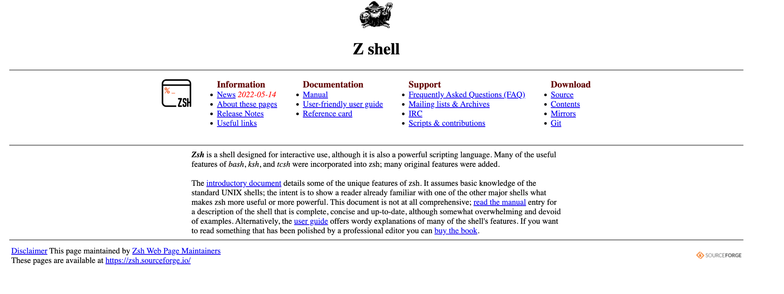
Headline first: no, that is _not_ an official zsh project logo, as far as I can tell. Official zsh pages still have the one that just says zsh.

EDIT: This was incorrect; it's an alternate version of the official zsh project logo.

So where did this logo come from?

It was added by Wikipedia user Justindorfman in March of 2022:
https://en.wikipedia.org/w/index.php?title=Z_shell&oldid=1078941115

EDIT: When I originally wrote this, I was in the process of investigating and not yet sure of the details, but ultimately what happened here is boring and straightforward: "Salvydas" grabbed a version of the zsh logo off Wikipedia and used it without permission. Justin has since reached out and confirmed this; thanks Justin!

Z shell - Wikipedia

Assuming Justindorfman is the same Justin Dorfman who works at Sourcegraph (https://twitter.com/jdorfman), this might be legitimate. It's sure the first time a name has come up that seems like a real developer.

Unfortunately, Twitter is awful now and I can't ask him via DM, not because his DMs are closed but because apparently DMing people who don't follow you is a "premium feature".

This mystery has me perplexed, but not enough to give Elmo $10.

Justin Dorfman (@jdorfman) on X

Open Source Program/Community Manager @Sourcegraph by day, cringy meme generator by night. Maintainers best friend 24-7-365.

X (formerly Twitter)
I wouldn't put it past someone with seven faked LinkedIn profiles and a Github org squatting on the name of a well-known developer who nuked their accounts to register a fake "Justin Dorfman", of course. But the account _is_ from 2016, and Sall's activity seems to have started more recently.
...We're so deep in tangents now and apparently some people are actually reading this, so hello friends! Welcome to the messy maze that is my mind. It won't get more organized, and I'm not sure where it's going, but hopefully you have fun riding along.

Anyways. Regardless of whether the Justin account is the same Justin Dorfman, this Wikipedia user seems to be pretty fine making a self-serving change.

His edit adding the Bash one back in 2016 says this:
"I updated the GNU Bash logo to the latest. You can read the history here: http://www.unixstickers.com/blog/new-home-for-bash-stickers-justin-dorfman-guest-post also used by Chet Ramey's Bash page: http://tiswww.case.edu/php/chet/bash/bashtop.html"

Hmm.....

Unixstickers stickers | Sticker Mule

Welcome to the original Unixstickers store! Since 2008, we’ve offered high-quality laptop stickers of iconic Unix, Linux, and open-source logos. Show off your passion for coding and tech culture!

Sticker Mule

That blog post is gone now, and unixstickers.com redirects to Sticker Mule.

It's days like this I am deeply grateful for the Wayback Machine.

https://web.archive.org/web/20160229231114/http://www.unixstickers.com/blog/new-home-for-bash-stickers-justin-dorfman-guest-post

If you're reading this and able to, go donate to Internet Archive! They make it possible to actually dig up and uncover stories like this.

New $HOME for Bash Stickers | Unixstickers

This is a guest post by Justin Dorfman. He heads Developer Relations and Open Source outreach at MaxCDN. This year (May 19th 2016) he will be speaking at OSCON in Austin. More info on that below.   In late September of 2015 I was looking at the back of my laptop and was irritated. Ca.

unixstickers

So the gist of this post is that Justin didn't like how old the Bash logo was, emailed the current maintainer (Chet Ramey) and asked to redesign it. I buy this story entirely. I've reached out to maintainers of old, critical projects before and they're usually super responsive and friendly.

EDIT: As confirmed by Justin below, this was entirely legit and not associated with any of the rest of the thread at all.

We can clearly see the story isn't the same with the zsh logo. There's no indication anywhere that they have changed the name in their logo from zsh to zshell.

Prior to Justin's edit, the zsh page didn't have a logo. Given that he appears to like shell logos and this fake logo from z-shell/zi was already floating around at the time, it's easy to imagine this was just a mistake.

But it sure lends even more false credibility to this project.

@dylnuge dude, I didn't make money from selling stickers. The stickers that were sold went back to the Free Software Foundation.

In fact, they still sell the stickers on their store! https://shop.fsf.org/stickers/bash-logo-sticker-pack

Please don't make assumptions that are entirely false. I would appreciate a correction of some sort.

Edit: we cleared this up, thanks Dylan for updating the thread

BASH logo sticker pack | FSF Shop

@dylnuge Looking up the zsh mailing list thread that got linked when the logo was added to Wikipedia, Justin Dorfman designed the logo: https://www.zsh.org/mla/workers/2022/msg00009.html

I can't see anywhere the zsh project used the horizontal "zshell" version but if he's the designer and was engaging with the community on it, it seems legit to me that both versions were some level of official.

Re: New Zsh Logo

@misty Yeah it seems quite possible that the zshell version is just an unused (or not widely used) alternative version of the official logo.

I did see the mailing list post, though I couldn't find a copy of that version in that thread (a few other alternates show up, though, such as in https://www.zsh.org/mla/workers/2022/msg00059.html)

Still doesn't explain why they're using it on the zi "community" page.

Re: New Zsh Logo

@dylnuge 👋

I was the art director of the Bash and ZSH logos. I've been a code & non-code contributor for 13 years, so I hope I have enough credibility to have people believe that **I have nothing to do with that other project.**

@jdorfman Hey Justin, thanks for getting in touch! Figured as much and appreciate the confirmation!

It seems most likely that they just stole the version of the logo from Wikipedia and slapped it on their website to look more legit.

@dylnuge hey all good sorry about that last (toot?) I just have co-workers sending me links like "dude you need to check this out" 😅

@jdorfman No worries at all, you were right to correct me!

I've edited a couple of the earlier posts about the logos in this thread, since I don't think people should need to read to the end to learn that the logo is legit and the project just stole it. Hopefully that makes things clearer!

Thanks again for reaching out, really appreciate it.

@dylnuge the bash logo is legit.
The GNU page for bash at https://www.gnu.org/software/bash/ links to the maintainer's own page at https://tiswww.case.edu/php/chet/bash/bashtop.html and the maintainer's page has that logo on it.
Bash - GNU Project - Free Software Foundation

@dylnuge When the zsh logo was designed and contributed, there were a few variations - black and white, with orange, just the %_ for use as a favicon and with and without the "ELL" to allow for use in wider or narrower spaces. They are all "official" but that's not to say that you aren't perhaps onto something with the fork of Sebastian's plugins being dodgy.

@dylnuge I feel like #zsh should ask them to change their logo/name so it can't be confused with official endorsement

People get pissy about OSS projects having trademark/logo policies and such, but this is why

@dylnuge Beating zsh.org, is not exactly setting a high bar for SEO. The site is pretty much unchanged since the mid-90s, some of it my work at that time. Seems there are more people with time to create rip-off scammy fake #zsh pages than actually willing to offer to help the project.
@dylnuge
I wonder how Wickes feel about him! 😳

@dylnuge

What's really scary is that if they used the current MidJourney it would be really hard to tell. (Maybe impossible if they were super careful)

that looks like MidJourney v4ish maybe?

@dylnuge They are clearly photoshopped in front of a wall, but how do you recognize these as AI faces? Genuine question.

Just yesterday I stumbled on this website: https://www.datenschutz.org/ueber-uns/ and I was 99% sure the faces were AI-generated. Then I looked in the archives and the pictures were there long before generative AI.

Über uns - Datenschutz

Wir helfen Ihnen durch den Datenschutz-DschungelDie Leistungen unserer Redaktion im ÜberblickMit Umsetzung der neuen EU-Datenschutz­grundverordnung zum 25. Mai 2018 stellen sich Unternehmen und Verbrauchern verstärkt differenzierte Fragen zum korrekten Umgang mit personenbezogenen Daten. Die Redaktion von datenschutz.org möchte alle Betroffenen, sowohl Datensammler als auch Dateneigentümer, mit den veränderten Gegebenheiten vertraut machen. Zu diesem Zwecke stellen […]

Datenschutz
@dylnuge Also including a classic TOCTOU "bug"

@dylnuge for anyone following along and still not sure why this is so bad (and even the check doesn't save you):

One could code the web server to:
* provide the nice version of the script on someone's first load & on subsequent loads if enough time has passed since the last request (human may in the loop)
* provide the malicious script on the second load if there are two in quick succession or if records show they regularly download via the first formula and aren't paying attention anymore

@dylnuge it's not bulletproof, though—if you launch multiple shells in quick succession, they might give the wrong copy to the download that's checking against the fixed hash by mistake

But since there's no permanent copy kept (if you do it the way they say to), they can always blame bad mirrors or something and "fix" it

@dylnuge at least it's not a sha1sum, which would be really easy to fake into having a valid hash every time while still having the above algorithm to avoid humans tripping over the malicious version
@dylnuge but honestly, you only need to infect a machine once, so once it delivers the malicious payload successfully once, it never needs to do it again

@igrok Very true.

I highly doubt a sophisticated attacker controls this project, but if they did, an essentially undetectable version of an attack here would be to serve a malicious version for a short period of time, and only to known users (e.g. match on IPs based on prior downloads; that matching is easy when legit users download every time they open a shell).

Of course, I also doubt anyone is using the "verified" version of this script, and it's even easier to do this on the "instant" one.

@dylnuge their "verified" snippet has been invalid for some time, so probably not

@dylnuge

Even worse, the code downloads the script TWICE on every shell invocation, and it is not as secure as it suggests.

The code downloads the script once solely to verify the checksum, and if it matches it downloads the script again to run it...and assumes the checksum will be the same.

If an attacker compromises the distribution site they could install a service that returns the original script for "new" client IPs, but return malware payload on subsequent calls from those IPs.

@boomfish @dylnuge Yeah, this code seems outright malicious to me.
@dylnuge curious…I don't have the same SHA-256 digest as in that screen capture

@dylnuge hrm, ok, it's just an update to the script to simplify it

Could be trying to figure out if anyone is really watching, too

Or encouraging users to switch to the first formula, or both

This is just ick

@dylnuge great for simulating powershell startup times

Wow, that’s sneaky!

They download it twice, once for validation and one for execution … I’m pretty sure one can give a good file to the first download and an evil file to the second with some pretty trivial heuristics in the webserver.  

I have the feeling that they know exactly what they are doing. (Edit: They probably don’t)

EDIT: I wrote this before reading the thread to its end. Still not trustworthy.

@dylnuge

@dylnuge Also, it looks like it downloads the script again if the hash of the first download matches. A malicious server could respond with a malicious script on every second request from the same IP address, and 💥
If it at least executed the script of which it calculated the hash... But no, it downloads twice 😳

@dylnuge

At the moment. It sure could change.

🤔
Maybe someone evil overtaking the domain could have it redirect every 30th request of the same IP to an evil script so it wouldn’t even get caught easily

@dylnuge
It's doubly bad in that they don't check the checksum of the d/l the second time. So they could figure out what checksum you're expected, serve that the first time, then upon the second request serve a different, but compromised version and it wouldn't be caught.
@dylnuge The quick install uses unencrypted HTTP, which is the first big red flag and the "verified" version has a TOCTOU vulnerability... The combination of both probably means that you can even MitM-attack users of the "verified" version...
@dylnuge At this point, I certainly vote "just stupid" on the obligatory "not sure if ..." question 🙈

@dylnuge Hold up 'pard that's straight up back door there!

🔥 The checksummed code is discarded and the server is not required to send out the same content for repeat requests in a short time window.