 Sarah Taber
Y'all know what day it is 🍀
In the US, St. Patrick's Day is strongly tied to the event that led so many Irish people to emigrate here: the famine of 1847.
Food systems & supply chains make history.
Y'all know what day it is 🍀
In the US, St. Patrick's Day is strongly tied to the event that led so many Irish people to emigrate here: the famine of 1847.
Food systems & supply chains make history.
I'm working to build a better food system here in the southern US. Both regions share rich land that can grow plenty of good food- and a history of deep rural poverty, thanks to what could generously be described as "poor leadership."
There's also a lot of ingenuity in both.
So today we're doing another round!
For every donation to the link below, I'll post one (1) fact about agriculture in Ireland- before, during, & after 1847.
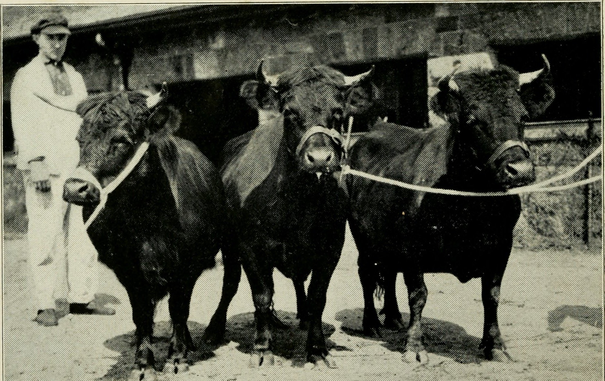
There's WAY more than potatoes. Like what's going on with these fully-grown, halfling-sized cows.
And we're off!
1/ Ireland has a long history of smallish cattle. Here's a guy posing with a bull, with some forced perspective to make this compact king look like full-sized.
Why small cows? They weigh less.
That's a big plus in Ireland. When it's rainy, big heavy cows can easily tear up sod with their weight. Next thing you know the pasture is a music festival-style mudpit. The grass can take years to grow back right.
You can avoid all of that just by having smaller cows!
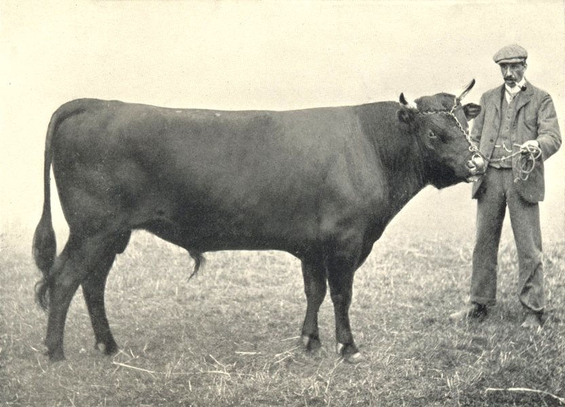
2/ This answers a question I'd had for a long time. When we learned about the 1847 famine in schools, the textbooks would say "People got almost all their calories from potatoes, and their fat and protein from a little bit of dairy." But I knew cows are big honkin' animals that need lots of space and food.
If people were living on tiny plots, how were they keeping cows?
Oh the cows were little. That helps a lot.
3/ If you're eating a lot of potatoes & dairy, you gotta find a way to make it interesting!
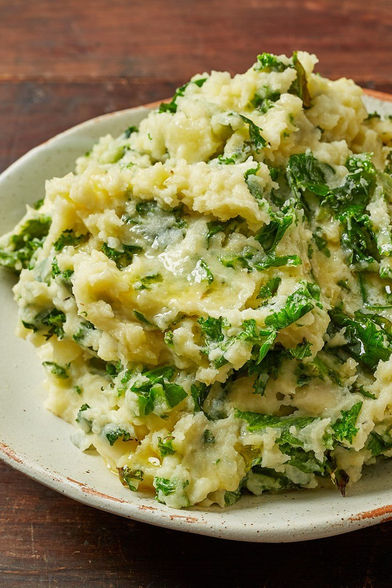
Enter colcannon: mashed potatoes with greens and ideally (IMO) as much milk/butter as possible.
4/ There's a song about colcannon! Fittingly called "Colcannon."
It's a little sappy but I think for a thing that stood between a lot of people & starvation, this is permissible.

5/ After emigrating to the US, a lot of people kept using colcannon as a side dish along with corned beef (a working-class friendly main dish in 19th century US) or other heartier options.
But for people living on small plots in Ireland, it often served as the main dish.
6/ What did people in Ireland eat before potatoes?
By all accounts, lots & LOTS of dairy. The weather's good for growing lush grass, which keeps cows well-fed enough to milk most of the year.
Drinkable yogurt-type beverages, curds, clabbered cream, and lots & lots of butter.
7/ But there's a problem: dairy is perishable. Hard aged cheeses have a longer shelf life. But those take dry conditions (part of why they're popular in the Mediterranean).
What's a dairy farmer in cold, rainy Ireland to do?
Bog butter, apparently!
8/ Starch came from oats- the grain most tolerant to wet weather- and root crops like turnips.
Ireland's food history didn't start with the potato! Potatoes arrived into a food system that had already been fully formed since the Bronze Age.
9/ Potatoes arrived from the Americas in the late 1500s/early 1600s.
And that was right around when England began seizing large amounts of land to set up plantations. (In Ireland, plantations = land grants the monarch gave to English gentry.)

 Bill Ricker
 Bill Ricker