

Fun fact: 56 kbit/s even as a theoretical maximum never existed in the US for dialup. FCC regulations on transmitting power over POTS limited it to 53.3 kbit/s.

Even that required very good operating conditions. The phone network was rarely that good, because it didn't have to be. You needed to have good copper all the way to the ISP (by no means guaranteed), a good connection at the CPE (which wasn't always a given), good wiring (very rarely a given), etc. There also only had to be one ADC in the path (which was not guaranteed although usually the case).

Modems would actually negotiate the data rate by checking the line quality. It would vary each time you dialled in. The number you dialled also had a major impact because it depended on where the other end was located. Sometimes in busy areas, you had to try different numbers to get the best speed.

"So how come DSL was possible?"

DSL requires a central office or terminal very close to your house.

Like extremely close.

Like anything more than 5.4km/3.4mi would not work at all, and that is pushing it. Usually there's a terminal in your neighbourhood.

It uses frequencies higher than speech, dialup was stuck using a typical voice connection, DSL doesn't do that.

DSL has enough error correction where you can transmit it through a banana for a short distance, also. It was designed to work with crappy copper.

"Could dialup be improved?"

Not really. There is a reason we all switched to cable, DSL, and fiber. We reached the limit of what it could do. I don't mean like "maybe if some better tech came along..." I mean the absolute physical limit. Like it basically reached the Nyquist limit... for a lot of very complicated physics reasons, dialup literally couldn't get the job done.

You actually can't use dialup over most VoIP lines because of how much dialup was pushing the limit. (This is a major oversimplification but it's good enough!)

You'd have to change the way POTS works to make dialup work faster, and trust me. Not worth it at all.

I simplified a lot of this for the non technical so technically minded people can expound upon this if they wish. Signals stuff is still very much the realm of magic for me, although I know enough to be dangerous.
Oh worth noting was V42/V42bis/V44 that was just a cheap compression hack. It didn't always give reliable results (a lot of data doesn't compress well and back then a lot of stuff was already heavily compressed). It was a bandaid that was never widely implemented or used. Even getting your ISP to upgrade to V92 was pretty much never gonna happen. It came too late. ISDN already existed and DSL/cable began rolling out. There was no going back.

Wikipedia has a great quote on this:

"[The dial-up sounds are] a choreographed sequence that allowed these digital devices to piggyback on an analog telephone network. A phone line carries only the small range of frequencies in which most human conversation takes place: about three hundred to three thousand hertz. The modem works within these [telephone network] limits in creating sound waves to carry data across phone lines. What you're hearing is the way 20th century technology tunneled through a 19th century network; what you're hearing is how a network designed to send the noises made by your muscles as they pushed around air came to transmit anything [that can be] coded in zeroes and ones."

— Alexis Madrigal, paraphrasing Glenn Fleishman

@Elizafox

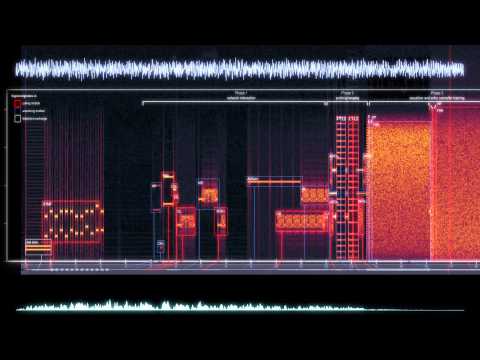
I thank you for this thread, and I thank Oona Räisänen in absentia for her analysis, and this person for animating "the sound of dialup":

https://www.youtube.com/watch?v=jpMrTxMV6E4

Dialup modem connecting

YouTube