
"A matrix with zeros on the diagonal and positive numbers elsewhere is called a zero-diagonal matrix. Zero-diagonal matrices are not invertible. This means that there is no matrix that can be multiplied by the zero-diagonal matrix to produce the identity matrix." -- Google's AI
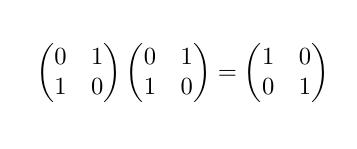
@ProfKinyon Good grief, how does it churn out this nonsense? I really doubt there was anything quite so horribly wrong in its training data, but I guess it must be taking a correct discussion of the non-invertibility of diagonalised matrices with at least one zero on the diagonal and garbling it, while blending the result into something smoothly grammatical, utterly confident, and totally wrong.
@gregeganSF @ProfKinyon I think this kind of language model is simply incapable of capturing the logical connections involved in doing real mathematics. Wrong arguments can sound as plausible as correct ones, to the level of plausibility it's capable of achieving.

@mattmcirvin @ProfKinyon

Absolutely! But the boosters are in denial about that, and churn out endless excuses for the LLMs: “Humans make mistakes too!” “You gave it the wrong prompt!” “This will all be fixed in the next iteration!”

@gregeganSF @ProfKinyon I think people probably will discover some good uses for this technology. But... not this.

The output still sounds like a student who paid enough attention in class to learn the terminology but didn't do any of the homework.

@mattmcirvin @gregeganSF @ProfKinyon
A useful exercise when asking LLMs any fact-based question is to reply with something like "That is wrong. Please give the correct answer." (Saying "please" may be more correlated with training data that complies with the request, while using rude language may generate an argument.) Quite often the LLM will "admit" or "apologize" for the wrong (or right!) answer and give a different one.
@mattmcirvin @gregeganSF @ProfKinyon my friends and I have settled on: large language models are roughly "a student that's really good at cheating"
@shapr @gregeganSF @ProfKinyon And it's not as if this sort of thing is beyond a machine--computer algebra systems that "understand" the rules of linear algebra in the sense of modeling them internally have existed for half a century. But they don't work this way.
@mattmcirvin @gregeganSF @ProfKinyon I think this is currently the perfect sort of example of why you can't trust any output of an LLM to be right -- they're good at right sounding answers but not good at actually being able to determine if they're right or have made it up completely.