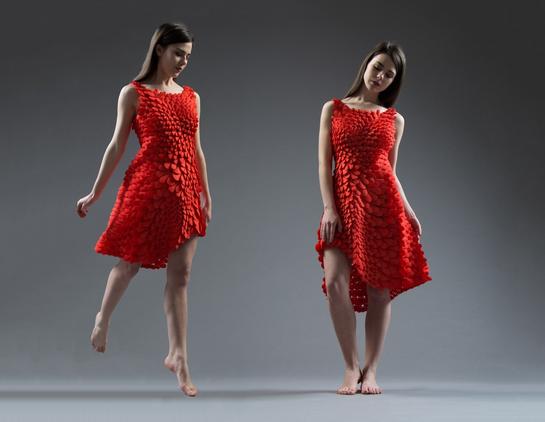
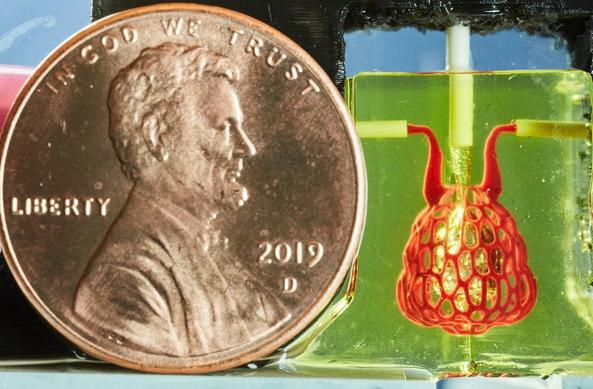
Nervous System is a strange business. We are a computational design and digital fabrication studio known for things like a no-assembly 3D printed dress or designing 3D printed organs.

However neither of those things actually make any money. Monetarily we are primarily a jigsaw puzzle company. How did that happen?

So here’s a thread about jigsaw puzzles.

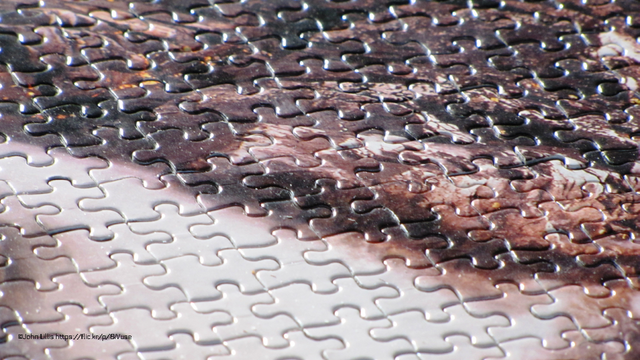
15 years ago, like most people, we knew jigsaw puzzles as mass produced die cut cardboard toys. While fun, the shapes are very simple and repetitive. In fact, the same die is usually used for multiple designs, so puzzles from the same company can swap pieces

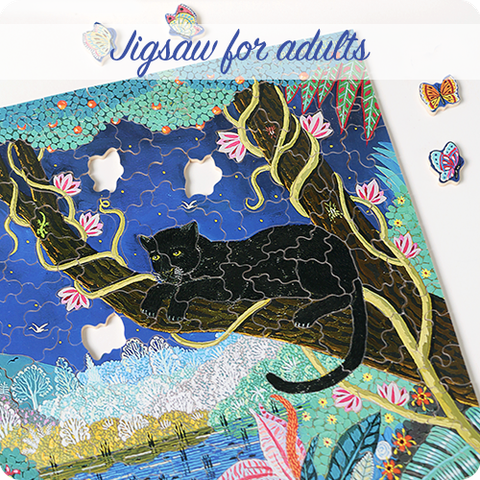
However, puzzles were originally made of wood and hand cut by an artist using a scroll saw. Jigsaw puzzles have a rich history going back to the industrial revolution. Individual artists had their own unique style and puzzles often included "whimsy" or figure pieces thematic to each puzzle. Being cut by hand, often with no pattern, each one was different. With the advent of mass production this art form was largely lost, though there is a small community still dedicated to the craft today

Here is an example from master puzzle maker John Stokes III

https://www.custompuzzlecraft.com/

JSS III Design & Custom Puzzle Craft

Custom Puzzle Craft is closed permanently. This website remains up for legacy purposes.

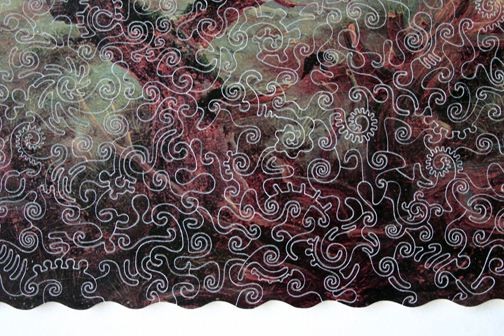
We found out about hand cut wooden puzzles while on vacation in Paris. We followed a guide book to a small shop called Puzzle Michele Wilson. In it a woman sat with a saw, cutting out puzzles as we perused the store. We were delighted and amazed. They specialized in a technique called "color cutting" where the cut of the puzzle follows the image, making it extra challenging

https://puzzlemichelewilson.com/en/

We loved the style and uniqueness of hand cut puzzles, and we thought we could use our techniques of computational design and digital fabrication to reinterpret this craft. Not simply trying to mimic what artists did by hand but to explore the spirit of this art form in new ways.

We created a series of one of a kind puzzles which are computationally generated and laser cut. The cuts are created in a simulation based on a crystal growth process called dendritic solidification and the images are generated by a fellow computational artist name Jonathan McCabe and were based on reaction diffusion. We even went out a limb and bought our first laser cutter, an Epilog Helix.

You can read more about our first puzzles here:

https://n-e-r-v-o-u-s.com/blog/?p=2368
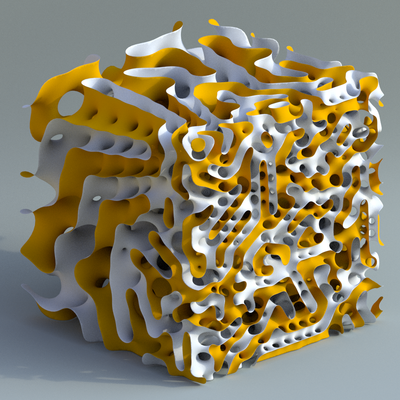
Generative jigsaw puzzles

Jigsaw puzzles for the 21st century! Each generative puzzle is a one of a kind creation with unique art and pieces. Our goal was to marry the artistry of traditional, hand-crafted jigsaw puzzles wi…

Nervous System blog

However, for years puzzles were not a major part of our business. They were my pet project. In fact, they weren't really something we talked about when discussing our work. Jigsaw puzzles just weren't very cool.

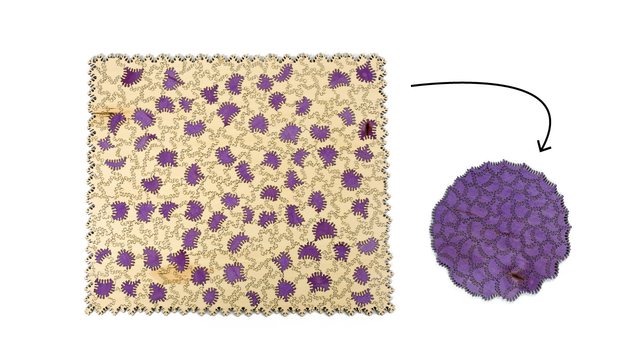
We still kept working on them though. One of the questions we asked was what can we do with our method of working that would be difficult or impossible to do by hand? This led to the "Challenge" puzzle, a puzzle I originally designed as a Christmas present for my brother. The puzzle has no image, no border, and there is a set of colored pieces scattered throughout the puzzle that pulls out to make their own mini sub puzzle. This puzzle within a puzzle is what is enabled by computation and digital fabrication that is otherwise impossible to create.

https://n-e-r-v-o-u-s.com/shop/product.php?code=182

Nervous System | Shop | 2-in-1 Challenge Puzzle

While I said the challenge puzzle has no border, it really does. The border just looks like the other pieces. So we started to ask what if a puzzle really had no border, What would that look like? Pieces from the left could connect to the right and the top to the bottom. In that way, we create a tiling puzzle, which can be assembled in thousands of different ways. We can think of this topologically like a closed surface. Mathematics teaches us that something that tiles like this has the same topology as a torus. We decided to call this an "infinity" puzzle.
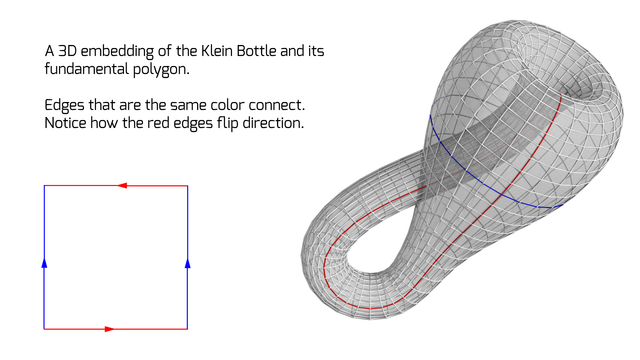
We can then ask, what other topologies are out there and what kind of puzzles might they create. A Klein bottle is a non-orientable surface which has no inside or outside. It's not possible to make in the real world without intersecting itself. However, it's topology is a lot like the torus except the top and the bottom connect in opposite directions. What happens when we make a puzzle like this? This is the question that changed our business forever
@nervous_jesse I wonder why did you go for a Klein bottle when a Möbius strip has a similar flip effect and is actually constructable. Then Möbius+Escher is a ready classic. I have it cut and glued from paper somewhere in the basement
https://www.weedist.com/wp-content/uploads/2013/05/Escher_Metamorphosis_II.jpg
@nervous_jesse probably exactly the jump - from what is a conceivable next step (Möbius strip, torus) to skipping several steps in order to get the mind perceiving it as an impossible magic - is what made the difference for the wow-bang effect