Unlike some others, Harriet Tubman did not believe the abolitionist John Brown was crazy. Indeed, she had deep respect for Brown and supported his militant approach to the abolition of slavery, something that was somewhat uncommon at that time when many anti-slavery agitators were advocating for a more pacifist approach.

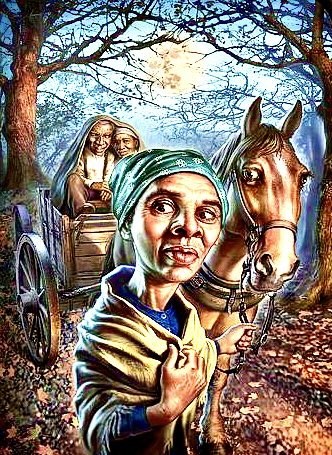
Image: Harriet Tubman Rescuing Her Parents” by Mark Frederickson

Blog Archives:
https://400years.substack.com/

Abridged Video Archive:
https://m.youtube.com/@400YearsUNLeashed/videos

1/
400 Years | Dr. D. Elisabeth Glassco | Substack

Here are essays that blend biography and narrative nonfiction to recover the Black tradition of resistance too often left out of American textbooks. Click to read 400 Years, by Dr. D. Elisabeth Glassco, a Substack publication with hundreds of subscribers.

In April of 1858, John Brown met Harriet Tubman for the first time in St. Catherines, located on the Canadian side of Niagara Falls. Overcome with awe, Brown named her “General” Tubman and hailed her as one of the bravest and most outstanding people on earth.

https://youtu.be/Z_9LlSmn8uE?si=i5U1hEUQbOTLAdL5

2/

Harriet Tubman on John Brown - Summit County Historical Society

YouTube

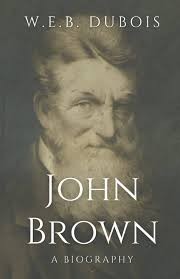
Tubman had felt a previous connection with John Brown through a dream. In Tubman’s biography, W.E.B Du Bois documented that she placed significant emphasis on a recurring dream she experienced shortly before meeting Brown in Canada.

Image: Book cover of W.E.B. DuBois’ biography of John Brown (1909)

3/

In this dream, an old man with a long white beard, resembling a serpent initially, appeared amidst the rocks, gazing at her with a hopeful demeanor. Soon, two younger figures joined him, only to be attacked by a throng of people who targeted the younger figures first and then the old man, who maintained his hopeful gaze on her.

4/

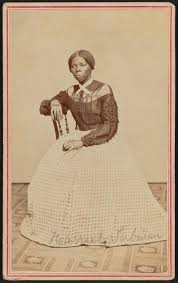
Image: Harriet Tubman as a young woman around 1860s. This is how she would have looked around the time she encountered Brown.

This dream puzzled her until she met Brown and recognized him as the figure from her visions. Harnessing her vast geographical knowledge of the Mid-Atlantic region, Tubman actively participated in raid preparations.

5/

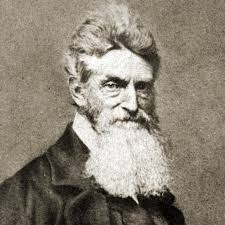
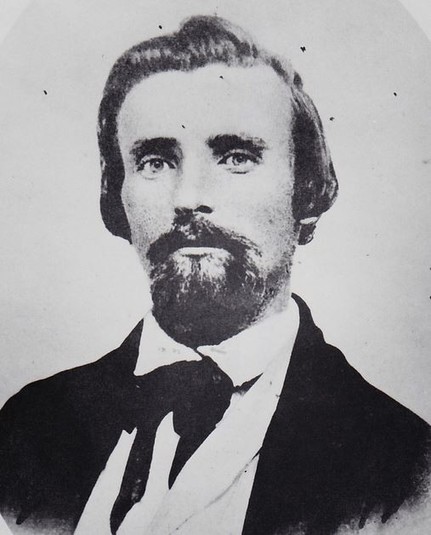
Image: John Brown in the late 1850s. This is how he would have looked around the time he met Harriet Tubman.

Harriet enlisted the help of people in Canada who had once endured enslavement, rallying them to back the cause.

However, illness prevented her from accompanying Brown during the critical raid on Harpers Ferry.

6/

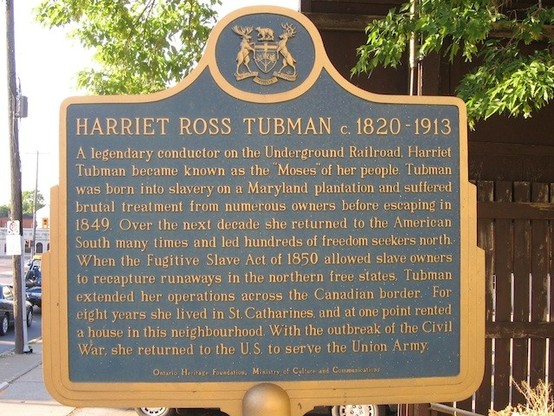
Image: Memorial Plaque ,The Region of Niagara? The City of St. Catharines Ontario Canada

The unfolding events of John Brown’s raid seemed to confirm Tubman’s prophetic visions. The raid culminated with the capture or death of all but five raiders. A mob fatally attacked Brown’s sons, Oliver and Watson, paralleling the younger figures in Tubman’s dream.

7/

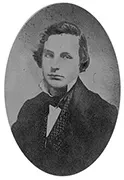
Images: John Brown’s sons, Oliver and Watson

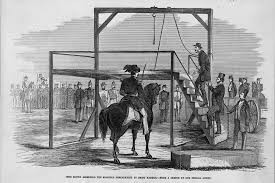
Subsequently, the authorities in Virginia arrested and tried John Brown, the old bearded man from her visions, for treason, murder, and inciting a slave revolt. They found him guilty and executed him six weeks later.

8/

Image: The hanging of John Brown

When John Brown met Harriet Tubman - Harpers Ferry National Historical Park (U.S. National Park Service)

Books

Bradford, Sarah. Harriet Tubman: The Moses of Her People. Bedford, Mass.: Applewood Books, [1993].

Bradford, Sarah H. (Sarah Hopkins), 1818. Scenes in the Life of Harriet Tubman. Freeport, N.Y.: Books for Libraries Press, 1971.

Clinton, Catherine. Harriet Tubman: The Road to Freedom. New York: Time Warner Book Company, 2004.

10/

More Books

Horton, Lois E. Harriet Tubman and the Fight for Freedom: A Brief History with Documents. Boston: Bedford/St. Martin’s, 2013.

Humez, Jean McMahon, 1944. Harriet Tubman: The Life and the Life Stories. Madison, Wis.: University of Wisconsin Press, 2003.

Larson, Kate Clifford. Bound for the Promised Land: Harriet Tubman, Portrait of an American Hero. New York: One World Publishers/Random House, 2004.

11/

Still More Books

Lowry, Beverly. Harriet Tubman: Imagining a Life. New York: Doubleday, 2007.

Sernett, Milton C., 1942-. Harriet Tubman: Myth, Memory, and History. Durham: Duke University Press, 2007.

I hope this is helpful! Let me know if there’s anything else you need.

12/

@Deglassco
Good! and you’d know this, but followers might not. It’s well worth a visit to Chatham, ON, an important terminus of underground railroad. Nice museum, has John Brown’s gun.

https://www.huronresearch.ca/antislavery/antislavery-in-small-things-project/2018-19-projects-2/john-browns-gun/
https://ckbhs.org/about/

John Brown’s Gun | Antislavery connections

Antislavery connections | History at Huron Student Projects

@Deglassco Alt text

A hand drawn sketch of the lead up to a hanging. A large number of people watch on as the victim is led up the steps to the waiting noose. In the forefront, an armed horseman keeps watch over the procedure. .

@Deglassco Alt texts - 2 images

1) A Young, clean-cut white man dressed nicely.
2) a slightly more rakish figure of a young white man in a goatee

@Deglassco Alt txt

A brass and metal plaque stand as a memorial. It reads :

HARRIET ROSS TUBMAN c. 1820-1913
A legendary conductor on the Underground Railroad, Harriet Tubman became known as the "Moses" of her people. Tubman was born into slavery on a Maryland plantation and suffered brutal treatment from numerous owners before escaping in 1849. Over the next decade she returned to the American South many times and led hundreds of freedom seekers north.

When the Fugitive Slave Act of 1850 allowed slave owners to recapture runaways in the northern free states, Tubman extended her operations across the Canadian border. For eight years she lived in St. Catharines, and at one point rented a house in this neighbourhood. With the outbreak of the Civil War, she returned to the U.S. to serve the Union Army.

@Deglassco Alt text

A sepia portrait of an older white main with thick unkempt hair and a long Nagy white beard. He has a serious look, but seems to have humorous eyes.

@Deglassco Alt txt

Sepia toned picture. A Black woman is seated sideways on a chair, her arm resting comfortably on the back of the chair. She is looking away from the camera. Her clothes are fairly nice, and her hair is straightened.

@Deglassco In June 1863 she led two Union gunboats in the Cumbahee Raid, freeing 700 slaves. Yes, a damned brave person.

@Deglassco Alt txt

A young Black woman with a very cautious look on her face is holding the reins to a horse-drawn cart. In the cart sit an older Black couple, looking frightened. They are being led through darkened trees.

@Deglassco she knew what was up. and John Brown was proven right with that damn Civil War, wasn't he?
@Deglassco Badger, you were a treasure of a Mastodon Find. Grazie. Xitter made hash of my former art guru circle, Ugh. 🤨