
In their book “The Dawn of Everything,” David Graeber and David Wengrow provide multiple accounts by early European settler colonists of the indigenous societies they encountered in the woodlands of northeastern North America.

Over and over, these Europeans noted that these societies were well and truly stateless, lacking rulers, laws, courts, police, prisons, or anything like what they were used to in Europe.

They quote one Jesuit, writing in 1644 about the Wendat:

“I do not believe that there is any people on earth freer than they, and less able to allow the subjection of their wills to any power whatever – so much so that Fathers here have no control over their children, or Captains over their subjects, or the Laws of the country over any of them, except in so far as each is pleased to submit to them. There is no punishment which is inflicted on the guilty, and no criminal who is not sure that his life and property are in no danger…”

1/ #thread
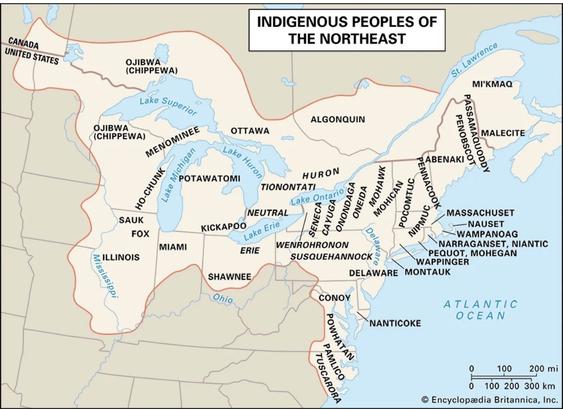
Most people would probably be horrified at the idea of utter and total lawlessness, in which even criminals go unpunished by any sort of coercive institution. This is the stuff of Hobbesian nightmares, a recipe for war of all against all and predation by criminals against the weak.

Except that’s not at all what those same Europeans report. The same Jesuit, Father Lallemant, went on to report that the Wendat’s process for dealing with transgressions “restrains all these peoples, and seems more effectually to repress disorders than the personal punishment of criminals does in France,” even though the members of these communities “never submit to any Laws and obey no other impulse than that of their own will.”

This is quite the claim and runs contrary to our modern intuitions about how people behave in the absence of coercive authority, to put it mildly.

2/

I was intrigued by this claim, so I decided to dive into the primary sources. I discovered that, over and over again, European observers confirmed Lallemant.

“They never quarrel and never are angry with one another…”

“Whatever misfortune may befall them they never allow themselves to lose their calm composure of mind, in which they think that happiness especially consists…”

“They know nothing of cursing. I have never seen them become angry, even on occasions when our frenchmen would have uttered a hundred oaths…”

“A person might be among them 30 years and even longer, and not once see two sober Indians dispute or quarrel; even when one of them has deadly hatred to another, they endeavor to smother their anger, and are soon reconciled when it is possible…”

“With us, a watchful police is supported, and crimes are more frequent than among them…”

Over and over, Europeans from a variety of countries described these societies as more peaceful than contemporary European society, with violent crimes such as murder essentially non-existent, at least at any rate comparable to European rates.

3/

I lack records that would allow me to compare murder rates across societies, but there is consistency among these early observers: these indigenous societies were remarkably less violent than their own, despite the absence of coercive authority.

This is, of course, precisely the opposite of what our hegemonic intuition would tell us to expect.

So how did these societies manage to produce *less* violence and crime than Europeans, with their prisons and police and courts and laws and punishments?

Very broadly, here’s how those indigenous societies managed disputes:

Absent a coercive authority, everyone was free to act however they pleased without fear of predictable interference or punishment by the state. This meant everyone was free to harm whomever they wanted, but also vulnerable to being harmed themselves.

The result was a detente—everyone refrained from harming each other to minimize the risk of harm to themselves.

4/

When violence did occur, there was always the risk of a cycle of violence—Person A hurts or kills Person B, so the friends and relatives of B retaliate against A, which inspires the friends and relatives of A to retaliate against the friends and family of B, and so on, in a potentially never-ending process of escalation that could destabilize or destroy an entire community.

To minimize this risk, these societies (very broadly speaking) adopted a process of restitution in the event of an act of violence or a violent dispute. The community of the perpetrator would gather to offer gifts to the victim or the victim’s community. The recipient was free to accept those gifts, and formally renounce retaliation, or not.

These were not merely bribes, but symbolic concessions by an entire community. Bruce Graham Trigger observed in the 1963 “Order and Freedom in Huron Society”:

“The final payment of the compensation took the form of an elaborate ceremony that might last several days. The chiefs presented each gift separately. Each gift symbolized some interesting or metaphoric act and was accompanied by a speech telling what it represented. From these speeches…we can get an idea of what this compensation was meant to accomplish. The purpose of the presents was to blot out the crime, honour the murdered man, console his relatives and possible avenger, reunite the country, and restore normal relations. As an expression of good faith, some smaller presents might be given in return.”

5/

The goal was not punishment or retribution but rather social cohesion and harmony, which was a social rather than individual responsibility. The knowledge that one’s own community would (voluntarily) bear the costs of one’s potential crime seems to have worked as a dramatically more effective deterrent than any of the tortures and murders concocted by European societies to punish “criminals.”

Trigger further noted:

“This, combined with the nature of the settlement itself, demonstrated that the primary aim of legal action on this level in the case of murder was not the punishment of the offender or the simple gratification of the offended family, but the repression of the blood feud and the restoration of amicable relations between kin groups. Deep fear of the disruptive effects of blood revenge is shown by the special effort made in the law to repress it. If a family resorted to blood revenge, not only were all the rights to receive compensation for the original murder forfeited, but the avengers were themselves regarded as murderers and their village required to pay the regular penalties.”

6/

As a result, people in these societies cultivated and practiced enormous self-restraint and encouraged this behavior in their peers.

In the case of habitual offenders, people who were not deterred by this process from harming others, then members of their own community generally expected that *they* would have to take action to stop the offender, rather than letting things escalate to the point of a feud with another community.

Abraham H. Cassell and Helen Bell noted, in their 1877 “Notes on the Iroquois and Delaware Indians”:

“When the crime is too great, and the guilty person is a notorious murderer or thief, that is, has been guilty several times before, then they council his own tribe to kill him, his tribe advise his own family to tell him the sentence, and then his nearest friend, and very seldom anyone else, kills him.”

Knowing that one might be responsible for killing one’s own friend to protect one’s community seems to have worked as an incredibly powerful and effective check on the sort of criminality and violence that most people today would expect from a stateless society.

7/

This process reminds me quite a lot of the institution of weregild, or “man-price,” that was common in pre-modern European societies and descended from archaic tribal custom. Harm done to someone might require payment to the victim or the victim’s family to prevent retaliation and feuding, not because material goods could compensate for a murdered person but to symbolically reconcile people and reinforce community bonds.

A weregild payment in, say, Anglo-Saxon Britain might include not just a direct payment to the victim’s kin but also an endowment paid to build a new church for the community and maybe a wedding between members of the families of both the perpetrator and the victim.

This is a radically different approach to crime and justice than what we’re used to in Western, capitalist, state societies. For us, justice is primarily a process of vengeance, punishment, and ostensibly deterrence. These societies emphasized restitution and social harmony, which seems to have actually generated deterrence. It also seems to have been more personally cathartic to victims and their communities.

8/

When we think about how we might manage the threat of crime in a revived anarchist society, people have conjectured lots of different mechanisms and processes, and there are lots and lots of good ideas out there.

This is one such process that seems to have evolved out of individual self-interest into an elaborate but purely voluntary system of communal response. It also seems to have been enormously effective at deterring aggression.

This is not to advocate for this particular system, or to argue that it is the best imaginable system, or to claim that it is without flaw. But we can observe that people are not fools and are perfectly capable of restraining themselves and each other from causing harm, for purely self-interested reasons, in ways that benefit entire communities and drive elaborate communal and cooperative behavior.

Hobbes and all the statists are wrong; we do not turn into bestial monsters in the absence of a state to harm us for misbehaving.

9/

You can always support my work by buying me a coffee here:

https://www.buymeacoffee.com/heavenlypossum

10/end

Heavenly Possum

Hello! I am a leftist anarchist and I write about history, anthropology, sociology, and economics on the fediverse. Please consider supporting my work!

Buy Me a Coffee

Bibliography:

- “Aboriginal Criminal Justice as Reported by Early French Observers” Desmond Brown; Social History; 2002

- “Notes on the Iroquois and Delaware Indians (continued)” Abraham H. Cassell and Helen Bell; The Pennsylvania Magazine of History and Biography; 1877

- “Indigenous Law in North America in the Wake of Conquest” James Zion and Robert Yazzie; Boston College International and Comparative Law Review; 1997

- “Iroquois Women” W.M. Beauchamp; The Journal of American Folklore; 1900

- “Order and Freedom in Huron Society” Bruce Graham Trigger; Anthropologica; 1963

@HeavenlyPossum Thanks for this thread, this was really interesting. I would be interested to know if violence against women were handled the same way as the other forms of violence?

@camcamagy

“For a Huron killed by a Huron thirty gifts are commonly deemed a sufficient satisfaction. For a woman forty are required...”

@HeavenlyPossum I would expect that community size is an important factor too. Is there known research on that?

Not to use that as dismissal (yeah, but they lived in small villages, this can never work for a city like Chicago, or a country like France) but as possible lesson to learn from: maybe if we can reshape our society into smaller communities we enable behavior and freedom as seen in these tribes?

@HeavenlyPossum This is really interesting, thank you.

It seems as if these Americans fostered a society in which every single person was responsible for keeping the peace, and doing so in an adult way which would not make things worse.

Personally I cannot imagine this working in the UK today. We're just not grown up enough. (I can't speak for other countries.)

But that leads me to wonder: did these reparation rules work because they were grown up? Or were they grown up because of the rules?

@fishidwardrobe @HeavenlyPossum not an expert in anarchism, but i would say it's because we are not (socially) responsible in this way, that people don't "grow" in this way, is we had to, if we were expected to, by our community, we would.

The hard question, imho, is how to get back there, under the influence of a state that took over the role of such peace keeping (and not doing a great job at it) and prevents communities from implementing some of these mesures.

Let alone at our current scale

@fishidwardrobe @tshirtman

I think this is precisely correct: we do not behave this way because we are prevented from doing so by controlling, authoritarian, and paternalistic capitalist states.

Domesticated animals resemble juvenile versions of their wild relatives.

@HeavenlyPossum @tshirtman
> Domesticated animals resemble juvenile versions of their wild relatives.

A powerful and cogent analogy.

@fishidwardrobe @HeavenlyPossum @tshirtman

Some of us *do* behave this way, in fact many of us *routinely* behave this way. Look for the person who was last to ditch their mask (or is still wearing one!). Look again at the driver you are swearing at because they are observing all the speed limits.
The seeds for this type of society are everywhere if you look for them, but require the (re)invention and development of social systems to support it.

@DavidM_yeg @HeavenlyPossum @tshirtman The problem is that you can't rely on *enough* people behaving like adults.

@tshirtman @HeavenlyPossum @fishidwardrobe

Coercive and punitive responses and culture *discourage* people from internalizing responsibility. With social systems that normalize responsibility vs transgression punishment we absolutely could have enough people, I think. Especially if we started at a young age.

@HeavenlyPossum @tshirtman @fishidwardrobe

Worth noting that this cycle of punishment and infantilization has never been applied to the wealthy. The world of the nobility and today’s class of owners are mostly immune from the types of consequences imposed on others. Punishment when it comes is something that comes from one’s peers or family.

@DavidM_yeg @HeavenlyPossum @fishidwardrobe the issue is how you handle people not cooperative and good willing (to put it mildly), and if you accept/normalize their behavior (e.g, if a behavior is antisocial but legal, there are few options for correction), if the community, and especially people close to the perpetrator take initial (and ultimate…) responsibility for corrective action, there is a lot more incentive to care, than if the state is the only one that can.
@DavidM_yeg @HeavenlyPossum @fishidwardrobe but i'm not sure how to transpose that community of responsibility in highly mobile, globalized world, it has a kind of disappeared as we don't know most people we interact with, let alone their peers.
@DavidM_yeg @fishidwardrobe @HeavenlyPossum @tshirtman "Peacemaking Among Primates" by Frans de Waal explores some behavior among some primates that parallels the indigenous groups described in this thread. That book came to mind as I read this discussion. An interesting read and National Book Award winner in Nonfiction as I recall.
@HeavenlyPossum This is a good TED Talk on 'restorative justice.' Thanks.

@HeavenlyPossum

This is a delightfully sanitized interpretation. You even contradict yourself in 5/ by mentioning a ‘law’. And you assume a homegeneity across cultural groups in the western hemisphere which is unsupported by the evidence.

It seems likely the cultural melieux were not reported by people trained to observe them, nor fluent in the local languages, nor able to present evidence to support their claims. But they *were* in the business of recruiting investors and colonists.

@amgine

- I did not use the word “law” in the fifth post and I’m not sure what you’re arguing there.

- I do not claim homogeneity across cultural groups in the western hemisphere, but rather explicitly and repeatedly referred to the societies of the northeastern woodlands of North America, among whom these social practices were common.

- Many of these observers were fluent in indigenous languages, because many of them were members of religious institutions who sought to persuade indigenous peoples to convert to European Christianity. They were not, by and large, agents of the colonization project and were, for the most part, horrified by the liberties they observed among these societies.

These sources are of course imperfect, but they’re the best textual sources we have and they’re remarkably consistent across time and space.

@HeavenlyPossum my apologies on two points: the thread toot is 6/, and you quoted Trigger stating:

> … Deep fear of the disruptive effects of blood revenge is shown by the special effort made in the law to repress it.

@amgine

Yes, Trigger was writing in the 1960s and used a term I would not have used to refer to a social phenomenon that we, in our hegemonically statist society, lack a vocabulary to accurately discuss.

In the absence of a state, rulers, courts, police, legislatures or legislation, or any of the trappings of a coercively hierarchical system, we can only refer to these as “laws” in the most tenuously metaphorical sense.

I’m not sure which part of what I wrote got you so worked up that you’d make such a weak attempt at a gotcha.

@HeavenlyPossum

As regards your other rebuttals, I will have to politely disagree on all points, and leave it at that!

@amgine

Yes, when you just make shit up to be snide, it can be hard to defend.

@HeavenlyPossum

You are of course correct, and I apologize profusely and abjectly. At some point I am certain I will find your work cited in the literature.

In the meantime, please be well, and enjoy your life. I am sorry I may have bothered or upset you.

@HeavenlyPossum
I believe I saw that portion of the belt in the Seneca-Iroquois Museum in Salamanca New York. Excellent thoughts.
@HeavenlyPossum Fascinating thread.
Thanks a lot.

@stuartb

You’re welcome, thank you for your kind feedback

@HeavenlyPossum

I think it would be interesting to explore the connections between customs similar to weregild surviving social structures that have made modern Scandinavians more broadly successful at socialism and addressing disorder than other western nations.

@DavidM_yeg

What customs of weregild survive in modern Scandinavia?

@HeavenlyPossum

Not specifically weregild, but the ways of being in community it is representative of. Speaking out of more ignorance than knowledge, my impression is that that feudal structures were far less comprehensive or deeply imposed in the north than elsewhere in Europe. So I wonder if there is a stronger expression of or continuity with other ways of being in community.

@DavidM_yeg

Feudalism was quite prevalent in Northern Europe, and Scandinavian society was deeply unequal and dominated by the aristocracy until quite recently. Thomas Piketty wrote about this extensively in “Capital in the 21st Century” if you’re interested in more.

@HeavenlyPossum I wonder what that red line represents.

@evan

Just an arbitrary boundary around the northeast woodlands cultural area.

@HeavenlyPossum I figured that was it, but I didn't think "cultural area" was a term that the EB recognises, or that one would use such a sharp line for it.

I'm reading Dawn of Everything right now. It's really engaging.

@HeavenlyPossum

I find it interesting how granular European naming is at points of first contact, and how vague they become further into the ‘hinterland’.

And then I imagine a group living on the north shore of Lake Superior, living lives completely unaware that they are part of this concretion-to-be named by foreigners, caught up in the detailed interactions between themselves and their neighbours, and hearing distant rumours of trouble off on the fringes of Turtle Island.

@HeavenlyPossum

I saw a mention go by a few weeks ago (from an Indigenous writer, I think) that, when you live (and have lived, and will live) in a place effectively since the dawn of time, there is overpowering incentive to learn to get along with your neighbors because THEY'RE ALWAYS GOING TO BE THERE.

Given that archeology has pushed the presence of humans in North America back to at least 23K years ago, it seems this principle has been very solidly road tested.

@HeavenlyPossum Coïncidentally, this is also the basis of the justice system SDF and its civil society equivalents established in Rojava after driving out ISIL.

@anarchiv

Do you have any recommendations for something I could read on this?

@HeavenlyPossum If you're specifically interested in the justice system part of it and how it ties in with democratic confederalism and societal structures in post-revolutionary Rojava, the podcast "The Women's War" by Robert Evans isn't the worst place to start.