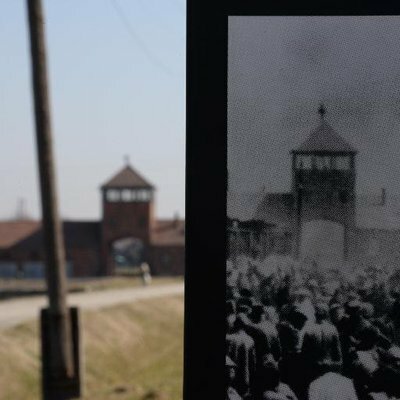
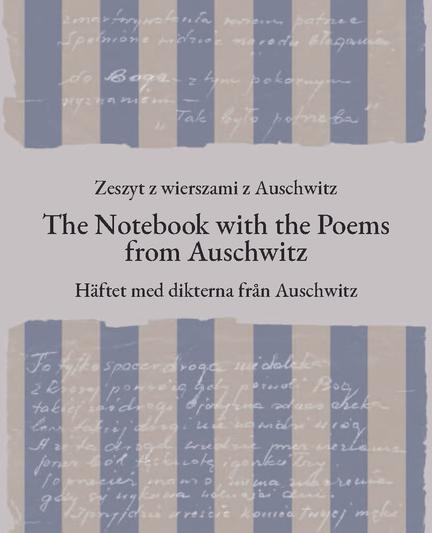
How is it possible that poems were written in the Auschwitz camp? Who wrote them? How did they survive? – these and other questions are answered by our new English-Polish-Swedish publication:

“The Notebook with the Poems from Auschwitz”

The 32-page notebook contains 17 camp poems written in various hand writings.

Learn more about this publication: https://auschwitz.org/en/museum/news/notebook-of-poems-from-auschwitz-the-museums-polish-english-swedish-publication-presented-in-sweden-,1646.html

See the book on our online bookstore: https://auschwitz.org/en/bookstoreproducts/product/zeszyt-z-wierszami-z-auschwitz,348.html#2

#Auschwitz #poetry #book

@auschwitzmuseum Poems have a way of expressing things that nothing else can quite touch. A way of being heard, being understood, and maybe even some hope for better.

@auschwitzmuseum
From the description:

"If a poem was found on a prisoner, it resulted in severe punishment. The specific situation in which the works were created, the fear of exposure, death of the author — they all make it very difficult if not impossible to determine the authorship of many poems written in the extermination camps – explained Joanna Ziembińska-Kurek."

@auschwitzmuseum "In 1944, on a forced march from Serbia to central Hungary, poet Miklós Radnóti was shot to death and his body dumped in a mass grave. A year and a half later, his remains were exhumed and a small notebook was found in the front pocket of his overcoat. It contained five poems — the last he would write."

https://news.ucsb.edu/2015/014708/70-years-later-it-all-still-matters

70 Years Later, It All Still Matters

English scholar publishes volume of selected works by Hungarian poet and Holocaust victim Miklós Radnóti

The Current