
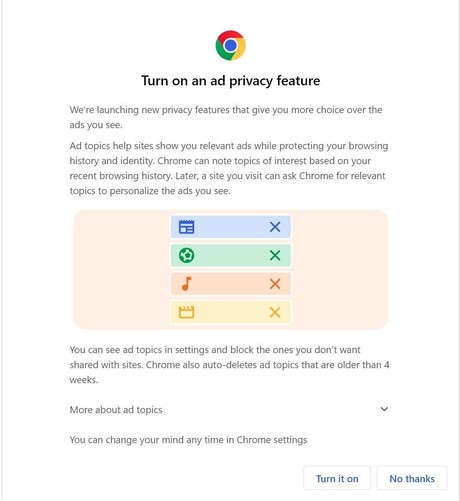
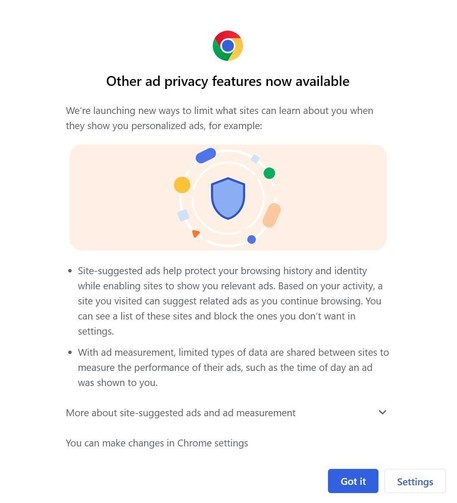
A new low, even for #Google. Giving Google permission to share information about you with third-party websites is being falsely advertised as an "ad privacy feature". This is privacy washing at its most extreme. But it gets even worse.

There is a dark pattern on the second screenshot. It isn't just informing you about the fake privacy features. Clicking on "Got it" actually turns on these features that allow Google to use your recent browsing history for ads on third-party websites:
@protonmail I don't understand how choice of ads you see is a selling point.
@Noptisun @protonmail
There’s a lie being told in marketing circles that people want personalized ads. They don’t want personalized ads. They don’t want ads. A small few people think that if they have no choice but to see ads that they should be relevant to them. But they falsely assume they are required to see ads. They aren’t.

@jrod3737 @Noptisun @protonmail Superficially:
- I can see why people might see ads as a necessary evil to fund a service they use (yes, you can block them, but your conscience may not let you use a service you're not funding).
- If you're going to see ads anyway, having ones relevant to me might be vaguely useful instead of just an annoyance.

But experience tells me that its not just me that sees my "relevant ads", and that's where there's a significant privacy concern. 1/

@jrod3737 @Noptisun @protonmail If my whole household sees ads which are relevant to me, that is a privacy problem - a single household is small enough to work out who the ads are targeted at, and reveals information about what they have been doing online.

In the case of my household, this has resulted in a few ruined christmas / birthday surprises. In other households, the effects of this kind of information leak may be very serious (think abusive relationships, etc.) 2/

@jrod3737 @Noptisun @protonmail So although superficially, "relevant ads" may be seen by end-users as a slight positive, if they think about it a bit more they would quickly realise that the potential for damage far outweighs any benefit that they might see. And that's even before we get into the data needed to target adverts being intentionally sold off for non-advertising purposes, or stolen.