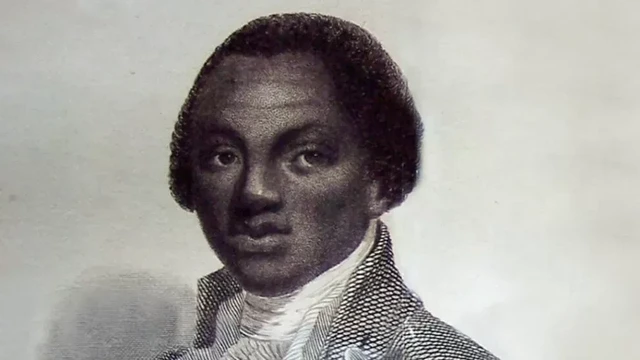
Olaudah Equiano’s book, “The Interesting Narrative of the Life of Olaudah Equiano, Gustavus Vassa, the African. Written by Himself,” stands prominently among autobiographies penned by former slaves in 18th-century Britain. Its comprehensive and detailed recounting, along with supporting documentation from various letters, offers unparalleled insights into Equiano's life, surpassing what we know about any of his peers.

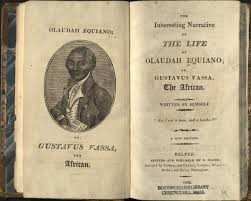
Image: Olaudah Equiano as a young man in the 1770s/1780s.

1/
In the late 1780s and early 1790s, Olauda Equiano rose to prominence, distinguishing himself as the most notable Black person in Britain. In contemporary times, his reputation has either matched or even surpassed the acclaim he received during his era. Today, Equiano is a recurrent figure in literary works and compilations that delve into the history of slavery and the presence of black communities in Georgian-era Britain.

Image: Title page of Olaudah’s book.

2/

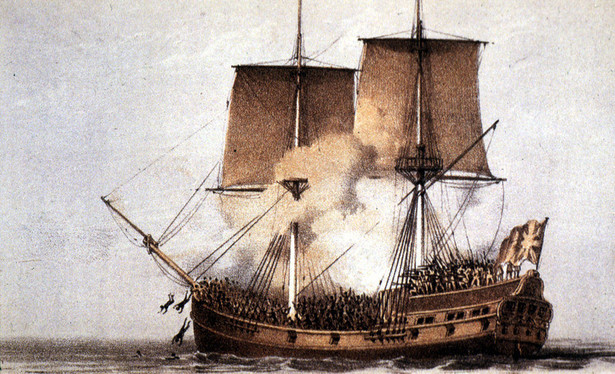
Inthe 1750s, Equiano, aged between 8 and 11, recounts being abducted by African raiders alongside his sister. They, along with other prisoners, endured a grueling journey that spanned several months to the Atlantic coast. As they delved deeper into the territories dominated by the Atlantic slave trade, the brutality and violence they encountered intensified.

Image: From book by William Fox, A Brief History of the Wesleyan Missions on the West Coast of Africa (London, 1851), facing p. 116.

3/

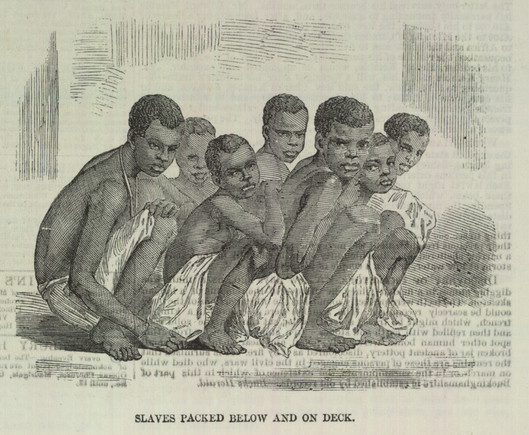
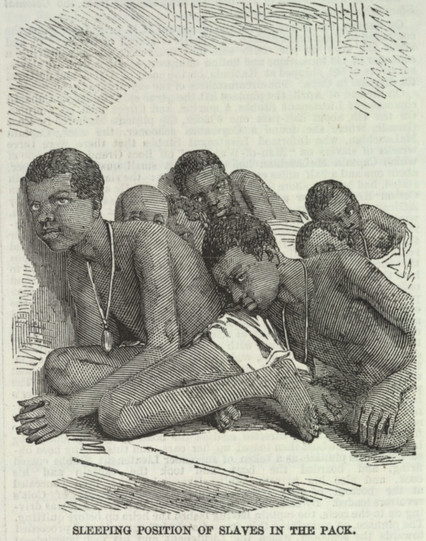
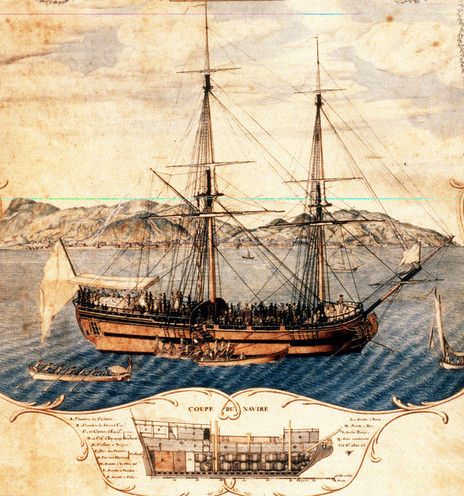
Upon reaching the coast, Equiano's journey took a devastatingly common turn. He faced a heart-wrenching separation from his sister and found himself confined within the hull of a British slave vessel. This was during an era when Britain had become the foremost slave-trading nation in the North Atlantic, overshadowing both the Iberian countries and the Dutch. The journey across the Middle Passage was a perilous ordeal.

Image: The Illustrated London News (June 20, 1857), vol. 30 p. 595.

4/

Tragically, over a million Africans, between the 16th & 19th centuries, didn't survive the journey.

After a short stay in Barbados, Equiano was relocated to Virginia. Within a few months, he was sold to Michael Pascal, a British naval officer. Pascal named him Gustavus Vassa, curiously after a renowned sixteenth-century Swedish king. For most of his life, he was more commonly known by this name rather than Olaudah Equiano.

Image: The Illustrated London News (June 20, 1857), vol. 30 p. 595.

5/

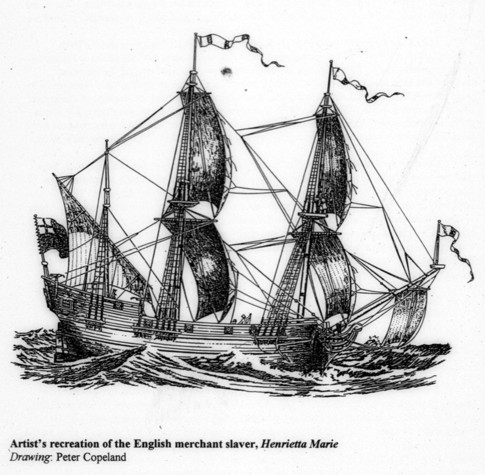
Being sold to Michael Pascal meant Equiano's experience with slavery deviated from the norm, but it wasn't entirely unique. Instead of toiling in the cane fields, he spent subsequent years aboard vessels that sailed the oceans connecting Britain to its colonies.

Image: Drawing by Peter Copeland, in David Moore, Historical and Archaeological Investigation of the Shipwreck Henrietta Marie, Key West, FL,, 1997.

6/

For nearly 3 decades, the sea remained an integral part of Equiano's life. His voyages took him through the West Indies, North & Central America, Britain, & the Mediterranean. He served under Michael Pascal in the Royal Navy during the 7 Years’ War, a conflict between France & Britain, 1756-1763.

Image: Watercolor by unknown artist in E.D.C. Campbell and K.S. Rice, eds., Before Freedom Came: African-American Life in the Antebellum South (University Press of Virginia, 1991), plate 6, p. xv.

7/

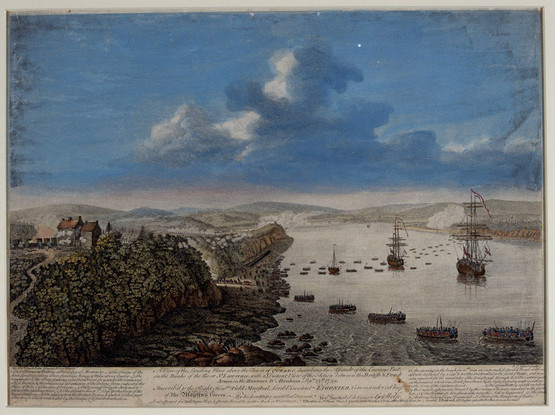
In his book, Equiano meticulously highlighted his involvement in the 7 years war, showcasing his allegiance to Britain.In these formative years, Equiano became literate. Yet, after dedicating years to wartime service, he was not granted freedom as pledged by Pascal. Instead, in 1762, he found himself being traded once more—first to Captain James Doran and later to Quaker merchant Robert King.

Image: The British landing at Quebec during the 7 years war, 1759.

8/

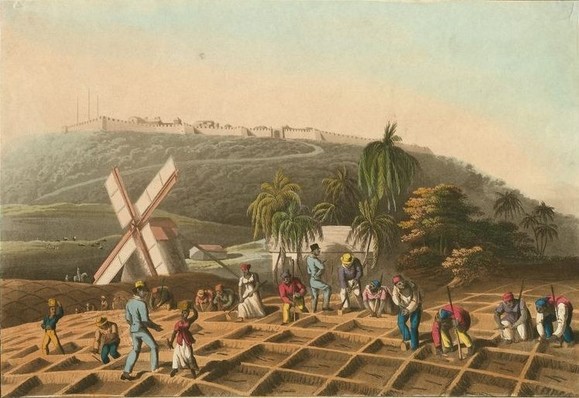
While Equiano had spent years navigating the seas, he was dispatched to Monserrat, where he was exposed to the harshest realities of plantation slavery. However, his education and skills proved valuable, and soon he was back on the sea, serving a new owner.

Image: Planting the sugar-cane” (Credit: Schomburg Center for Research in Black Culture, Photographs and Prints Division, The New York Public Library).

9/

Benefiting from the goodwill of a compassionate ship's captain, who recognized Equiano's worth and skills, he was allowed to engage in independent trade ventures during his 3-year tenure with Robert King's fleet.

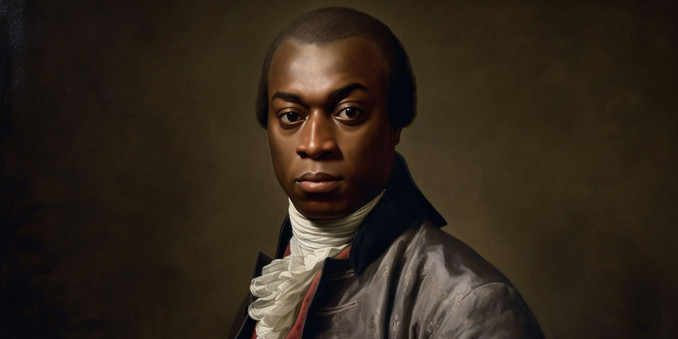
Starting with a modest capital, he would buy goods at one port and sell them for a profit at another. This period honed Equiano's entrepreneurial instincts, which he later utilized as an author.

Image: Olaudah Equiano around 1790.

10/

Over time, in spite of numerous setbacks and thefts, Equiano gathered £40, the amount set by Robert King for his emancipation.

In his narrative, "The Interesting Narrative", he labeled the day he procured his freedom from slavery as 'the happiest day I have ever experienced'.

https://youtu.be/6HT6kF8m358?si=1lnoBoD6Mwet6P-X

11/

The Extraordinary Equiano - Part 1

YouTube

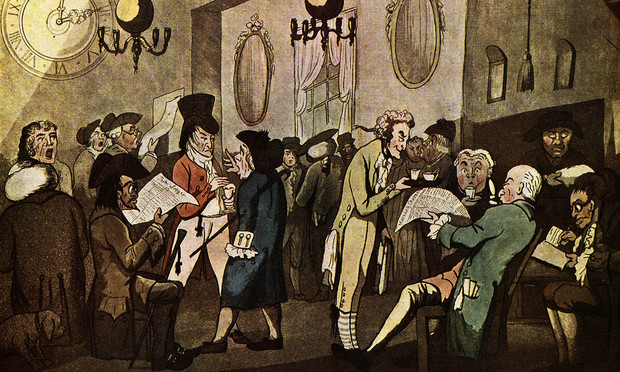
In London, Equiano pursued a career in hairdressing, immersing himself in a modest black community comprising both free individuals and those bound by varying degrees of captivity. Soon, he emerged as an influential figure within this community.

Image: William Lloyd’s Coffee House in London where merchants bought and sold slaves.

12/

@Deglassco A number of well dressed 18th century white people mingle. Their faces are caricatures, many looking vaguely unpleasant or foolish.