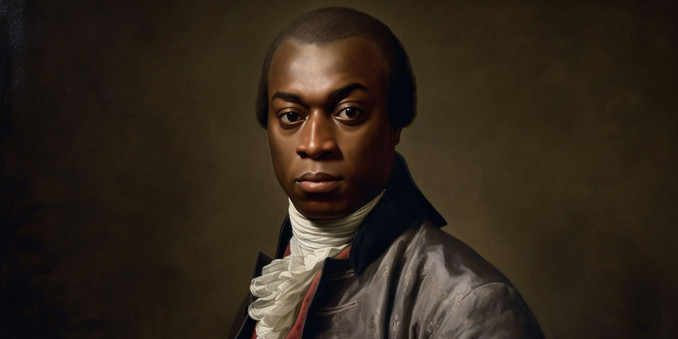
Olaudah Equiano’s book, “The Interesting Narrative of the Life of Olaudah Equiano, Gustavus Vassa, the African. Written by Himself,” stands prominently among autobiographies penned by former slaves in 18th-century Britain. Its comprehensive and detailed recounting, along with supporting documentation from various letters, offers unparalleled insights into Equiano's life, surpassing what we know about any of his peers.

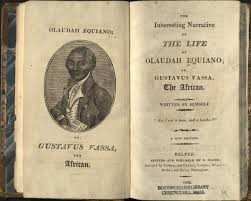
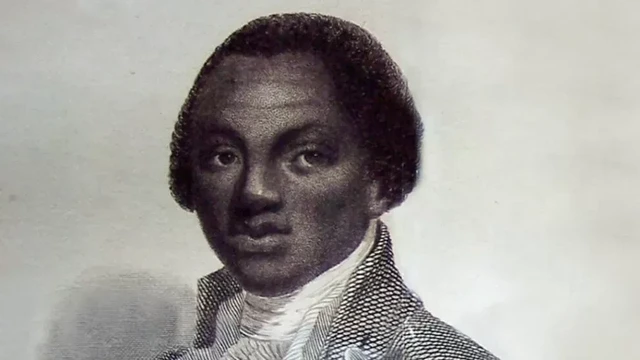
Image: Olaudah Equiano as a young man in the 1770s/1780s.

1/
In the late 1780s and early 1790s, Olauda Equiano rose to prominence, distinguishing himself as the most notable Black person in Britain. In contemporary times, his reputation has either matched or even surpassed the acclaim he received during his era. Today, Equiano is a recurrent figure in literary works and compilations that delve into the history of slavery and the presence of black communities in Georgian-era Britain.

Image: Title page of Olaudah’s book.

2/

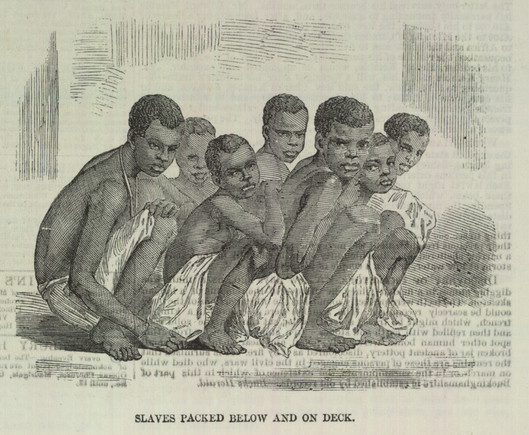
Inthe 1750s, Equiano, aged between 8 and 11, recounts being abducted by African raiders alongside his sister. They, along with other prisoners, endured a grueling journey that spanned several months to the Atlantic coast. As they delved deeper into the territories dominated by the Atlantic slave trade, the brutality and violence they encountered intensified.

Image: From book by William Fox, A Brief History of the Wesleyan Missions on the West Coast of Africa (London, 1851), facing p. 116.

3/

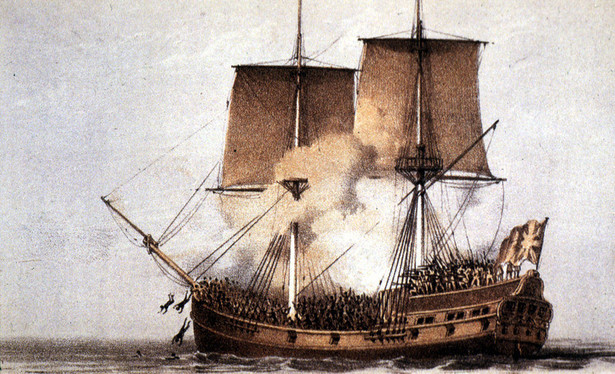
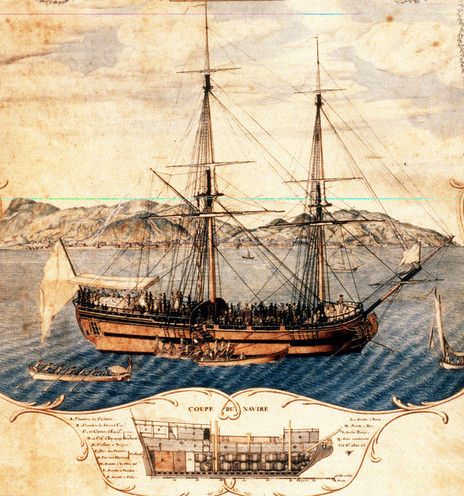
Upon reaching the coast, Equiano's journey took a devastatingly common turn. He faced a heart-wrenching separation from his sister and found himself confined within the hull of a British slave vessel. This was during an era when Britain had become the foremost slave-trading nation in the North Atlantic, overshadowing both the Iberian countries and the Dutch. The journey across the Middle Passage was a perilous ordeal.

Image: The Illustrated London News (June 20, 1857), vol. 30 p. 595.

4/

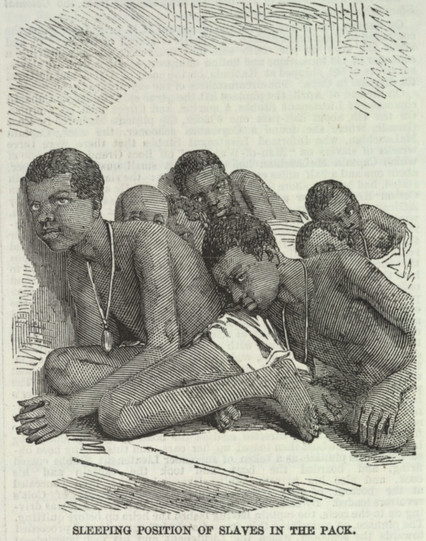
Tragically, over a million Africans, between the 16th & 19th centuries, didn't survive the journey.

After a short stay in Barbados, Equiano was relocated to Virginia. Within a few months, he was sold to Michael Pascal, a British naval officer. Pascal named him Gustavus Vassa, curiously after a renowned sixteenth-century Swedish king. For most of his life, he was more commonly known by this name rather than Olaudah Equiano.

Image: The Illustrated London News (June 20, 1857), vol. 30 p. 595.

5/

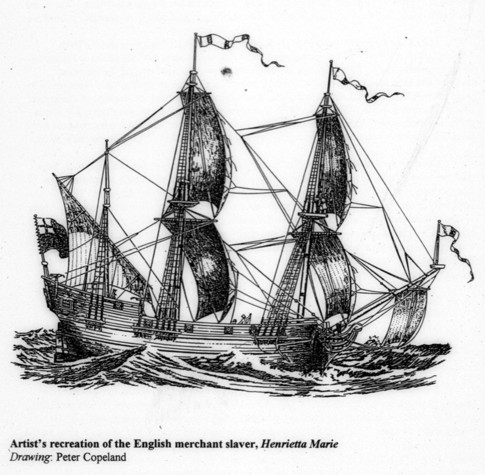
Being sold to Michael Pascal meant Equiano's experience with slavery deviated from the norm, but it wasn't entirely unique. Instead of toiling in the cane fields, he spent subsequent years aboard vessels that sailed the oceans connecting Britain to its colonies.

Image: Drawing by Peter Copeland, in David Moore, Historical and Archaeological Investigation of the Shipwreck Henrietta Marie, Key West, FL,, 1997.

6/

For nearly 3 decades, the sea remained an integral part of Equiano's life. His voyages took him through the West Indies, North & Central America, Britain, & the Mediterranean. He served under Michael Pascal in the Royal Navy during the 7 Years’ War, a conflict between France & Britain, 1756-1763.

Image: Watercolor by unknown artist in E.D.C. Campbell and K.S. Rice, eds., Before Freedom Came: African-American Life in the Antebellum South (University Press of Virginia, 1991), plate 6, p. xv.

7/

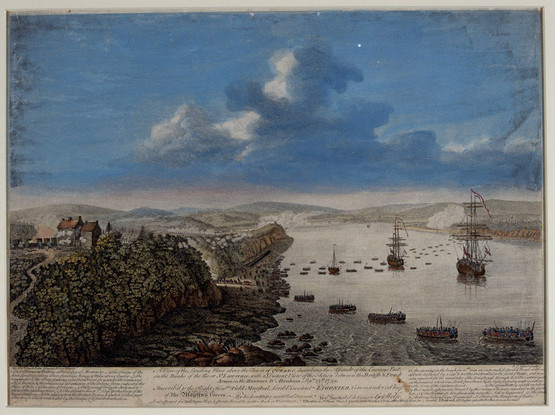
In his book, Equiano meticulously highlighted his involvement in the 7 years war, showcasing his allegiance to Britain.In these formative years, Equiano became literate. Yet, after dedicating years to wartime service, he was not granted freedom as pledged by Pascal. Instead, in 1762, he found himself being traded once more—first to Captain James Doran and later to Quaker merchant Robert King.

Image: The British landing at Quebec during the 7 years war, 1759.

8/

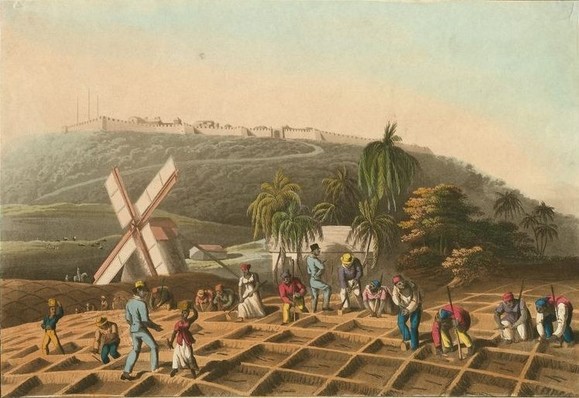
While Equiano had spent years navigating the seas, he was dispatched to Monserrat, where he was exposed to the harshest realities of plantation slavery. However, his education and skills proved valuable, and soon he was back on the sea, serving a new owner.

Image: Planting the sugar-cane” (Credit: Schomburg Center for Research in Black Culture, Photographs and Prints Division, The New York Public Library).

9/

Benefiting from the goodwill of a compassionate ship's captain, who recognized Equiano's worth and skills, he was allowed to engage in independent trade ventures during his 3-year tenure with Robert King's fleet.

Starting with a modest capital, he would buy goods at one port and sell them for a profit at another. This period honed Equiano's entrepreneurial instincts, which he later utilized as an author.

Image: Olaudah Equiano around 1790.

10/

Over time, in spite of numerous setbacks and thefts, Equiano gathered £40, the amount set by Robert King for his emancipation.

In his narrative, "The Interesting Narrative", he labeled the day he procured his freedom from slavery as 'the happiest day I have ever experienced'.

https://youtu.be/6HT6kF8m358?si=1lnoBoD6Mwet6P-X

11/

The Extraordinary Equiano - Part 1

YouTube

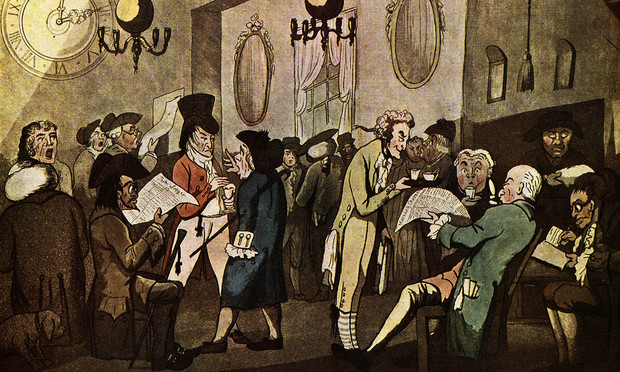
In London, Equiano pursued a career in hairdressing, immersing himself in a modest black community comprising both free individuals and those bound by varying degrees of captivity. Soon, he emerged as an influential figure within this community.

Image: William Lloyd’s Coffee House in London where merchants bought and sold slaves.

12/

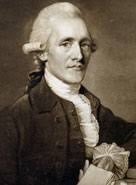
But the sea continued to pull on Olaudah. In 1773, Equiano joined an Arctic expedition led by Constantine Phipps, 2nd Baron Mulgrave. This harrowing journey, which nearly ended in catastrophe, was later vividly described in his "The Interesting Narrative". By the late 1770s, Equiano had started advocating for the oppressed black community in London. He was acquainted with anti-slavery proponents like Granville Sharp.

Image: Granville Sharp Esquire, engraved by Charles Turner 1806

13/

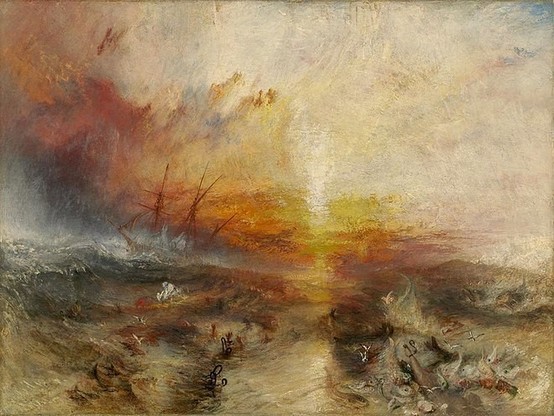
It was Equiano who, in 1783, informed Sharp about the Zong massacre, where nearly 130 ailing Africans were thrown overboard by a slave ship crew, a heinous act motivated by insurance claims.

Image: A painting entitled “The Slave Ship” (1840), J. M. W. Turner's representation of the mass killing of enslaved people, inspired by the Zong killings.

14/

In 1786, after a trip to the U.S., Equiano engaged in a government initiative aimed at relocating London's 'Black Poor'. These were primarily black loyalists, many previously enslaved, who had supported British campaigns during the American War of Independence. Displaced post-war and destitute in Britain, they were perceived as a societal burden and a national disgrace, given their allegiance to the British cause.

https://youtu.be/BXh1aRkouic?si=k2L1vzbTvoeqyJvd

15/

The Book of Negroes Conversation with Aunjanue Ellis

YouTube

A questionable strategy proposed relocating them to a prospective colony in Sierra Leone. As the Commissary of Provisions and Stores for this mission, Equiano watched the initiative descend into disorder and witnessed the deplorable treatment of the settlers. After reporting malpractices, he was discharged. The Sierra Leone plan was a turning point.

Image: Black Loyalists in Nova Scotia, Bedford Basin (Robert Petley, 1835)

16/

If Equiano had embarked on this journey, he might not have survived, as only 60 of the initial 374 settlers remained alive after four years.

The abrupt end of his involvement with the project, combined with ensuing corruption allegations, spurred Equiano to defend his honor and demand unpaid wages.

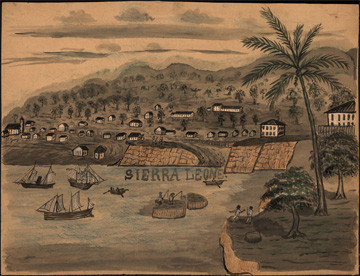
Image: Freetown, Sierra Leone, mid-19th century. [Drawings of Western Africa, University of Virginia Library, Special Collections, MSS 14357, no. 8]

17/

The newspapers of the day amplified his claims of corruption, leading to an onslaught of derogatory remarks often tinged with racism against him.

Though these defamations stung, they heightened his public visibility and fortified his ties with influential abolitionist supporters.

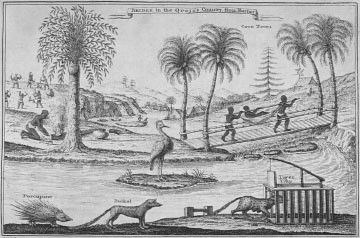
Image: Sierra Leone, “Bridge in the Quoja’s Country” Kingdom of Quoja, Sierra Leone, late 17th century.

18/

Equiano's "The Interesting Narrative" was first released in 1789. Remarkably, during his lifetime, the book saw eight more editions, a notable feat in an era when a second edition was a rarity for most works. Equiano personally updated and expanded each edition, sometimes responding to critics who doubted that an African could have authored such a book.

https://youtu.be/d0k15rLLHR8?si=R3ZyaDWhjMM3A0Of

19/

Olaudah Equiano Biography

YouTube

Olaudah Equiano’s work is a foundational text in many schools across the western hemisphere. Next time, in part two, I will write a brief thread, outlining the book and some of the controversy surrounding its authenticity.

Thanks for reading.

https://docsouth.unc.edu/neh/equiano1/summary.html

20/

Summary of The Interesting Narrative of the Life of Olaudah Equiano, or Gustavus Vassa, the African. Written by Himself. Vol. I.

The Interesting Narrative of the Life of Olaudah Equiano, or Gustavus Vassa, the African. Written by Himself. Vol. I.

Olaudah Equiano, Interesting Narrative (1789) – Knowledge for Freedom seminar

Books

Carretta, Vincent. Equiano, the African: Biography of a Self-Made Man. University of Georgia Press, 2005.

Equiano, Olauda, Paul Edwards, and S.E. Ogude. Equiano’s Travels. Abridged edition. Heinemann, 1997.

Equiano, Olaudah. The Life of Olaudah Equiano, or, Gustavus Vassa, the African. Mineola, NY: Dover Publications, 1999.

22/

Equiano, Olaudah & Olusoga, David. The Interesting Narrative of the Life of Olaudah Equiano. Hodder & Stoughton, 1789/2021.

Fryer, Peter. Staying Power: The History of Black People in Britain. University of Alberta, 1984.

Hochschild, Adam. Bury the Chains: Prophets and Rebels in the Fight to Free an Empire’s Slaves. 2006.

Petley, Christer. White Fury: A Jamaican Slaveholder and the Age of Revolution. Oxford: Oxford University Press, 2018.

23/

Ogude, S. E. “Facts into Fiction: Equiano’s Narrative Reconsidered.” Research in African Literatures 13, no. 1 (1982): 31–43

Walker, Luke. Olaudah Equiano: The Interesting Man. Wrath and Grace Publishing, 2017.

Walvin, James. An African’s Life: The Life and Times of Olaudah Equiano, 1745–1797. London: Continuum, 1998/2000.

24/

@Deglassco What?! Never heard of this person before, where are the biopics? An amazing thread, thanks a lot for your work!
@Deglassco
There is not much on the Internet that genuinely enriches my life, but your regular histories are one. Thank you so much for your work.
@Deglassco thank you for sharing. When I read about the loyalists being sent to Sierra Leone, I can’t help thinking of the current UK government policy of sending asylum seekers to Rwanda. Do they know their history or is it just the same heinous instincts leading to the same conclusions centuries later??
@annaf thank you. I will read up on it.
@Deglassco
Thanks for posting. A fascinating story. I shall look forward to reading more.
@Deglassco interesting thread, thank you! Looking forward
to part two.

@Deglassco
I know I say this every time, but I love your threads!

Thank you for all the work that goes into sharing these important bits of history. 👏👏👏

@Deglassco

A fascinating narrative, so much packed into one life. Also fascinating and important for the witnessed/experienced events of slavery. Nothing glossed over.

@Deglassco

Ahhh Sunday morning, Coffee and black history!

Also thanks for highlighting this figure. I just recently finished barracoon, and would be interested in the differences...

@Deglassco Hand drawn black and white depiction of 2 Black men dressed in breech-clouts crossing a bridge carrying another man slung between them in a hammock. Animals with their names are displayed while in the distance other Black people work and seem to dance (?) with spears in their hand.

@Deglassco A collection of ships and boats in the harbour that rises to simple houses and small buildings dotting a hillside with palm trees.

In the middle are the words “Sierra Leone”

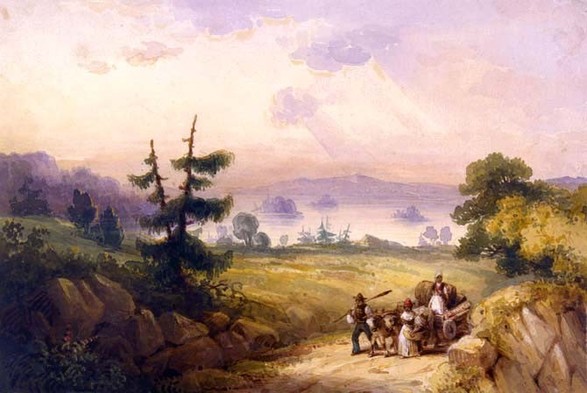
@Deglassco A Black man and woman lead a cow-drawn cart down a country road. A young (?) Black woman sits on the cart along with bay bales.
@Deglassco Older white man in frock-coat and tie with a pony-tail and hair fashionably curled up on the sides.
@Deglassco A number of well dressed 18th century white people mingle. Their faces are caricatures, many looking vaguely unpleasant or foolish.