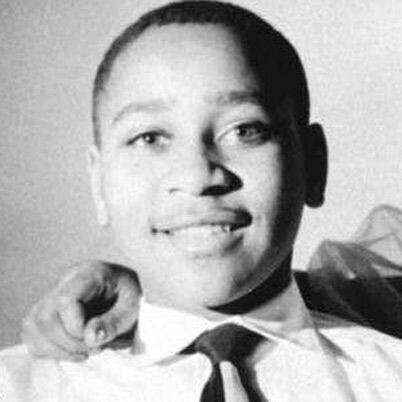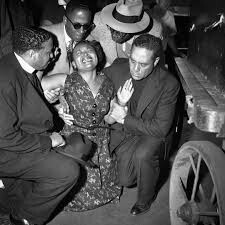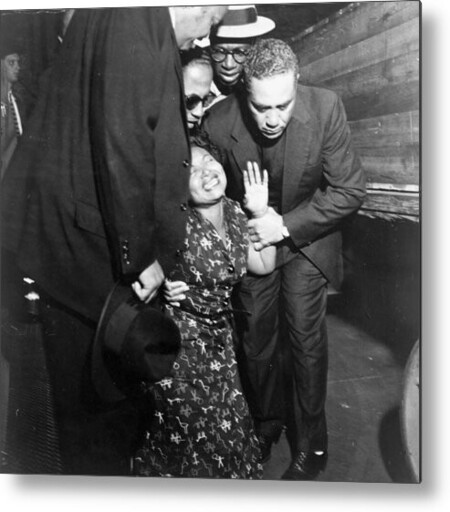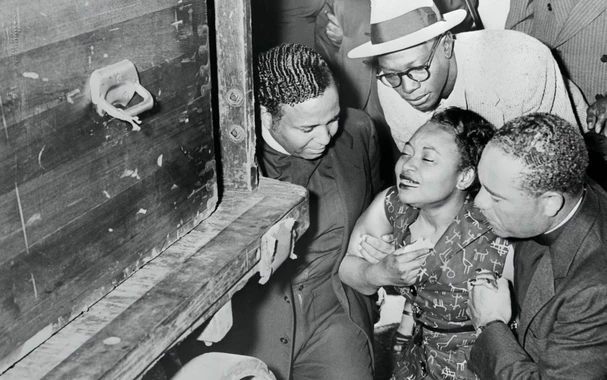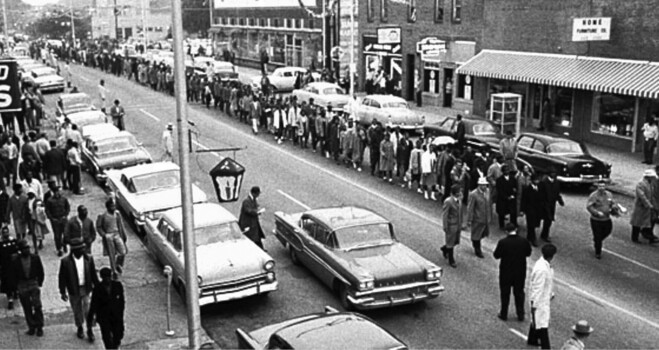
Emmett Till’s murder, the sit-ins, Freedom Rides, & the March on Washington were distinct elements within the Civil Rights struggle that contributed to the larger goal of eliminating racial violence, challenging segregation, & achieving civil rights reforms. Collectively, they showcased resilience, strategic diversity, & the movement’s ability to leverage various forms of activism to effect change.

1/

@[email protected] @BlackMastodon #BlackMastodon #Histodons #History
#WasingtonDC #Florida
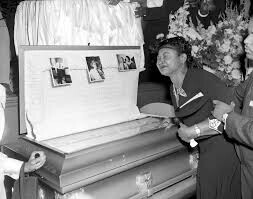
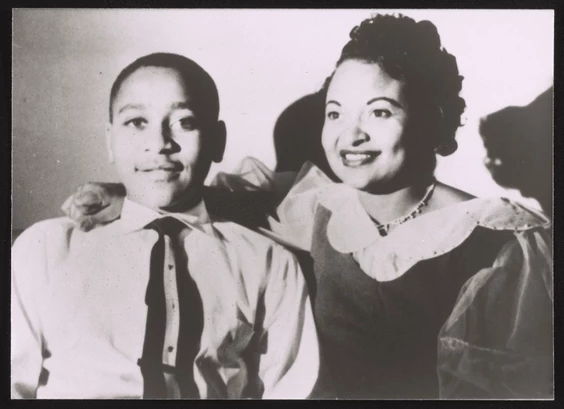
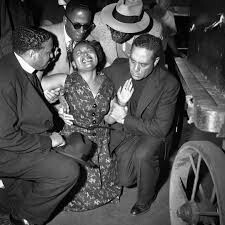
The brutal lynching of 14-year-old Emmett Till, and the subsequent acquittal of his white murderers, highlighted the extreme racial violence prevalent in the South. The open-casket funeral, showing the young boy's mutilated body, drew nationwide attention and outraged many, galvanizing support for the civil rights cause.

2/

#BlackMastodon #Histodons #History #StillWeRise #BlackHistory
#WasingtonDC #MarchOnWashington #MLK #Florida

Emmett Till’s death had a profound impact on the civil rights movement. The brutality of his death & a mother’s profound grief were powerful testimony to the horrors of racial oppression. This event brought renewed attention to the pervasive racism and violence faced by Black Americans, inspiring more people of all races, creeds, ethnic origins to join the fight for civil rights.

3/

#BlackMastodon #Histodons #History #StillWeRise #BlackHistory
#WasingtonDC #MarchOnWashington #MLK #Florida

Emmett’s mother’s decision to open his broken body for public viewing horrified the world. The resulting media attention was a catalyst for increased activism and mobilization. The March on Washington, several years after Emmett’s murder, was a manifestation of a growing momentum in the civil rights movement toward public activism against racial violence.

4/

#BlackMastodon #Histodons #History #StillWeRise #BlackHistory
#WasingtonDC #MarchOnWashington #MLK #Florida

While the march addressed a range of issues, it was deeply rooted in the goal of achieving justice, equality, and an end to racial violence like that which claimed Emmett Till’s life.

Emmett’s tragic story served as a reminder of the urgency of the movement’s cause and the need for collective action to effect change.

5/

#BlackMastodon #Histodons #History #StillWeRise #BlackHistory
#WasingtonDC #MarchOnWashington #MLK #Florida

So, in essence, the murder of Emmett Till and the March on Washington are connected through their roles in the broader narrative of the civil rights struggle. The brutality of Emmett’s murder brought greater visibility to the fight for racial justice, contributing to the groundswell of support and determination that culminated in events like the March on Washington.

https://youtu.be/ToqvM8GprNU?si=0IhwM4h0y7xW5M0C

6/

#BlackMastodon #Histodons #History #BlackHistory
#WasingtonDC #MarchOnWashington #MLK #Florida

Mamie Till receives closed casket with Emmett’s body | Let the World See E1 l Part 6

YouTube

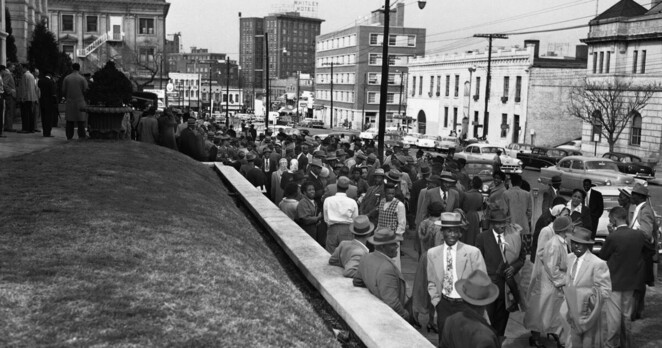
Another galvanizing event was the Montgomery Bus Boycott. Sparked by Rosa Parks' arrest for refusing to give up her bus seat to a white passenger, this year-long boycott against the segregated bus system was a foundational moment in nonviolent resistance. Led by a young Dr. Martin Luther King Jr., it marked the rise of mass protest as a tool for civil rights.

7/

#BlackMastodon #Histodons #History #StillWeRise #BlackHistory
#WasingtonDC #MarchOnWashington #MLK #Florida

While the Montgomery Bus Boycott focused on challenging segregation and inequality within a specific local context, the March on Washington had a broader national and symbolic significance. Both events were integral parts of the struggle for racial equality & contributed to the momentum that led to the passing of the Civil Rights Act of 1964 and the Voting Rights Act of 1965.

8/

#BlackMastodon #Histodons #History #StillWeRise #BlackHistory
#WasingtonDC #MarchOnWashington #MLK #Florida

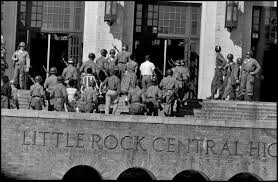
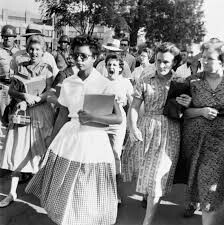
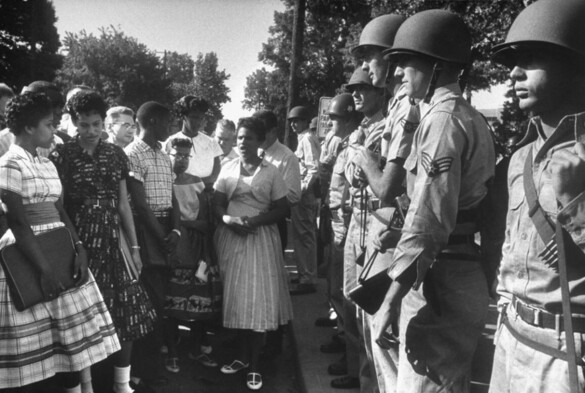
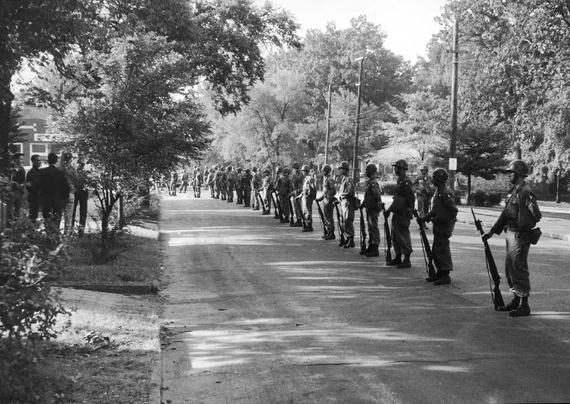
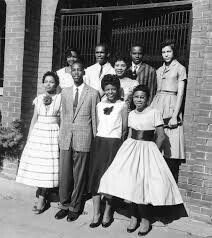
After Brown v Board of Ed, White Southerners dug their heels in against desegregation. Civil Rights activists demanded legal action and instituted a series of lawsuits designed to force schools to comply. So it was that in 1957, 9 Black American students faced immense hostility and resistance when they attempted to integrate Little Rock Central High School in Arkansas.

9/

#BlackMastodon #Histodons #History #StillWeRise #BlackHistory
#WasingtonDC #MarchOnWashington #MLK #Florida

While the focus of the March on Washington was broader than just education, the struggle for desegregation and equal access to quality education was an underlying theme. The event culminated in Martin Luther King Jr.’s famous “I Have a Dream” speech, which emphasized the need to dismantle racial segregation and discrimination in all areas of society, including education.

10/

#BlackMastodon #Histodons #History #StillWeRise #BlackHistory
#WasingtonDC #MarchOnWashington #MLK #Florida

The Little Rock Nine’s struggle exemplified the challenges faced in achieving school desegregation and equal access to education at a local level, while the later March on Washington underscored the nationwide demand for comprehensive civil rights reform.

11/

#BlackMastodon #Histodons #History #StillWeRise #BlackHistory
#WasingtonDC #MarchOnWashington #MLK #Florida

Both events highlighted the systemic injustices faced by Black Americans and the urgent need for change. The Little Rock Nine’s bravery and the subsequent legal battles helped pave the way for the integration of schools across the country, while the March on Washington galvanized support and played a pivotal role in influencing the passage of civil rights legislation.

12/

#BlackMastodon #Histodons #History #StillWeRise #BlackHistory
#WasingtonDC #MarchOnWashington #MLK #Florida

Together, these events showcase the courage of ordinary people and the multi-faceted nature of the struggle for racial equality and justice in the United States.

13/

#BlackMastodon #Histodons #History #StillWeRise #BlackHistory
#WasingtonDC #MarchOnWashington #MLK #Florida

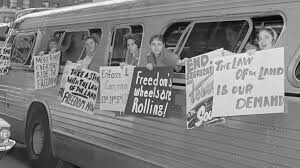
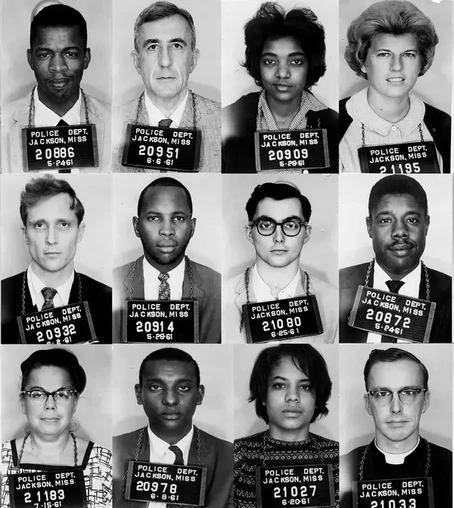
Inspired by the story of the Little Rock 9, by the early 1960s, activists began to adopt direct-action tactics, staging sit-ins at segregated establishments and undertaking Freedom Rides to challenge segregation in interstate bus terminals. These actions, often met with violent responses, illuminated the stark racial injustices in the everyday lives of Black Americans and emphasized the need for federal intervention.

14/

#BlackMastodon #Histodons #History #
#WasingtonDC #Florida
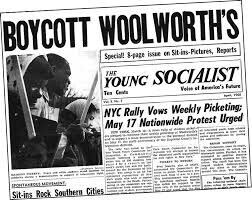
The sit-ins were a form of nonviolent protest that began in 1960 when Black American students began sitting at “whites-only” lunch counters in segregated establishments, demanding service. These protests spread rapidly across the South, attracting media attention and igniting discussions about segregation. The sit-ins showcased the power of nonviolent direct action to challenge discriminatory practices.

15/

#BlackMastodon #Histodons #History
#WasingtonDC #MarchOnWashington #MLK #Florida

The Freedom Rides, which began in 1961, involved interracial groups of activists traveling on buses through the South to challenge segregation on interstate buses and in bus terminals. These rides were met with violent resistance, and the activists faced physical attacks and arrests. The Freedom Rides exposed the brutality of segregationist practices and forced the federal government to address the issue.

16/

#BlackMastodon #Histodons #History
#WasingtonDC #MarchOnWashington #MLK #Florida

The sit-ins and the Freedom Rides, and the March on Washington were all key components of the Civil Rights Movement in the United States, each employing different tactics to challenge racial segregation and discrimination. They collectively demonstrated the movement’s determination to bring about change and highlighted various aspects of the fight for civil rights.

17/

#BlackMastodon #Histodons #History #StillWeRise #BlackHistory
#WasingtonDC #MarchOnWashington #MLK #Florida

While not as confrontational as the previous tactics, the March on Washington aimed to showcase unity and gather widespread support for comprehensive civil rights legislation.

It built upon earlier momentum by gathering a diverse crowd from across the country, demonstrating the widespread support for civil rights reform.

18/

#BlackMastodon #Histodons #History #StillWeRise #BlackHistory
#WasingtonDC #MarchOnWashington #MLK #Florida

Ultimately, the relationship between these events lies in their collective impact on the momentum of the Civil Rights Movement. Little Rock 9, Mamie Till, the sit-ins and Freedom Rides displayed the grit, resilience, courage, and commitment of activists to challenge segregation head-on, often facing violence and arrest in the process.

19/

#BlackMastodon #Histodons #History #StillWeRise #BlackHistory
#WasingtonDC #MarchOnWashington #MLK #Florida

All of these events drew attention to the stark realities of racial inequality and pressured the federal government to take action.

20/

#BlackMastodon #Histodons #History #StillWeRise #BlackHistory
#WasingtonDC #MarchOnWashington #MLK #Florida

In the last thread on the 60th anniversary of the Match on Washington, we will look at the actual organizing of the March—-the roles of key individuals, civil rights organizations, and community leaders who collaborated to bring together a diverse coalition of participants.

21/

#BlackMastodon #Histodons #History #StillWeRise #BlackHistory
#WasingtonDC #MarchOnWashington #MLK

Also, we will look at the logistical challenges, strategies for mobilization, fundraising efforts, and the coordination of speakers and performers at the March to shed light on the remarkable feat of uniting hundreds of thousands of people for a common cause.

22/

#BlackMastodon #Histodons #History #StillWeRise #BlackHistory
#WasingtonDC #MarchOnWashington #MLK

The 1963 March on Washington

On August 28, 1963, about 260,000 people participated in the March on Washington, when Dr. Martin Luther King, Jr. delivered his exalted “I Have a Dream” speech

NAACP

Books

Anderson, Jervis. *A. Philip Randolph: A Biographical Portrait.* New York: Harcourt, Brace, Jovanovich, 1973.

Bates, Beth Tompkins. *Pullman Porters and the Rise of Protest Politics in Black America, 1925–1945.* Chapel Hill, NC: University of North Carolina Press, 2001.

Davis, Daniel S. *Mr. Black Labor: The Story of A. Philip Randolph, Father of the Civil Rights Movement.* New York: Dutton, 1972.

24/

#BlackMastodon #Histodons #History #BlackHistory
#WasingtonDC #MarchOnWashington

Harris, William H. *Keeping the Faith: A. Philip Randolph, Milton P. Webster, and the Brotherhood of Sleeping Car Porters, 1925–37.* Urbana, IL: University of Illinois Press, 1977.

Hughes, Lyn. *An Anthology of Respect: The Pullman Porters National Historic Registry of African American Railroad Employees.* Chicago: Hughes Peterson Publishing, 2007.

25/

#BlackMastodon #Histodons #History #StillWeRise #BlackHistory
#WasingtonDC #MarchOnWashington #MLK

Kersten, Andrew E., and Clarence Lang, eds. *Reframing Randolph: Labor, Black Freedom, and the Legacies of A. Philip Randolph.* New York: New York University Press, 2015.

Pfeffer, Paula F.A. *Philip Randolph: Pioneer of the Civil Rights Movement.* Baton Rouge, LA: Louisiana State University Press, 1990.

26/

#BlackMastodon #Histodons #History #StillWeRise #BlackHistory
#WasingtonDC #MarchOnWashington #MLK

Santino, Jack. *Miles of Smiles, Years of Struggle: Stories of Black Pullman Porters.* Urbana, IL: University of Illinois Press, 1989.

Tye, Larry. *Rising from the Rails: Pullman Porters and the Making of the Black Middle Class.* New York: Macmillan, 2005.

27/

#BlackMastodon #Histodons #History #StillWeRise #BlackHistory
#WasingtonDC #MarchOnWashington #MLK

Chapters in Edited Books

Arnesen, Eric. "Black Protest and the Great Migration: A Brief History with Documents." In *The Great Migration: A Historical Encyclopedia of the American Mosaic,* edited by Steven A. Reich. 2014.

28/

#BlackMastodon #Histodons #History #StillWeRise #BlackHistory
#WasingtonDC #MarchOnWashington #MLK

Baldwin, Davarian L. "Chicago's New Negroes: Modernity, the Great Migration, & Black Urban Life." In *The Great Migration in Historical Perspective: New Dimensions of Race, Class, and Gender,* edited by Joe William Trotter. Indiana University Press, 1991.

29/

#BlackMastodon #Histodons #History #StillWeRise #BlackHistory
#WasingtonDC #MarchOnWashington #MLK

Other Books

Grossman, James R. *Land of Hope: Chicago, Black Southerners, and the Great Migration.* Chicago: University of Chicago Press, 1991.

Lemann, Nicholas. *The Promised Land: The Great Black Migration and How It Changed America.* Vintage Press, 1991.

Marks, Carole. *Farewell – We're Good and Gone: The Great Black Migration.* Indiana University Press, 1989.

30/

#BlackMastodon #Histodons #History #StillWeRise #BlackHistory
#WasingtonDC #MarchOnWashington #MLK

Reich, Steven A., ed. *The Great Black Migration: A Historical Encyclopedia of the American Mosaic.* 2014.

Rodgers, Lawrence Richard. *Canaan Bound: The African-American Great Migration Novel.* University of Illinois Press, 1997.

Scott, Emmett J. *Negro Migration during the War.* New York: Oxford University Press, 1920.

31/

#BlackMastodon #Histodons #History #StillWeRise #BlackHistory
#WasingtonDC #MarchOnWashington #MLK

Sugrue, Thomas J. *Sweet Land of Liberty: The Forgotten Struggle for Civil Rights in the North.* Random House, 2008.

Tolnay, Stewart E. "The great migration and changes in the northern black family, 1940 to 1990." *Social Forces* 75, no. 4 (1997): 1213–1238.

Wilkerson, Isabel. *The Warmth of Other Suns: The Epic Story of America's Great Migration.* Random House, 2010.

32/

#BlackMastodon #Histodons #History #StillWeRise #BlackHistory
#WasingtonDC #MarchOnWashington #MLK

@Deglassco
Everyone needs to read this thread; it is masterfully executed down to *sources*! Thank you for this work, esp in light of certain states trying to erase and recast history!
#BlackHistory #MarchOnWashington #BlackMastodon
#StillWeRise
@stoicybele thank you for reading it. Appreciate the good word.
@Deglassco thank you for all of that

@Deglassco Alt text

Black and white

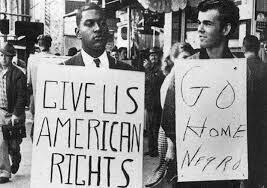
Two young men wearing placards stand side by side on a sidewalk. On the left is a Black man in a suit wearing a placard that reads “Give us American rights” in a neat block font. On the right, a white man in a T-shirt is wearing a placard with “Go home negro” written in a messy and uneven manner. The white man is smiling slightly and glancing over at the Black man.

@Deglassco Alt text

Black and white

An immense crowd of protesting Black women and men fill the street, holding printed signs with different slogans or demands for equality, affordable housing, and other civil rights.

@Deglassco Alt text

Black and white

A large crowd of Black men (too many to count) are standing crowded together holding signs that all say “I am a man”

@Deglassco Alt text

Black and white (mostly)

Four pictures.

1 - The front page of The Register newspaper in yellow with the headline “Students Stage Sit-down Demand” and a grainy picture of young Black men sitting together at long table, possibly in a school lecture hall.

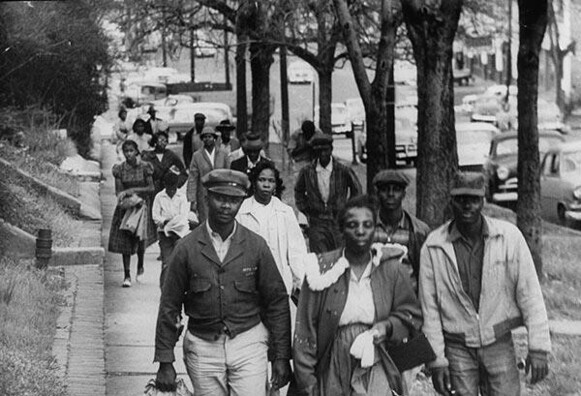
Pictures two through four are images described up-thread of the mother of Emmet Till being comforted as she grieves, a group of Black men and women walking down a sidewalk, and the outside of the bus with signs being held out the windows.

@Deglassco Alt text

Black and white

An uncountable crowd of people fill the National Mall in Washington.

@Deglassco Alt text

Black and white

Two pictures.

The first is of the outside of a bus, as young people lean out holding signs that have slogans such as “Freedom wheels are rolling” and “The law of the land is our demand.”

In the second, three Black men are sitting at a counter. Two appear to be reading, while another is holding a camera (though it is lowered). None of them have been served.

@Deglassco
What amazes me is that this is only 62 years ago. Within my lifetime!

@Deglassco Alt text

Black and white

There are two pictures.

The first is of a bus with huge clouds of smoke pouring out of it, obviously burnt or burning.

The second is of a mixed group of Black & white young women and men standing together in a line alongside the same bus, unburnt. Their hands are linked and they are singing.

@Deglassco brave individuals.
These are my kind of American patriots.

@Deglassco Alt text

Black and white

The front page of The Young Socialist newspaper is pictured. The headline reads “Boycott Woolworth’s” and there is a large picture of two Black women carrying picket signs.