
Just uploaded a (hopefully!) complete mirror of the University of Michigan's old software archives to the Internet Archive, as the original server seems to have finally gone down.

The U-M Archive contained software for Atari computers (8-bit, ST, TT, and Falcon), Apple II computers, classic Mac OS, DOS, and Unix X11 software, but its draw was software for Apollo graphical workstations, which everyone can read about here! https://en.wikipedia.org/wiki/Apollo_Computer

The entire archive is currently up at the Internet Archive as one huge tar.gz archive, and I'll be uploading the entire collection uncompressed for anyone who wants to browse it easier.

https://archive.org/details/u-mich-archives

Apollo Computer - Wikipedia

@LambdaCalculus

nice! I was there when the software collection started in 1985.

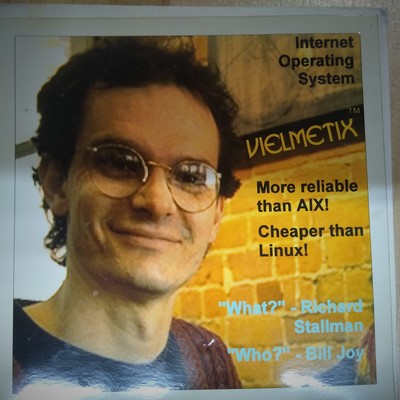
https://www.flickr.com/photos/edward-vielmetti/53151582016/in/datetaken/

UMich Computing Center Newsletter v16n2, 1986-01-20

Flickr
@w8emv @LambdaCalculus I thought you started it in the first place? I remember grubbing thru PC1: in the early years when I still worked on MS-DOS, before diving into Atari...

@hyc @LambdaCalculus

I started the MS-DOS collection at UMich and PC1 and the PC1 Confer conference. As I remember it, Richard Conto had already been collecting CP/M software for at least a little while before I got to do the same thing for MS-DOS.

Which reminds me, I need to talk to Gavin.

@w8emv @LambdaCalculus oh geeze, I'd forgotten about the CP/M archive. I trawled thru there a few times too. Mainly looking for cool stuff to port to the Atari ST.

@hyc @LambdaCalculus

I remember the early days as being days of figuring out compression and archiving tools (.arc was first but not the only) and getting modem programs to go at maximum speed over non-transparent networks.

Kermit was slower than most, but it supported batch transfers, so you could point it a directory and have it pull the whole thing down, instead of file by file.

There should also be an early KA9Q NOS in this collection, which is where I learned TCP/IP a packet at a time.