 Sophie 🎲🏳️⚧️
Is a cube is more pointy than an octahedron?
Yes
No
Poll ended at .
(Assuming we’re talking about the regular platonic shapes. I’ll accept no “look at this dagger I made with X sides!”.
I have my own answer and reasoning but I’m curious what others think).
Okay so I did some checking and even my assumption was wrong.
When you slice the points off of the shapes (at same distance from a vertex), the octahedron has less surface area, less volume, is less flat. However you want to measure it the octahedron point is more pointy. The cube's point is simply more blunt.
HOWEVER, the cube has more points (vertices) and is therefore more pointy.
Like I say, this was NOT what I was expecting and I may have made a mistake - but I don't think so.
The cube appears to be less pointy, probably because it is less pointy. (or rather, it has 8 points, they just aren't as sharp as an octahedron's 6 points.)
If we're talking about sharpness though, a cube's edges are absolutely sharper than an octahedron's. Be very careful around cubes!
Anyway, my conjecture (which has probably already been conjured by someone else but I am too lazy to check) is:
Polyhedra with fewer vertices have pointier vertices.
Polyhedra with fewer edges have sharper edges.
tl;dr: This is why you don't fuck with tetrahedra.
@Sophie I reject defining pointy by quantity over quality 😤
words for that are spiky/prickly but even those would have trouble sticking to a cube, because it is right on the edge of blunt angles
@skylerblue @Mayor_of_Smartarse just want to step into the most pedantic conversation I’ve ever seen with:
A cube and an octahedron are duals so they are each equidistant to “spherical” depending on how you want to measure it.
@skylerblue @Mayor_of_Smartarse “Visually Evident”
haha you trust your EYES to solve things? :p
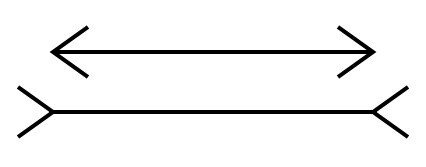
@Sophie no
sharper angles override more individual points - if you take either property to the extreme you are comparing a needle to a sphere
@Sophie I think a good measure of pointiness would probably be the proportion of volume outside the object in a sphere around the measured vertex.
Probably more useful would be that multiplied by two minus one, so that 0 is flat and concave is negative pointy.
 🇨🇦 TRH 🇨🇦
 YinYin Falcon
 Annette
 Pete Alex Harris🦡🕸️🌲/∞🪐∫
 Miriam's on Medical Leave
 Skyler Blue
 Martijn Frazer
 +>e
+>e Zrephel
 AndroidArts
 Farbs
Farbs