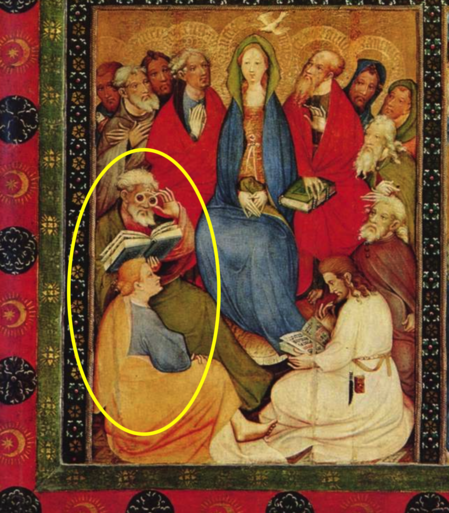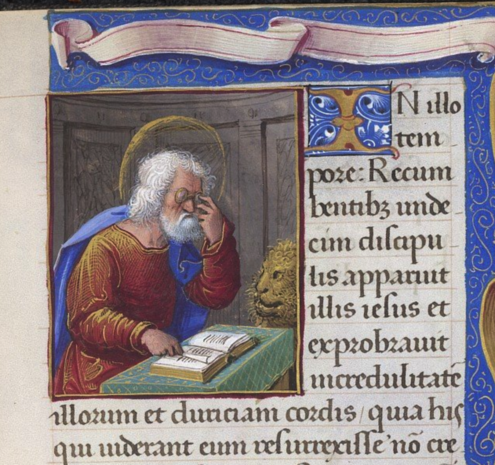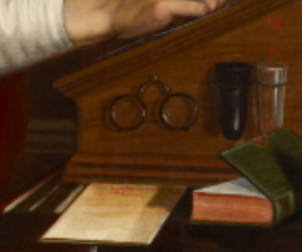
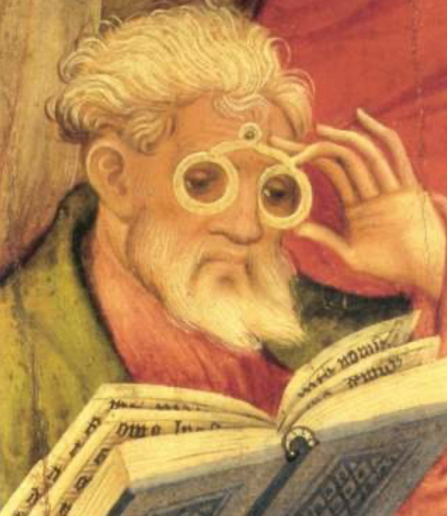
#Eyeglasses were part of the material history of reading in early modern Europe, as this painting of 1403 (from Conrad von Soest) shows.

This is a slow moving thread for #histodons, a thread about how to read in the past, where to buy eyeglasses, and how to do with them in general. The hashtag is #HowToDoWithGlassesInThePast

Let's roll. #EarlyModernHistory #MediaHistory #BookHistory #HistKnow

1
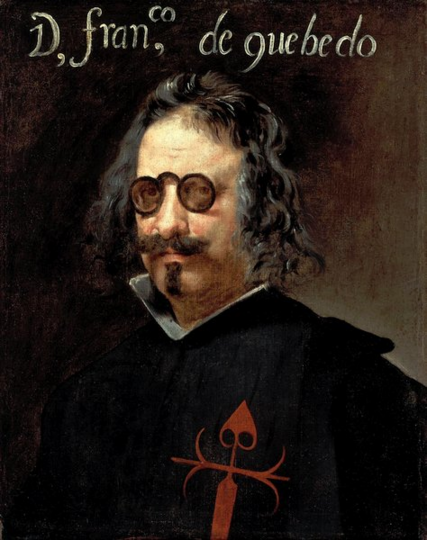
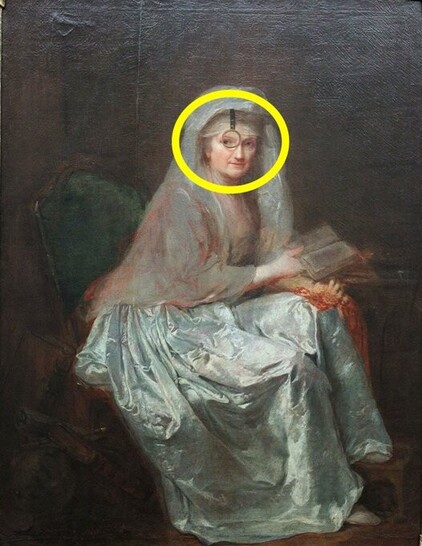
About wearing eyeglasses: Something on your nose attracted attention, and sometimes this object made you more fancy than you were. Eyeglasses were made for reading and seeing better but also had a distinctive function of making you, the one wearing eyeglasses, a bit more special. The writer Francisco de Quevedo on this painting knew how to make an impression.

#HowToDoWithGlassesInThePast

2

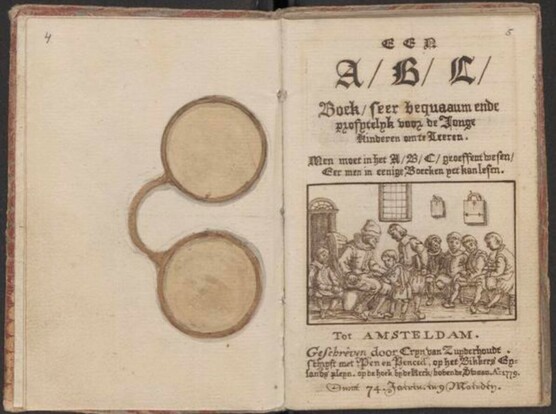
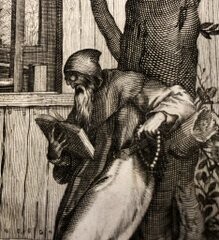
About imagining eyeglasses: Traces and images of early modern eyeglasses are to be found in paintings, in books, in prints, etc., and this reminds the historian of the presence of these artifacts in cultural life. Inserting eyeglasses into your painted, printed of hand drawn imaginations about a moment of your life clearly sends a message: eyeglasses were present. Often near books or in books, like these painted eyeglasses as part of imagined book.

#HowToDoWithGlassesInThePast

3

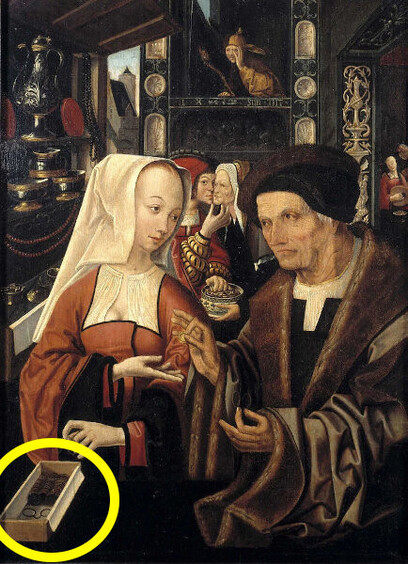
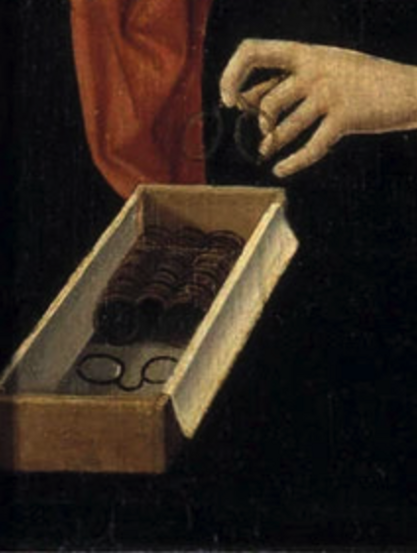
About buying eyeglasses: You might have been needing eyeglasses for reading purposes for a long time, but before every using of the artifact one needed to find a seller offering the assisting tool. The young woman in this painting is selling eyeglasses by the dozens as a zooming in into the details of the painting clearly shows. You may find the painting here, for example http://lamusee.fr/jeune-femme-vendant-des-besicles-a-un-vieil-homme/

#HowToDoWithGlassesInThePast

4

Jeune femme vendant des bésicles à un vieil homme : lamusée

Ballade iconographique dans la Renaissance

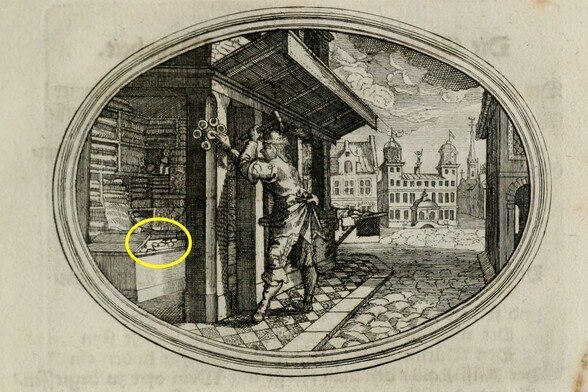
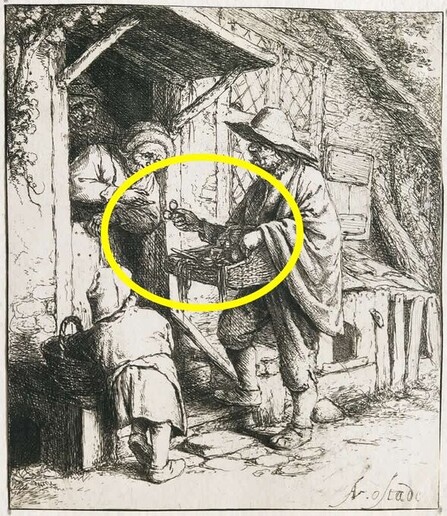
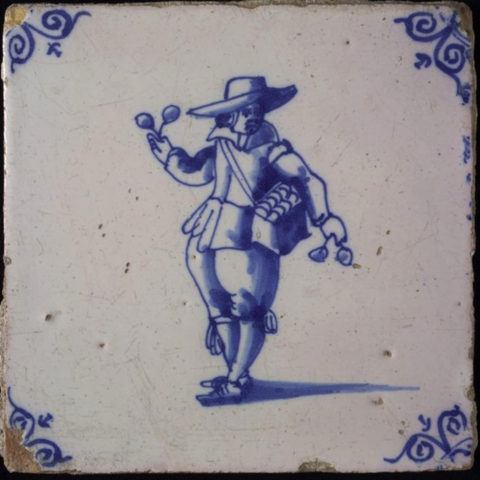
Apropos, buying and selling eyeglasses in early modern Europe: Shops offered the goods, surely, but also mobile sellers did so. Eyeglasses became a moved good that was sold along to the new reading habits and book usages of the period. More books in all variations meant also: more markets for selling eyeglasses. #BookHistory and the growing usages of eyeglasses from 1400 onward are a connected history.

5

#HowToDoWithGlassesInThePast

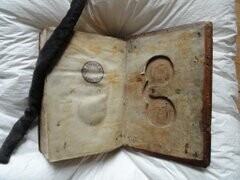
Let's focus upon storing eyeglasses in a premodern context. As a wealthy reader and owner of books you could always go for the luxury option: use your a custom-made case carved out of the back board of a big book to store your reading tool.

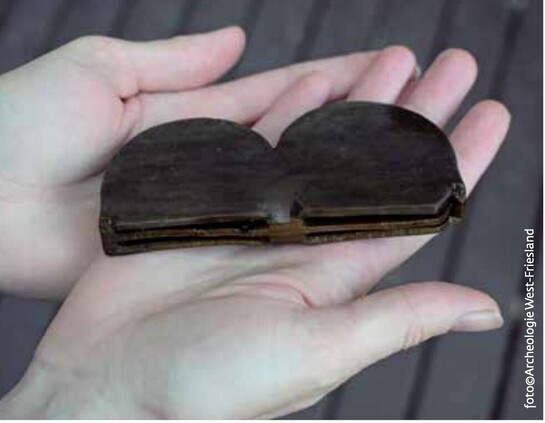
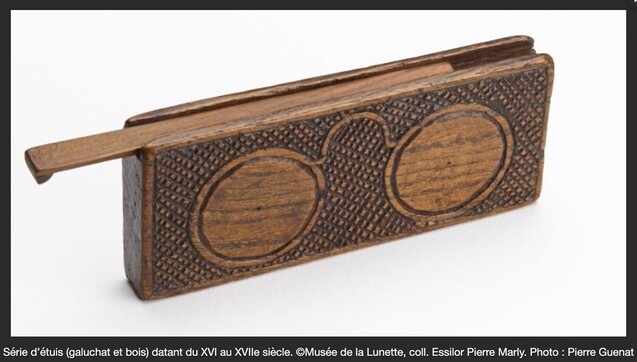
Some also chose to protect the glasses in a wooden case, for traveling maybe?

Well, and apparently, at least someone in the sixteenth-century fancied fish-skin leather for her or his glasses as well.

6

#HowToDoWithGlassesInThePast

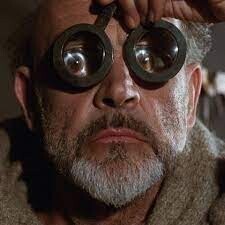
Wearing your eyeglasses: in style, in contemplation, at work, out of context, for the wild look.

7

#HowToDoWithGlassesInThePast

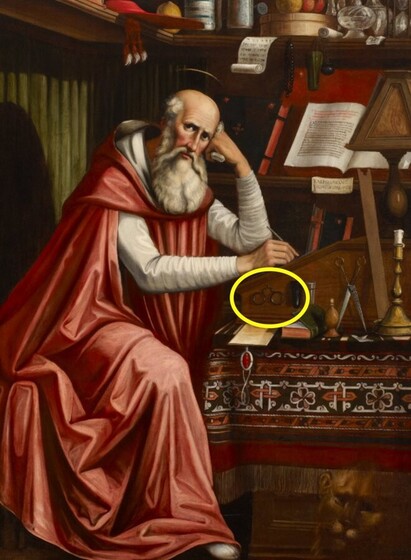
About using your eyeglasses: Mostly, eyeglasses were needed for reading and writing purposes. In this sense, eyeglasses were part of a cultural practice of writing and reading (and drawing to be honest), near books, with books, at a desk, in a library, at an artist's worktable etc.

It is not by chance that Saint Jerome, patron Saint of librarians, is often sitting at a writing desk surrounded by books and papers, with eyeglasses hanging at his desk.

8

#HowToDoWithGlassesInThePast

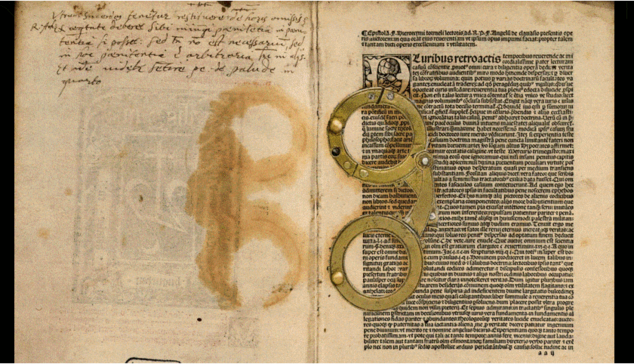
About forgetting or losing your eyeglasses in early modern Europe: Poor thing, have you lost your glasses again? Have you checked the book you were reading? Most often, when you forgot where you put your eyeglasses to, someone found them between the pages...

The history of reading had a chapter about forgetting eyeglasses in books, and about historians and librarians finding traces of these lost eyeglasses.

9

#HowToDoWithGlassesInThePast

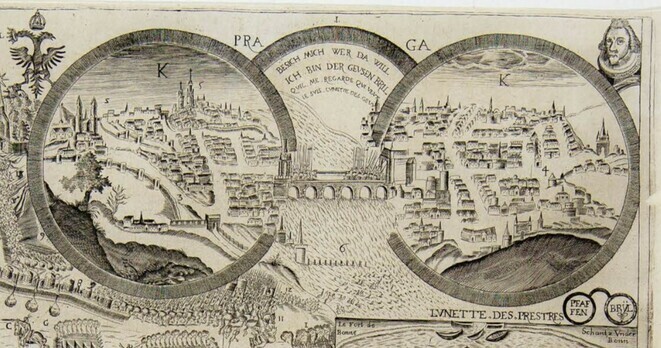
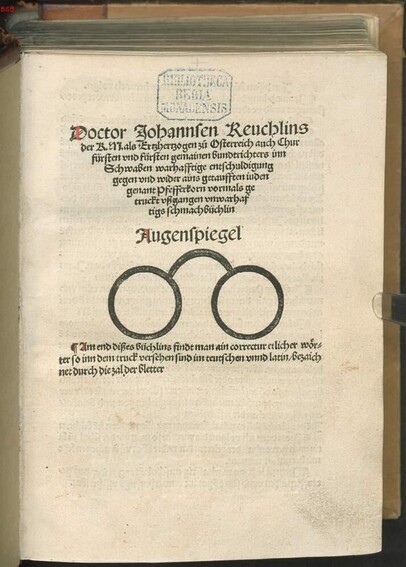
About using eyeglasses as symbols and metaphors in early modern Europe: One could use giant eyeglasses in broadsides to zoom into a topic, like here: https://mastodon.social/@dbellingradt/109624672307990094

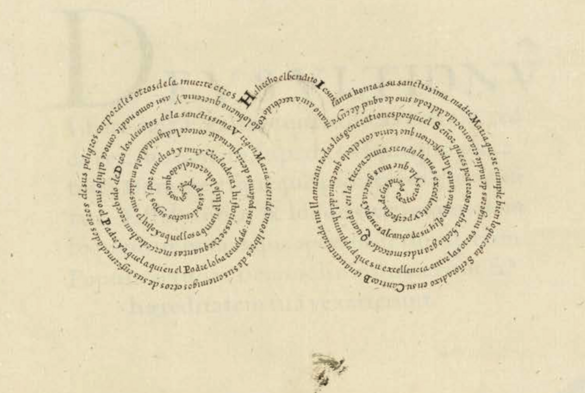
One could use calligram-glasses to attract readers to your message, like in this example: http://bdh-rd.bne.es/viewer.vm?id=0000139678&page=1

Or you could use eyeglasses as a metaphor to strengthen the argument in a printed pamphlet: look closer, see better, examine with more quality, you stupid fellow human.

10

#HowToDoWithGlassesInThePast

Liber varias diversasque characterum formas continens

Nesser, Hermann — Manuscrito — 1501-1700?

Biblioteca Digital Hispánica
@dbellingradt that reminded me of an old website of mine https://sites.google.com/site/visualisationnerlich/
visualisationnerlich

On this page I collect (random) information about images and visualisation in science and society. I provide access to some material that I find interesting, to some conferences that I have attended, and background to a conference I organised with Andrew Balmer (Manchester) and Annamaria Carusi

@dbellingradt
I'm tempted to actually read this one (it's in spanish, right?) but fear I might get dizzy while doing so :-)